
Key Takeaways
A gearbox problem can become a roadside safety issue and a much larger repair bill if it is ignored. The right response is to stop safely, arrange a proper diagnosis and compare replacement options carefully.
- Treat slipping, grinding, burning smells and fluid leaks as warning signs.
- Do not keep driving if the vehicle cannot select gears or move safely.
- Ask whether repair, reconditioning or replacement best suits the vehicle.
- Confirm parts availability, labour, warranty and expected turnaround time.
- Follow the recommended running-in and servicing schedule after installation.
Recognising when a gearbox replacement is urgent
A gearbox does not always fail without warning. Changes in sound, gear selection or fluid condition can provide useful clues before the vehicle becomes completely immobile. If the symptoms are worsening, an urgent gearbox replacement Melbourne service may be necessary, but diagnosis should come before committing to a particular unit.
Warning signs of serious gearbox failure
A vehicle that slips out of gear, refuses to select drive or reverse, or produces a harsh grinding sound needs attention promptly. Delayed engagement, a burning smell and repeated warning lights can also indicate that internal components are no longer working correctly. A sudden loss of drive is especially serious because it can leave you exposed in traffic.
The safest approach is to treat a major change as a fault rather than adapting your driving around it. A gearbox that still moves the car may be close to complete failure, even if the journey home seems possible.
How noises, slipping and leaks point to deeper damage
Whining, clunking and grinding can arise from worn bearings, damaged gears, low fluid or problems elsewhere in the drivetrain. Slipping may occur when clutch packs, synchronisers or hydraulic controls cannot hold the selected gear. A red, brown or unusually dark fluid leak deserves attention because low lubrication can accelerate internal wear.
The symptom alone does not identify the failed part. For example, a vibration may come from a mount, driveshaft or differential rather than the gearbox itself. That is why a careful inspection matters before a replacement is ordered.
When a diagnostic inspection is still necessary
Even when replacement appears likely, a technician should confirm the source of the fault. The inspection may include a road test where safe, electronic fault-code checks, fluid inspection and examination of mounts, linkages and related components. This prevents a sound gearbox from being replaced when the real problem is an external component.
A useful diagnostic conversation includes when the symptom began, whether it appears hot or cold, and whether it changes with speed or engine load. Photographs of leaks and recordings of unusual noises can also help if the vehicle is already at the roadside.
Why continuing to drive can increase repair costs
Driving with low fluid, slipping gears or severe noise can turn a limited fault into broader internal damage. It may also damage the clutch, torque converter, differential or other connected parts. Stopping early can limit damage and gives the specialist more options when assessing the vehicle.
If the vehicle is struggling to move, repeatedly losing drive or behaving unpredictably, towing is usually safer than testing it through another long trip. A small saving on recovery can disappear quickly if the gearbox fails completely in traffic.
What to do when your vehicle breaks down
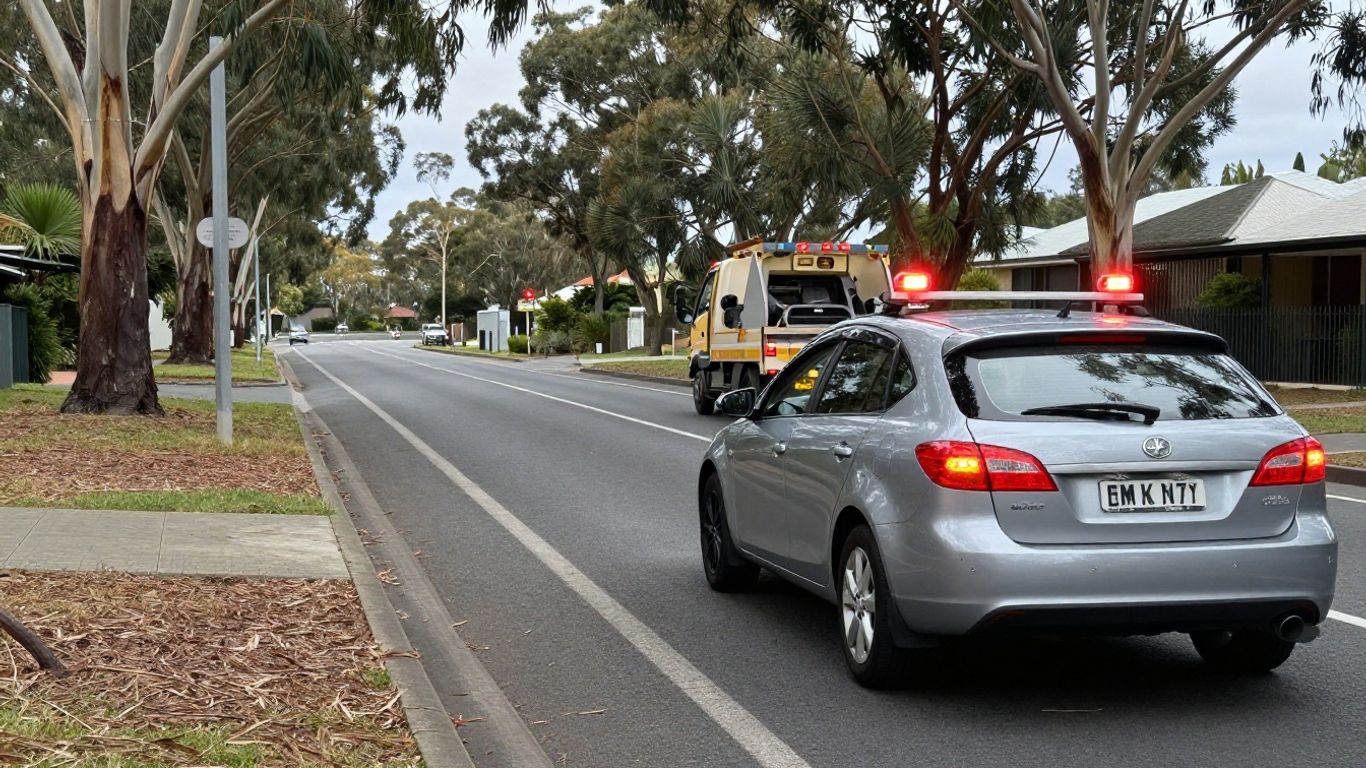
A breakdown is stressful, particularly on a busy Melbourne road, but a calm sequence of actions makes the situation safer. Move away from traffic if the vehicle can be driven without risk, switch on hazard lights and contact roadside assistance or a towing provider. Do not crawl underneath the vehicle or attempt a roadside repair in an unsafe location.
Safe steps to take at the roadside
If possible, steer to a safe shoulder, parking area or emergency lane and apply the park brake. Keep passengers away from moving traffic, remain aware of passing vehicles and call emergency services if there is an immediate danger. Use warning equipment only when it is safe and lawful to do so.
Once the vehicle is secure, avoid repeatedly starting the engine or selecting gears to see whether the fault has disappeared. Each attempt may add heat or stress to a damaged transmission.
When to arrange towing instead of driving to a workshop
Towing is the sensible choice when the vehicle cannot select a gear, is leaking heavily, makes loud mechanical noises or loses power while moving. It is also preferable when a warning light is accompanied by harsh shifting, smoke or a burning smell. A vehicle that moves only intermittently can stop again in a dangerous place.
When booking recovery, explain whether the vehicle is manual or automatic, whether it is all-wheel drive, and whether the wheels can roll freely. Those details help the operator choose suitable equipment and loading methods.
Information to provide the gearbox specialist
A clear account of the failure helps the workshop prepare. Share the vehicle identification details, transmission type, approximate mileage and the symptoms you observed. Mention any recent repair, towing incident, fluid service or warning light, even if it seems unrelated.
It can help to organise the key details before calling:
- The first symptom and when it appeared
- Whether the vehicle selects every gear
- Any leak, smell, noise or warning message
- Whether the fault changes once the vehicle warms up
That information is not a substitute for inspection, but it can make the initial conversation more useful. It may also help the specialist identify whether a replacement unit is likely to be available.
How to protect the vehicle from further damage
Leave the vehicle in a safe position and do not add fluid unless a qualified person has identified the correct fluid and the reason for the loss. Incorrect fluid can cause additional problems, while topping up a serious leak may only postpone failure. Keep keys, service records and any loose parts available for the recovery operator or workshop.
A written record of the symptoms is worthwhile, especially if the failure occurred intermittently. It gives the technician a more accurate starting point than a vague description such as “it felt wrong.”
Deciding between gearbox repair and replacement
Replacement is not automatically the best answer. Some faults involve a serviceable external component, worn fluid or a repairable internal part, while others make removal and fitting another gearbox more practical. The decision should account for reliability, availability, vehicle condition and the total installed cost.
Situations where a repair may be sufficient
A repair may suit a gearbox with one identifiable and accessible fault, particularly when the casing and major internal components remain in good condition. External seals, linkages, mounts and sensors can sometimes be addressed without replacing the whole unit. In other cases, a rebuild can restore the original gearbox after inspection and machining.
The important question is not simply whether a repair is possible. Ask what has failed, what else was inspected and what warranty applies to the completed work.
When a replacement gearbox is the more practical option
A replacement may make more sense when the original unit has extensive internal damage, severe contamination or a history of repeated failure. It can also reduce downtime when a suitable unit is already available and the vehicle needs to return to service quickly. Compatibility must be checked carefully, including transmission code, electronics, mounting points and drivetrain configuration.
The lowest purchase price is not necessarily the lowest installed cost. A unit that requires extra modification, uncertain parts or repeated removal can become expensive once labour is included.
Comparing reconditioned, rebuilt and used gearboxes
These descriptions are not interchangeable, so ask what work has actually been carried out. A used gearbox may be tested or inspected but still contain original wear components. A rebuilt or reconditioned unit may have selected parts replaced, but the scope depends on the supplier and the unit’s condition.
| Option | What to clarify | Best comparison point |
|---|---|---|
| Used unit | Source, mileage and testing completed | Upfront cost and availability |
| Reconditioned unit | Parts replaced and inspection scope | Warranty and refurbishment standard |
| Rebuilt unit | Internal work and final testing | Workmanship and documented inclusions |
| New unit | Supplier, compatibility and warranty | Price against vehicle value |
The table is only a starting point. A written description of the work, a matching identification number and a clear warranty provide much more confidence than a label alone.
How vehicle age, mileage and condition affect the decision
A newer vehicle with a sound body and strong service history may justify a higher-quality replacement. On an older vehicle, the calculation should include tyres, suspension, cooling system, electronics and likely future repairs. A gearbox replacement cannot restore value to a vehicle with several unrelated major faults.
Consider how long you plan to keep the vehicle and how it is used. A commuter, work van and towing vehicle may need different priorities for durability, downtime and future support.
Finding an urgent gearbox replacement service in Melbourne
The right specialist should be able to diagnose the failure, identify a compatible unit and explain the work in plain language. Availability matters, but speed should not mean skipping checks or accepting an unclear quote. If a replacement is needed, the best service balances a realistic turnaround with sound parts selection and careful installation.
What to look for in a local transmission specialist
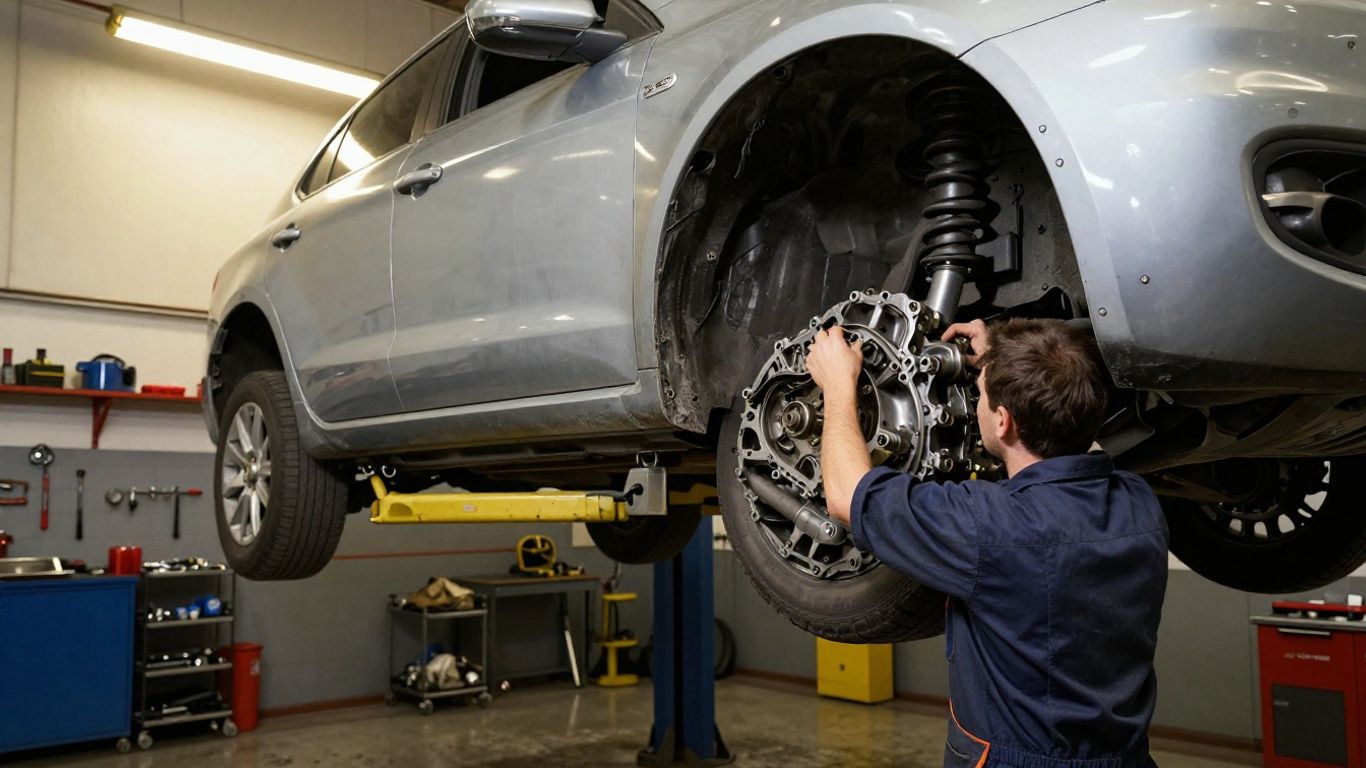
Look for experience with the vehicle’s transmission type, proper diagnostic equipment and a clear process for sourcing replacement units. A service that handles both parts identification and fitting can reduce delays between diagnosis and installation. It should also explain what happens if the initial inspection reveals additional damage.
For broader guidance on assessing experience, equipment, guarantees and written quotes, this workshop selection guide offers useful questions, even though every vehicle decision still needs a transmission-specific assessment.
Questions to ask about availability and turnaround times
Ask whether the replacement is physically in stock, how compatibility will be confirmed and when the vehicle can be inspected. Clarify whether the quoted timeframe begins at booking, diagnosis or parts arrival. If the unit must be sourced, ask what could delay delivery and whether alternatives are available.
A local specialist may also coordinate pickup and delivery. Some Melbourne services advertise fast gearbox turnaround, but the promised timing should still be confirmed for your particular vehicle and fault.
Checking parts sourcing, workmanship and technical expertise
A responsible quote identifies the gearbox type, condition, included components and installation work. Ask whether seals, fluids, filters, mounts and related parts are checked or included. You should also know who supplies the unit and what inspection or testing was completed before fitting.
Do not treat a very low quote as proof of value. The useful comparison is between equivalent units and equivalent labour, with exclusions and warranty terms shown clearly.
Confirming support for manual and automatic gearboxes
Manual and automatic gearboxes have different failure patterns, service requirements and fitting considerations. Confirm that the workshop regularly handles the relevant type, including any electronic controls or calibration required after installation. If the vehicle has a dual-clutch, CVT or four-wheel-drive system, say so at the first contact.
For a general example of a Melbourne service describing support for manual and automatic transmission work, see Melbourne transmission specialists. Treat any advertised capability as a starting point and confirm that it applies to your model.
Understanding the gearbox replacement process
Knowing the usual stages can make an urgent repair feel more manageable. The vehicle is first assessed, the failed unit is removed and the replacement is checked before installation. The final stage should include fluid filling, adjustment and testing rather than simply bolting in a component.
Initial inspection and fault diagnosis
The technician will confirm the symptoms and inspect the vehicle’s drivetrain, controls, mounts and fluid condition. Electronic systems may be scanned, and the vehicle may undergo a controlled road test if it is safe to do so. This stage establishes whether the gearbox itself has failed and what supporting work may be needed.
The result should be explained before major work begins. If the diagnosis is uncertain, ask what further testing would resolve the uncertainty and whether that cost is included.
Removing the failed gearbox
Removal commonly involves securing the vehicle, disconnecting electrical and mechanical connections, supporting the drivetrain and lowering the gearbox safely. Depending on the vehicle, the exhaust, subframe, driveshafts or other components may need to be moved. Once removed, the technician can inspect the clutch, torque converter, mounts and surrounding areas.
Additional damage found at this point should be documented and priced before it is repaired. That avoids surprises when the vehicle is collected.
Installing and testing the replacement unit
Before installation, the replacement should be checked against the vehicle’s identification and inspected for damage or missing components. The workshop then fits the unit, reconnects the drivetrain, fills the correct fluid and completes any required adjustments or electronic procedures. A controlled test checks gear selection, engagement, leaks and abnormal noise.
The transmission diagnostic process described by one Melbourne automotive service illustrates why diagnosis and repair should be treated as connected steps rather than separate guesses. Your technician should still explain the exact checks performed on your vehicle.
Expected timing for urgent replacement work
Timing varies with vehicle access, diagnosis, parts availability and the complexity of removal. A unit already matched to the vehicle may allow faster work, while a rare transmission or additional damage can extend the job. Ask for a likely completion window and the events that could change it.
A rushed installation that skips testing is not a useful result. The vehicle should leave only after the replacement has been checked under conditions that reflect normal driving.
Managing gearbox replacement costs
The final price includes more than the replacement gearbox itself. Labour, towing, fluids, seals, calibration and related drivetrain work can all affect the invoice. Asking for a written estimate early makes it easier to compare practical options without assuming the cheapest quote is the best one.
Main factors that influence the total price
Vehicle design, transmission type and access can change labour time considerably. The source and condition of the replacement unit also matter, as do mileage, warranty and whether it includes a torque converter, clutch or electronic components. Diagnosis and post-installation testing may be charged separately.
Ask which items are fixed and which are allowances. That distinction is useful when a failed component is removed and further inspection becomes possible.
Labour, towing and related component costs
Towing may be required both to protect the vehicle and to deliver it to a suitable workshop. Installation can reveal worn mounts, a damaged clutch, leaking seals, contaminated fluid or a problem with the cooling system. These related parts may be sensible to address while access is available, but they should be approved first.
A quote that excludes every supporting item may look attractive and still produce a larger final bill. Request an itemised breakdown so the comparison is fair.
How to compare quotes without choosing on price alone
Compare quotes by matching the unit type, condition, labour scope, included fluids and warranty. Check whether removal, installation, diagnostics, road testing and disposal are included. A slightly higher quote may provide a better-tested unit and clearer support after the repair.
The practical comparison is often easiest in a simple format:
- Confirm the exact gearbox identification and condition
- Match the included labour and related components
- Check delivery timing and possible extra charges
- Compare warranty duration and claim requirements
This approach keeps the decision focused on the complete repair rather than one headline figure. It also gives you a record of what was agreed before work starts.
Warranty coverage and written estimates
Ask whether the warranty covers the unit, labour or both, and whether there are conditions about servicing, fluid type or use. Find out how a problem must be reported and whether the vehicle must return to the installer. Keep the estimate, invoice and any service records together.
Written details matter most when the repair is urgent. They provide a shared reference if the scope changes or a follow-up inspection becomes necessary.
Protecting your replacement gearbox after installation
A replacement gearbox still needs correct care from its first kilometres. The workshop’s recommendations should take priority because running-in requirements vary between units and vehicles. Good servicing and sensible driving reduce avoidable stress, although they cannot eliminate normal wear.
Running-in recommendations for a replacement unit
Ask whether the unit needs a specific running-in period, fluid check or early inspection. For the first drives, avoid unnecessary heavy loads, aggressive acceleration and prolonged high-temperature operation unless the technician advises otherwise. Pay attention to engagement, shift quality and any new noise.
A gentle early period gives you a better chance of noticing a fitting or adjustment issue before it becomes more serious. Record the date and distance of the installation for future servicing.
Fluid checks and scheduled servicing
Use only the fluid specified for the vehicle and transmission. Check for leaks after parking and follow the recommended interval for fluid and filter servicing. Some transmissions require a level check at a particular temperature or procedure, so avoid relying on a simple visual check alone.
Service records also help preserve warranty support. If the vehicle tows, carries heavy loads or works in stop-start traffic, ask whether a more frequent schedule is appropriate.
Driving habits that reduce gearbox wear
Smooth acceleration, complete stops before selecting reverse and avoiding unnecessary rocking can reduce strain. Do not rest a hand on a manual gear lever or hold an automatic vehicle on an incline with the accelerator. Allow the transmission to engage fully before applying heavy power.
For broader vehicle upkeep, even general resources such as reliable backup systems and routine maintenance information reinforce the value of preventing small issues from becoming disruptive ones. Those pages are not substitutes for transmission advice, but the principle of planned care remains useful.
Symptoms that require an immediate follow-up inspection
Return to the workshop promptly if the replacement slips, bangs into gear, leaks fluid, smells burnt or produces a new whine. Delayed engagement, warning lights and vibration should also be reported rather than monitored indefinitely. Stop driving if the vehicle loses drive or becomes unsafe to control.
Keep the original invoice and describe exactly when the symptom occurs. Early follow-up can distinguish an adjustment issue from a separate fault and may help protect the applicable warranty.
Conclusion
A gearbox failure does not have to become a chaotic repair decision. Secure the vehicle, arrange a proper diagnosis, compare the full replacement cost and choose a unit with clear compatibility and warranty information. With careful installation and sensible follow-up servicing, an urgent gearbox replacement Melbourne job can return the vehicle to dependable use without unnecessary guesswork.
Frequently Asked Questions
How do I know whether my gearbox needs replacing?
Severe slipping, grinding, loss of drive, repeated warning lights and major fluid leaks can indicate serious failure, but a technician should diagnose the cause before replacement is approved.
Is it safe to drive a car with a slipping gearbox?
It may not be safe, particularly if the vehicle loses drive, changes gear unpredictably or has a burning smell. Arrange an inspection or towing rather than continuing a long journey.
Is a used gearbox a good replacement option?
A used unit can be practical when its identification, condition, history and warranty are clear. Compare it with reconditioned or rebuilt options using the complete installed cost.
How long does gearbox replacement take?
Timing depends on vehicle design, workshop access, diagnosis, parts availability and any related repairs. Ask for an estimated window and what circumstances could extend it.
What should a gearbox replacement quote include?
A useful quote identifies the unit, labour, fluids, seals, related components, diagnostics, testing, towing if applicable and warranty terms. It should also show exclusions and possible additional charges.
Should the fluid be changed after gearbox replacement?
The correct fluid and servicing procedure depend on the vehicle and transmission. Follow the installer’s written recommendation and use only the specified fluid.
What should I do if the replacement gearbox develops a new symptom?
Stop driving if the vehicle becomes unsafe, leaks heavily or loses drive. Contact the installer promptly, describe the symptom and keep the invoice and warranty documents available.