Key Takeaways
Maintaining your transmission temperature is critical for vehicle longevity and performance. Below are the essential points to keep in mind regarding transmission health and heat management.
- Transmission systems generally operate safely between 175°F and 200°F.
- Low or degraded fluid is a leading factor in thermal breakdown.
- External factors like towing and traffic place significant strain on cooling components.
- Regular inspection of sensors and solenoids prevents catastrophic mechanical failure.
- Preventive maintenance and fluid flushes are the most effective strategies against heat damage.
Low fluid levels and external leaks
Maintaining the proper amount of transmission fluid is the most fundamental aspect of protecting a vehicle’s drivetrain. When levels drop below the manufacturer’s suggested threshold, the fluid can no longer absorb heat effectively or provide adequate lubrication for moving parts. This deficit forces the remaining fluid to circulate at much higher temperatures, accelerating its inevitable degradation and potentially damaging rubber seals throughout the system.
How leaks affect cooling efficiency
When a leak occurs, the volume of circulating fluid decreases, which directly reduces the system’s ability to pull heat away from critical internal components. This creates a localized heat spike that can impact nearby parts before the fluid even reaches the cooling circuit.
Low fluid pressure often leads to a failure in hydraulic engagement, which manifests as surging or delayed shifting while the vehicle struggles to maintain a consistent operating temperature.
The resulting inefficient cooling loop triggers a downward spiral where the fluid cooks itself, leading to a thinner viscosity that provides even less protection under load.
Identifying internal versus external transmission fluid leaks
External leaks are often visible beneath the vehicle, appearing as reddish stains on the driveway or undercarriage pan. Internal leaks, however, are more insidious because they occur within the valve body or housing, often due to porous casting or worn sealing rings. Auto Matic Kings notes that these internal losses bypass the required pressure paths, meaning the transmission must fight against internal fluid bypass to maintain functionality, which generates significant waste heat without producing useful work at the wheels.
Checking fluid levels using a dipstick or inspection port
To check your fluid levels, locate the dipstick under the hood or the inspection bolt on the side of the transmission housing depending on the model. Ensure the engine is running and the transmission has reached operating temperature, as fluid expands when warm, giving an accurate reading only under operational states. If you find the level consistently low, that is a strong indicator of an active leak that requires immediate professional evaluation.
- Park on a flat, level surface to ensure measurement accuracy.
- Verify the fluid color; bright red is healthy, while dark brown suggests overheating.
- Check for burnt odors, which indicate that internal friction materials are likely cooking the fluid.
- Always consult your manufacturer’s manual for the correct fluid specification before topping off.
Once the levels are checked and corrected, monitor the transmission for any repeated fluid drops that might suggest a more severe seal failure.
Degraded or contaminated transmission fluid
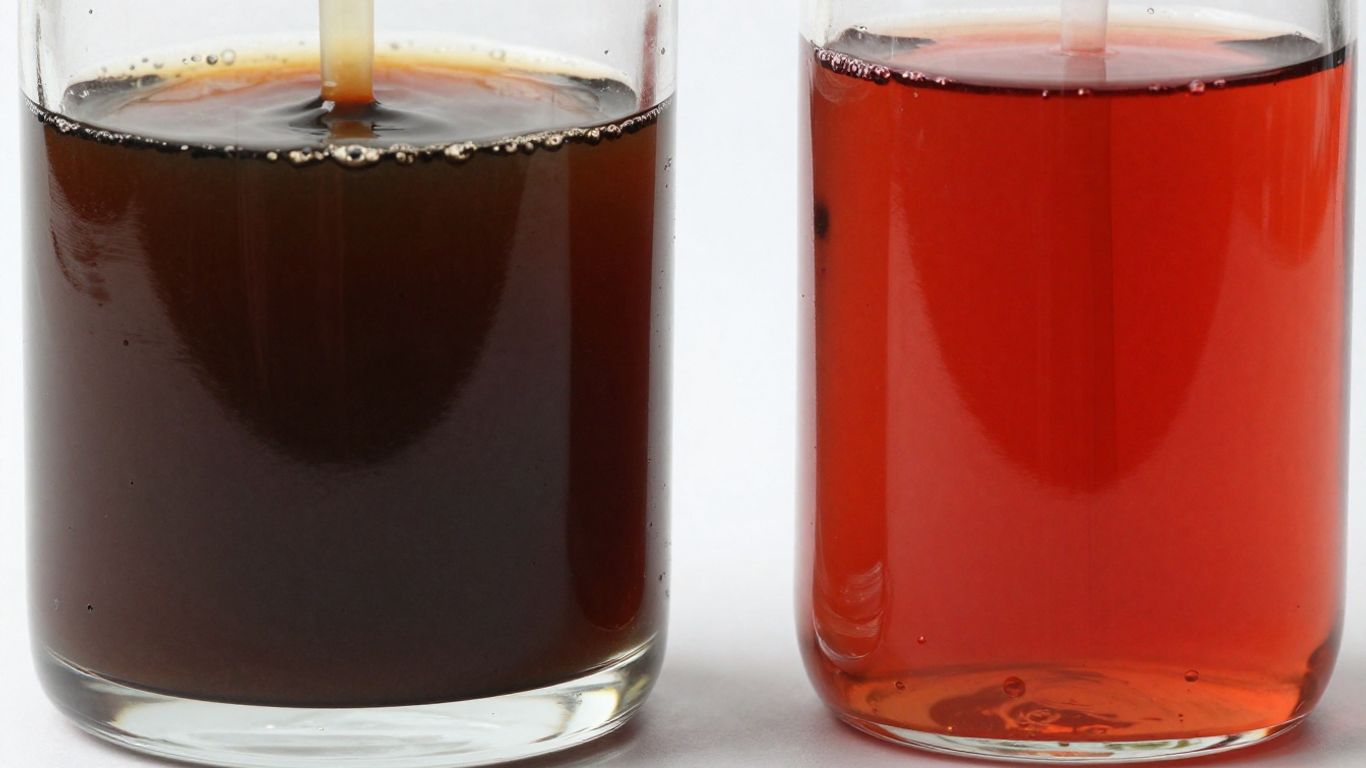
Fluid degradation begins the moment the internal temperature threshold is crossed, fundamentally altering the fluid’s chemical makeup. This breakdown turns the transmission into a hostile environment where friction materials and steel components lose their protective film, leading to increased metal-to-metal contact. Drivers often ignore fluid health until shift quality declines, but by that point, the damage to internal mechanisms is often already underway.
Chemical breakdown due to prolonged heat exposure
As temperatures rise, the oxidation process accelerates, causing the base oil and additives to lose their molecular integrity. This results in the formation of sludge and varnish-like deposits that coat the internal control valves, further restricting fluid flow and deepening the heat-related crisis within the system.
How debris interferes with internal gear lubrication
Microscopic metal shavings and burnt clutch material begin to circulate with the fluid once wear cycles become aggressive. This debris acts as a grinding agent that polishes surfaces meant to be smooth, causing rapid wear on pumps and gear sets, and making it harder for the fluid to reach the tight tolerances within the planetary gears.
Recommended service intervals for fluid flushes
Sticking to a strict maintenance cycle is the simplest way to clear out suspended contaminants and replenish the thermal protective additives. While drivers focused on endurance training might track engine strain, they should also align their transmission fluid service frequency with the intensity of their vehicle’s regular workload to ensure longevity remains high.
Malfunctioning transmission cooling systems
When the primary cooling mechanism fails, the transmission effectively has no way to vent its operational heat. In most vehicles, this involves a heat exchanger integrated into the radiator, which relies on the engine’s coolant flow to keep the transmission fluid within its safety envelope. Complications here are frequent and often overlooked until they cause noticeable performance drops.
The role of the radiator-integrated cooling circuit
This circuit serves as the primary thermal regulator, utilizing engine cooling fluid to maintain an equilibrium. If the radiator itself is partially clogged or the thermostat is failing, the transmission fluid will not be able to dump its load of thermal energy, leading to a steady rise in operating temperatures under typical driving conditions.
Detecting clogged lines or external cooler blockages
Regularly inspecting the external cooler lines for debris or physical dents is part of proactive vehicle care. A restriction in the supply line to the remote cooler can choke off fluid flow entirely, while insect build-up on the face of the cooler prevents air from conducting heat away from the fluid piping as efficiently as needed.
| Observation Factor | Potential Issue Indicated | Recommended Action |
|---|---|---|
| Excessive line vibration | Loose mounting or internal blockage | Secure lines and monitor flow |
| Coolant in fluid | Radiator heat exchanger breach | Replace radiator and flush system |
| External heavy debris | Obstructed airflow through fins | Clean cooler faces with compressed air |
By keeping these components clear of physical obstructions, you protect the system from avoidable heat buildup and maintain a stable internal temperature across all gears.
Diagnosing a failing auxiliary cooling fan
Many high-performance or heavy-duty vehicles use dedicated cooling fans to assist in pulling air through the transmission cooler when the vehicle is stationary. If this fan motor burns out or the relay fails, the transmission temperature will rise rapidly whenever the vehicle sits in traffic, as there is no passive airflow to aid in cooling the hot fluid.
Excessive towing and extreme load strain

When a vehicle is pushed beyond its normal operating parameters, the torque converter experiences higher degrees of slip, which generates a massive amount of heat. Towing heavy trailers creates a continuous upward pressure on the drivetrain that forces the transmission to stay in lower, higher-heat-generating gears for longer durations than it would during standard road use.
Understanding gross vehicle weight ratings and trailer limits
Drivers often fail to consult their vehicle’s specific weight ratings before connecting a trailer, leading to immediate transmission stress. Utilizing NFL injury reports analogies, ignoring a technical constraint usually guarantees a negative outcome, as the transmission cannot compensate for weight classes it was never engineered to handle.
The impact of heavy stop-and-go city traffic on thermal buildup
Constant starting and stopping at low speeds force the transmission to build and drop pressure repeatedly, which is a key driver of thermal buildup. In 1.3 Million Views Gone Wrong fashion, a lack of planning in your route can lead to situations where your transmission is stuck in a cycle of overheating because it cannot lock into a high-speed, cooler-running gear.
Managing gear selection and driving habits on steep inclines
On mountain roads, manually selecting a lower gear prevents the transmission from "hunting" between speeds and causing unnecessary shifting heat. Additionally, maintaining a steady throttle position and avoiding aggressive pedal inputs helps keep the internal pressure buildup manageable during sustained climbs.
Internal mechanical failures and friction issues
Internal wear is the final frontier of transmission degradation, where repeated thermal stress results in physical component failure. The internal friction surfaces are designed for durability, but they possess a finite threshold for how much heat they can absorb before the binding agents in the clutch material begin to liquefy.
Wear on clutch packs and brake bands
When clutch packs begin to thin, they lose their ability to provide the "lock" necessary for efficient power transfer. This lost grip creates more slipping, which releases more heat, creating a feedback cycle that eventually leads to complete power loss at the wheels.
Torque converter slippage as a primary heat source
Monster Transmission engineers units to manage torque more efficiently, but in stock vehicles, significant slippage within the converter is the single greatest emitter of heat. This occurs when the lock-up clutch fails or does not engage, forcing the fluid to undergo extreme shearing forces.
Recognizing the burnt odor of overheated components
Finding a distinct, sharp, and acrid smell around the transmission housing is a universal sign of serious interior damage. This scent confirms that organic clutch material has been scorched, generally indicating that the transmission has reached temperatures well beyond its sustainable operating range.
Electrical and sensor malfunctions
Modern transmissions rely as much on electrical signals as they do on fluid pressure to function correctly. When electronic components fail, the system loses its ability to manage shift timing and pressure, often defaulting to conditions that promote rapid heating.
Transmission control module faults affecting pressure regulation
Faulty software or logic errors in the controller can result in incorrect line pressure, which doesn’t hold the clutch packs tightly enough. Low pressure consistently causes slippage, and slippage consistently causes excessive heat, requiring expensive electronic diagnostic tools to correct.
Troubleshooting erratic temperature sensor readings
If the dashboard gauge fluctuates wildly or shows high readings while the vehicle is idling, the issue may be a faulty thermistor rather than the transmission itself. However, it is always safer to trust the sensor’s warning and check the physical fluid temperature before assuming it is just an electrical glitch.
How faulty solenoids disrupt fluid circulation and heat dissipation
Solenoids act as the gates for fluid routing, and if they stick open or closed due to debris, they disrupt the intended flow patterns. This misdirection can cause fluid to be trapped in certain pockets of the transmission while bypassing the cooling loop entirely, accelerating local hotspots that can destroy nearby seals.
Conclusion
Managing transmission temperature is a multi-faceted process that requires attention to fluid health, driving habits, and the physical state of your cooling components. By staying proactive with your maintenance, understanding the signs of heat stress, and addressing minor mechanical leaks before they escalate, you can effectively avoid the most common causes of transmission failure. Keeping your drivetrain cool is ultimately the best protection against early obsolescence and expensive overhauls.
Frequently Asked Questions
Can my regular motor oil be used as transmission fluid?
No, transmission fluid has specialized friction modifiers and detergent additives that motor oil lacks, so you must use the specific type mandated by your vehicle manufacturer.
Will an external cooler help if my radiator is failing?
An auxiliary cooler provides an excellent secondary path for heat dissipation, but it cannot fully compensate for a radiator that is restricted or failing, as the transmission needs a balanced cooling environment.
How often should I check my transmission fluid level?
It is good practice to check the fluid during every major oil change or at least twice a year to ensure there are no signs of leaks or color degradation.
Does high outside temperature contribute to transmission failure?
Extreme ambient heat makes it significantly harder for the transmission to maintain its optimal temperature range, especially in heavy traffic where there is little airflow available.
Can I continue driving if I smell a burning odor from my transmission?
Driving with this symptom is risky because it indicates the components are actively destroying themselves through excessive heat; it is recommended to pull over and seek professional assessment.
Are automated transmissions more prone to overheating than manual ones?
Automatic units produce significantly more heat due to the torque converter’s fluid-based power transfer, making them more susceptible to thermal issues in high-load scenarios.
What can I do in traffic to keep my transmission cool?
Avoiding stop-and-go patterns when possible and keeping the vehicle in neutral while sitting for long durations can help reduce the localized heat buildup in the torque converter.