

Key Takeaways
A transmission oil change service is routine maintenance, but the right timing and procedure depend on the vehicle. The owner’s manual, fluid specification, and transmission symptoms should guide the decision.
- Follow the manufacturer’s service schedule whenever one is provided.
- Use fluid that matches the transmission’s exact specification.
- Ask whether a drain-and-fill, exchange, or flush is appropriate.
- Treat slipping, delayed engagement, leaks, or burning smells as inspection signs.
- Compare estimates by scope, parts, fluid, labor, and warranty—not price alone.
Understanding transmission oil and its role
Transmission oil, often called transmission fluid, works inside a demanding system of gears, clutches, bearings, valves, and seals. It helps reduce friction, carry heat away, and support the hydraulic action used by many transmissions. Because the fluid is part of the transmission’s operating system, its condition matters as much as its level.
A service is not simply a cosmetic fluid replacement. The technician needs to identify the transmission type, confirm the required specification, and look for signs that a larger problem may be developing. That context makes a transmission oil change service more useful than treating every vehicle as though it follows the same recipe.
How transmission oil protects internal components
Fluid forms a lubricating film between moving components and helps control heat created during operation. In automatic transmissions, it also transfers hydraulic pressure through passages and valves, while additives help keep deposits and oxidation under control. Aged, contaminated, or overheated fluid may not perform those jobs as reliably.
The fluid’s condition can change gradually. Short trips, high temperatures, heavy loads, and repeated stop-and-go driving can all place extra stress on the transmission. Regular inspection gives a shop a chance to notice fluid problems before they are confused with a more serious mechanical failure.
Differences between automatic, manual, and CVT fluids
Automatic transmissions, manual transmissions, and continuously variable transmissions do not necessarily use interchangeable fluids. Automatic transmission fluid is designed around hydraulic operation and clutch behavior; manual transmissions may use gear oil or a manufacturer-specific manual transmission fluid; CVTs require fluid formulated for their belt, pulley, or chain system.
The name on the bottle is not enough by itself. The vehicle’s year, engine, transmission code, and manufacturer specification can all matter. A fluid that seems similar may have different friction characteristics and may not be suitable for the transmission in question.
Signs that fluid condition is affecting performance
Fluid condition is only one possible cause of a performance complaint, so symptoms should lead to diagnosis rather than an automatic flush. Delayed engagement, slipping, harsh or hesitant shifts, unusual noises, a burning odor, and visible leakage deserve attention. A warning light adds another reason to arrange an inspection promptly.
Some drivers notice a change after the vehicle warms up, while others feel it during acceleration, reversing, or shifting from park into drive. Write down when the symptom occurs and whether it is getting worse. That simple history can help the technician reproduce the concern.
Why the correct fluid specification matters
Transmission fluid specifications describe more than viscosity. They relate to friction behavior, seal compatibility, temperature performance, and the way the transmission’s internal controls operate. Using the wrong product can create shifting problems or complicate later diagnosis, even when the fluid appears clean.
The exact specification matters more than a broad label such as “automatic fluid.” The safest reference is the owner’s manual or the manufacturer’s service information, confirmed against the vehicle identification details when necessary.
Knowing when to schedule a transmission oil change service
There is no single mileage figure that fits every car, truck, or transmission. Some manufacturers specify a replacement interval, some recommend inspection, and some describe different schedules for normal and severe use. The maintenance section of the owner’s manual is the starting point, not a generic interval found online.
Age and operating conditions also influence the decision. A vehicle used for towing in hot weather may need closer attention than one driven gently on open roads. If the vehicle has symptoms, a service appointment should be treated as a diagnostic visit rather than waiting for the next routine milestone.
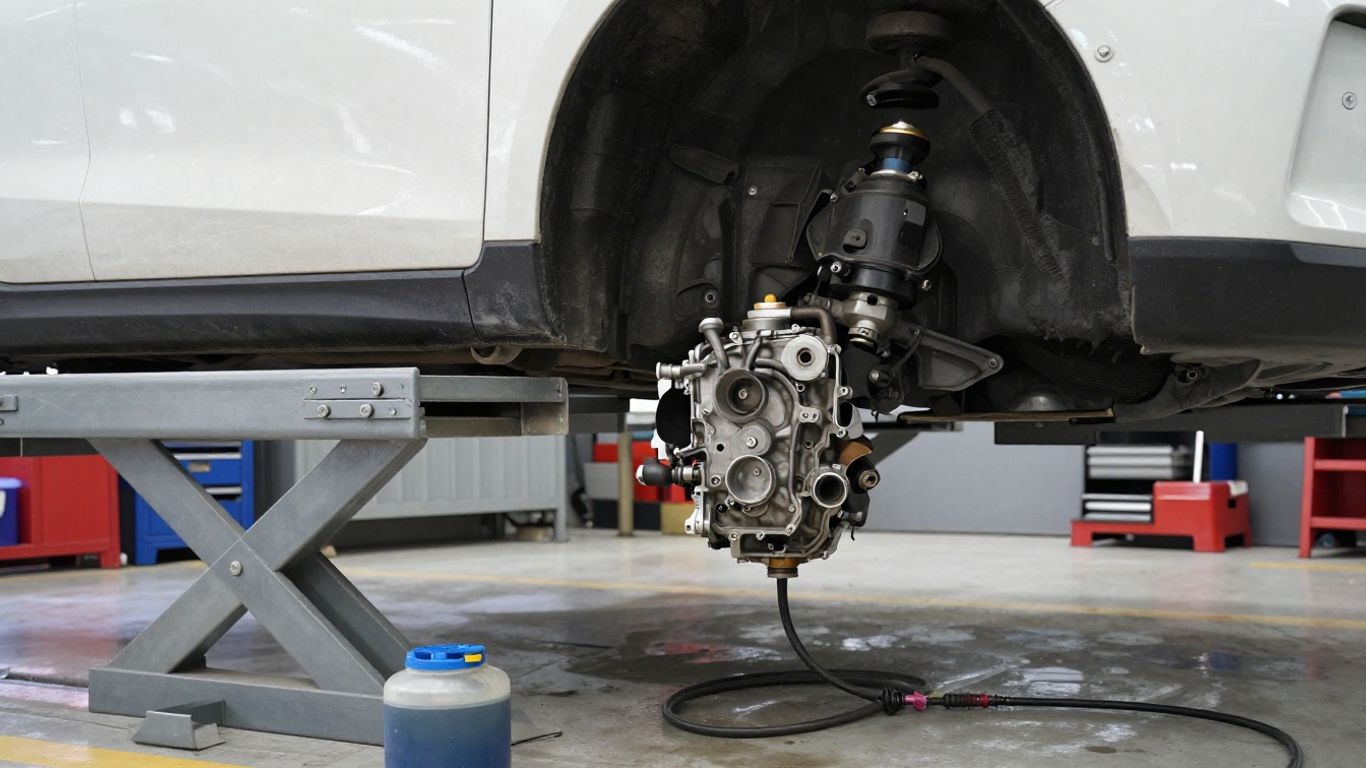
Manufacturer-recommended service intervals
Service schedules may be expressed in miles, months, operating hours, or inspection instructions. Follow the interval for the specific transmission, since an automatic, manual, and CVT can have very different requirements. If maintenance records are incomplete, a shop can help establish what has been done and what still needs verification.
A manufacturer schedule is a useful baseline, but it does not override an obvious leak or shifting concern. Fluid that is low, badly discolored, or contaminated calls for an inspection even when the odometer has not reached the listed interval.
Mileage, age, and driving conditions that change the schedule
Mileage measures use, but time and operating environment matter too. Heat, dust, steep terrain, frequent idling, carrying heavy loads, and repeated short journeys can increase transmission stress. Towing and delivery-style driving are especially useful details to share when asking a shop about timing.
A vehicle that sits for long periods is not automatically free from maintenance concerns. Seals can age, fluid can deteriorate, and a leak may go unnoticed until the vehicle is driven again. The schedule should reflect both the calendar and the way the vehicle is used.
Symptoms that warrant an earlier inspection
Do not wait for a routine interval if the transmission begins behaving differently. A quick appointment can distinguish a fluid-level issue from an electrical, hydraulic, or mechanical fault. For general background on warning signs and fluid replacement, readers can also review transmission fluid exchange guidance, while keeping the vehicle’s own manual as the primary reference.
Useful observations to report include whether the problem happens cold or warm, at a particular speed, during a specific shift, or after towing. Avoid repeatedly driving a vehicle that is slipping badly or losing fluid; continued use can increase damage.
Why some vehicles need fluid checks instead of routine changes
Some transmissions are designed around inspection or condition checks rather than a simple, recurring replacement interval. Access may be limited, the level may need to be checked at a specific temperature, or the manufacturer may prescribe a particular procedure. A sealed design does not mean the fluid is irrelevant; it means the service method requires care.
A check may include looking for leaks, evaluating fluid condition, and confirming the level under the prescribed conditions. The technician should explain whether the vehicle needs replacement, inspection, or no service at that visit.
Choosing the right transmission oil change service
“Change” can describe several different procedures. A drain-and-fill removes the fluid that can flow out through the drain point, while an exchange replaces a larger share of the old fluid through equipment or a specified process. A flush may involve additional steps and is not automatically suitable for every transmission.
The best option depends on the manufacturer’s instructions, the transmission’s condition, and the vehicle’s service history. Before booking, ask what the shop will do and what it will not do. Clear answers are more valuable than a vague promise of a complete service.
Drain-and-fill versus fluid exchange
A drain-and-fill is often a straightforward maintenance procedure, though the amount removed varies by design. A fluid exchange aims to replace more of the old fluid, but the exact method and result depend on the equipment and transmission. Neither label alone proves that one option is better for a particular vehicle.
Ask whether the quote includes a filter, pan removal, level-setting procedure, and the exact fluid specification. For a quick comparison, transmission fluid change services describe a replacement option, but the vehicle-specific procedure should still be confirmed before work begins.
When a transmission flush may be appropriate
A flush can be appropriate when the manufacturer allows it and the transmission is a good candidate after inspection. It should not be selected simply because it sounds more thorough. A transmission with an active fault, severe contamination, or unknown history may need diagnosis and repair before any fluid exchange is considered.
The phrase “flush” can also mean different things at different shops. Ask whether the process follows manufacturer guidance, what equipment is used, and whether the technician will inspect the pan or filter. Those details help separate a defined service from a sales label.
Questions to ask a repair shop before booking
A few direct questions can prevent surprises at the counter. They also reveal whether the shop has considered the actual vehicle rather than quoting a universal package.
- Which fluid specification and quantity does my transmission require?
- Is the recommendation a drain-and-fill, exchange, or flush, and why?
- Does the price include a filter, gasket, leak inspection, and level check?
- What symptoms or findings would make you stop and request approval?
The answers should be specific enough to appear on the estimate. If a shop cannot explain the procedure or fluid type, pause before authorizing the work.
How to compare service estimates and warranties
Compare estimates by their included work. One price may cover only fluid, while another may include pan removal, a filter, a gasket, diagnostic time, and a road test. A lower total is not necessarily a lower cost if important steps are excluded.
Ask about the parts and labor warranty, what it covers, and whether it applies to leaks caused by a new gasket or seal. Keep in mind that a maintenance warranty generally does not guarantee that an existing transmission defect will disappear.
What happens during the service
A careful transmission oil change service follows a sequence, although the exact steps vary by vehicle. The technician first confirms the transmission and checks for conditions that could change the recommendation. The work then proceeds through fluid removal, component inspection where required, refilling, level verification, and a final performance check.
This is why a quoted service time can differ from the time needed for a repair. A leak, damaged pan, inaccessible filter, or unusual level-setting procedure may require additional work. For a general example of the inspection-and-refill sequence, see transmission service inspection; the actual process remains vehicle-specific.
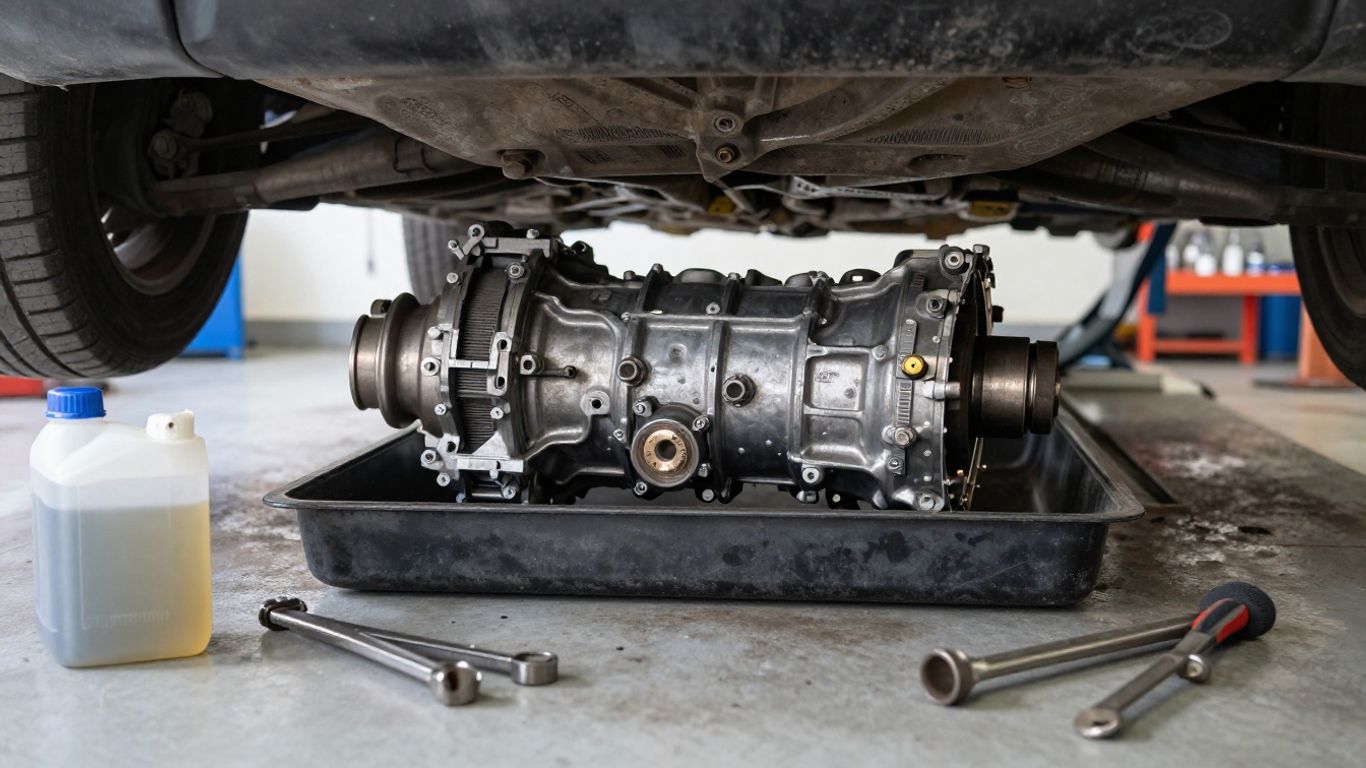
Inspecting the transmission and checking for leaks
The technician looks around the pan, drain plug, cooler lines, axle areas, and nearby seals for wetness or accumulated residue. They may also inspect the fluid’s appearance and odor, though these observations do not replace a full diagnosis. A leak should be identified before fresh fluid is added and the vehicle is returned to service.
Finding a leak does not always mean the transmission itself has failed. It may involve a gasket, seal, line, plug, or housing area. The estimate should distinguish inspection findings from confirmed repairs.
Draining or extracting the old fluid
Depending on the design, fluid may be drained through a plug, removed when the pan is lowered, or extracted through an approved procedure. The technician should use a clean process and account for the fluid that remains inside the transmission, torque converter, cooler, or lines.
The removed fluid can provide useful clues. Metallic debris, an abnormal smell, or an unexpectedly low quantity may prompt further inspection before the service is completed. Fresh fluid cannot correct every internal problem.
Replacing the filter, pan gasket, or seals when needed
Some transmissions have serviceable filters and pans; others use different arrangements or specify inspection rather than routine replacement. If the pan is removed, the gasket or sealing surface may need attention. A filter replacement should be included only when it suits the vehicle and the agreed procedure.
The shop should explain any added part before installing it. This is especially important when a maintenance appointment turns into a repair because of a damaged seal, stripped plug, warped pan, or heavy contamination.
Refilling with the correct fluid and verifying the level
Refilling is more precise than pouring in a standard amount. The technician must use the specified fluid and follow the manufacturer’s level-check procedure, which may involve a temperature range, a running engine, or a particular gear-selection sequence. Too little or too much fluid can create its own operating problems.
The final amount should be recorded when practical, particularly if the transmission was found low. If the vehicle has no conventional dipstick, ask how the level was verified and whether the shop found evidence of a leak.
Road-testing and checking shift performance
A road test can confirm that the transmission engages, shifts, and responds as expected after the service. The technician may check for delayed engagement, harsh shifts, slipping, noises, and warning lights. A road test is not a guarantee of future performance, but it can catch an immediate concern.
Afterward, ask whether the technician noticed anything that should be monitored. If a pre-existing symptom remains, the service record should say so rather than implying that fluid replacement resolved it.
Understanding transmission oil change service costs
The price of a transmission oil change service depends on the vehicle and the procedure, not just the number of quarts. Fluid type, labor time, access, filter design, and the condition of the pan or seals all influence the estimate. A shop may also charge for diagnosis when symptoms are present.
A useful estimate makes those variables visible. Ask for a written breakdown before work begins and confirm whether taxes, disposal, inspection, and any required reset or level-check steps are included.
Factors that affect the total price
The main cost differences usually come from the transmission design and the scope of service. A simple drain point may require less labor than a pan removal or a temperature-controlled level check. A larger vehicle may also require more fluid, while a specialized fluid can raise material costs.
A maintenance service and a repair should appear as separate line items. That distinction makes it easier to approve only the work you want and to compare estimates fairly.
Parts, fluid type, labor, and vehicle accessibility
Fluid is sold in different formulations and quantities, and the required product should match the manufacturer’s specification. Labor rises when access is restricted, protective panels must be removed, or the level-check procedure takes additional time. Parts such as filters, gaskets, and drain-plug washers can be modest individually but meaningful in the final total.
Here is a simple way to see why two legitimate estimates may differ:
| Cost factor | What it can include | Why it changes the price |
|---|---|---|
| Fluid | Specification, quantity, and disposal | Some fluids cost more or require more volume |
| Parts | Filter, gasket, seal, or washer | Component access and replacement needs vary |
| Labor | Drain, inspection, refill, and testing | Procedures differ by transmission design |
| Accessibility | Covers, pan removal, or special tools | Restricted access adds time |
The table is a comparison tool, not a universal price guide. A detailed estimate should connect each charge to the work your vehicle actually needs.
When additional repairs increase the estimate
A low fluid level, damaged gasket, leaking cooler line, or contaminated pan can turn routine maintenance into a repair visit. So can a symptom that requires scanning, pressure testing, or a more extensive inspection. The technician should show or explain the finding and obtain approval before adding the work.
If the transmission is slipping or making abnormal noises, replacing fluid alone may not solve the underlying cause. Treat a maintenance quote as separate from a promise about the transmission’s overall condition.
How dealership and independent shop pricing can differ
Dealerships may have vehicle-specific tools, procedures, and service records, while independent shops may offer different labor rates or package structures. Neither setting is automatically the better value. Compare the technician’s explanation, included steps, fluid specification, warranty, and familiarity with the transmission.
A transparent independent-shop estimate and a transparent dealership estimate can be compared on the same terms. For specialized transmission maintenance, Power Purge services are one documented example of a broader fluid-replacement process that may include additional inspection steps; ask exactly what any named package includes.
Protecting your transmission after the service
Good maintenance continues after the vehicle leaves the shop. Pay attention to how it engages and shifts, look for fresh leaks after parking, and keep the service paperwork with the rest of the vehicle records. Small observations are easier to act on than a vague memory months later.
The service also creates a useful baseline. If the vehicle behaves normally afterward, future changes can be compared with that condition. If a symptom remains, report it promptly instead of repeating the same maintenance without diagnosis.
Checking for leaks and unusual shifting
For the first several drives, notice delayed engagement, new slipping, harsh shifts, unusual sounds, or a burning smell. Look beneath the parked vehicle for spots or dampness, especially after the transmission has warmed up. A small leak can become a low-fluid condition if it is ignored.
If anything changes, note the mileage and driving conditions and contact the shop. Do not assume that every new symptom is normal adaptation, particularly when it is accompanied by a warning light or loss of drive.
Maintaining proper fluid levels between visits
If the vehicle has a dipstick and the manual permits owner checks, use the prescribed method and avoid adding fluid based on guesswork. Some transmissions require a specialized level check and should not be topped up casually. The correct fluid and correct amount both matter.
Never use a universal additive or substitute fluid without confirming compatibility. If the level is low, finding and repairing the leak is usually more useful than repeatedly adding fluid.
Adjusting maintenance for towing or severe driving
Towing, mountain roads, extreme heat, heavy traffic, and frequent hauling can increase transmission temperatures and load. Share those conditions with the service provider and consult the severe-use schedule if the manufacturer provides one. A cooling-system concern or repeated overheating deserves attention as well.
Severe use does not automatically dictate a flush. It may instead mean more frequent checks, an earlier replacement interval, or a different inspection plan. The manufacturer’s instructions should determine the response.
Keeping service records for future repairs and resale value
Record the date, mileage, fluid specification, quantity, procedure, and any parts replaced. Keep the invoice and note any recommended follow-up. These details help a future technician understand the transmission’s history and prevent unnecessary duplication.
Clear records can also support a resale conversation. They do not guarantee transmission life, but they show that maintenance decisions were documented and that emerging issues were not simply ignored.
Conclusion
A transmission oil change service is most valuable when it matches the vehicle, the fluid specification, the manufacturer’s schedule, and the transmission’s actual condition. Ask what procedure is being recommended, what the estimate includes, and whether symptoms point to a separate repair. With accurate records and sensible follow-up, routine fluid maintenance becomes a clearer part of protecting the vehicle rather than a guess at the counter.
Frequently Asked Questions
How often should transmission fluid be changed?
Follow the vehicle manufacturer’s schedule because intervals vary by transmission and use. Some vehicles call for replacement at a mileage or time interval, while others emphasize inspection or a specific service procedure.
Is a transmission flush the same as a fluid change?
No. A drain-and-fill removes fluid that can flow out through an approved drain or pan procedure, while an exchange or flush may replace a larger share through a different process. The correct choice depends on the vehicle and manufacturer guidance.
Can old transmission fluid cause shifting problems?
Degraded, overheated, contaminated, or low fluid can contribute to poor shifting, but similar symptoms can come from electrical, hydraulic, or mechanical faults. A proper inspection is needed before blaming fluid alone.
What fluid does my transmission need?
Use the exact specification listed in the owner’s manual or manufacturer service information. Transmission type, model year, and transmission code may affect the required product.
Should a filter be replaced during a fluid service?
Only when the vehicle’s design and service procedure call for it. Some transmissions have accessible serviceable filters, while others use a different arrangement or specify inspection rather than routine replacement.
What should I do if transmission fluid is leaking?
Arrange an inspection promptly and avoid relying on repeated top-ups. The leak may come from a gasket, seal, line, plug, or housing, and driving with a low fluid level can worsen transmission damage.
Does a fluid change fix a slipping transmission?
Not necessarily. Slipping may reflect a fluid problem, but it can also indicate worn internal parts, hydraulic issues, sensors, or control faults. Fluid service should not be presented as a guaranteed repair for an existing symptom.