
Key Takeaways
Transmission service is not one universal procedure. The right choice depends on the vehicle, fluid condition, maintenance history, and what a technician finds during inspection.
- A fluid change drains and replaces some of the old fluid, while a flush exchanges more of the fluid in the system.
- Slipping, delayed engagement, rough shifts, leaks, burning smells, and warning lights deserve prompt attention.
- The owner’s manual is the best starting point for service intervals and fluid specifications.
- A neglected or damaged transmission may need diagnosis and repair rather than a routine flush.
- After service, watch for leaks, confirm smooth shifting, and maintain the correct fluid level.
What transmission flush and service involves
Transmission flush and service can describe several different jobs, from a basic drain-and-fill to a more extensive fluid exchange with inspection and filter work. The terminology is not perfectly consistent between repair shops, so ask exactly what the quoted service includes. A proper conversation should cover the fluid type, amount, filter access, inspection steps, and whether a test drive is included.
The transmission relies on fluid for lubrication, cooling, cleaning, and hydraulic operation. As the fluid ages, heat and contamination can reduce its effectiveness. That does not mean every transmission problem can be solved by replacing fluid, though; service is maintenance, not a substitute for repairing worn or damaged parts.
The difference between a fluid change and a full flush
A fluid change generally removes fluid from the pan or drain point and replaces it with fresh fluid. Some old fluid can remain in areas such as the torque converter or cooler, depending on the design. A flush or fluid exchange is intended to replace a larger share of the fluid, usually with specialized equipment and vehicle-specific procedures.
Neither term alone tells you whether the service is appropriate. Ask whether the shop will remove the pan, replace the filter, inspect debris, or simply exchange fluid through the lines. Those details matter more than the label on the estimate.
Inspection, fluid replacement, and filter service
A thorough appointment may include a visual leak check, fluid-condition assessment, fluid replacement, and filter or gasket service where the transmission design allows access. Some units have a replaceable filter, while others use a screen or a different service arrangement. The technician should explain what applies to your vehicle rather than promising the same package for every model.
For a useful comparison, a basic service may look like this:
| Service element | Fluid change | More extensive exchange |
|---|---|---|
| Old fluid removed | Some of the system | A larger share of the system |
| Pan inspection | May not be included | May be included |
| Filter or screen service | Vehicle-dependent | Vehicle-dependent |
| Leak check and verification | Should be confirmed | Should be confirmed |
The table is only a framework, not a universal rule. A shop should identify the actual procedure for your transmission and disclose any parts or diagnostic work that could change the price.
How technicians check transmission condition
Technicians usually begin by asking about symptoms, service history, towing, and recent repairs. They may inspect the fluid level and appearance, look for leaks, scan for diagnostic trouble codes, and evaluate shift behavior during a road test. No single observation proves that a transmission is healthy or failing.
Fluid that looks dark or smells burnt can be a reason for further investigation, but it must be considered alongside vehicle behavior and the manufacturer’s requirements. Diagnosis comes before machinery when symptoms suggest internal wear.
Why service procedures vary by vehicle
Automatic, continuously variable, dual-clutch, and manual transmissions can use different fluids and service methods. Fluid level may need to be checked at a particular temperature, with the engine running, or through a specified fill port. Some vehicles also require scan-tool checks or adaptations after related work.
That is why a generic universal-fluid approach is risky. The service information for the exact year, engine, transmission, and drive configuration should guide the appointment. For broader vehicle-care reading, a transmission fluid change is one example of a service that should follow manufacturer guidance.
Signs your transmission may need service
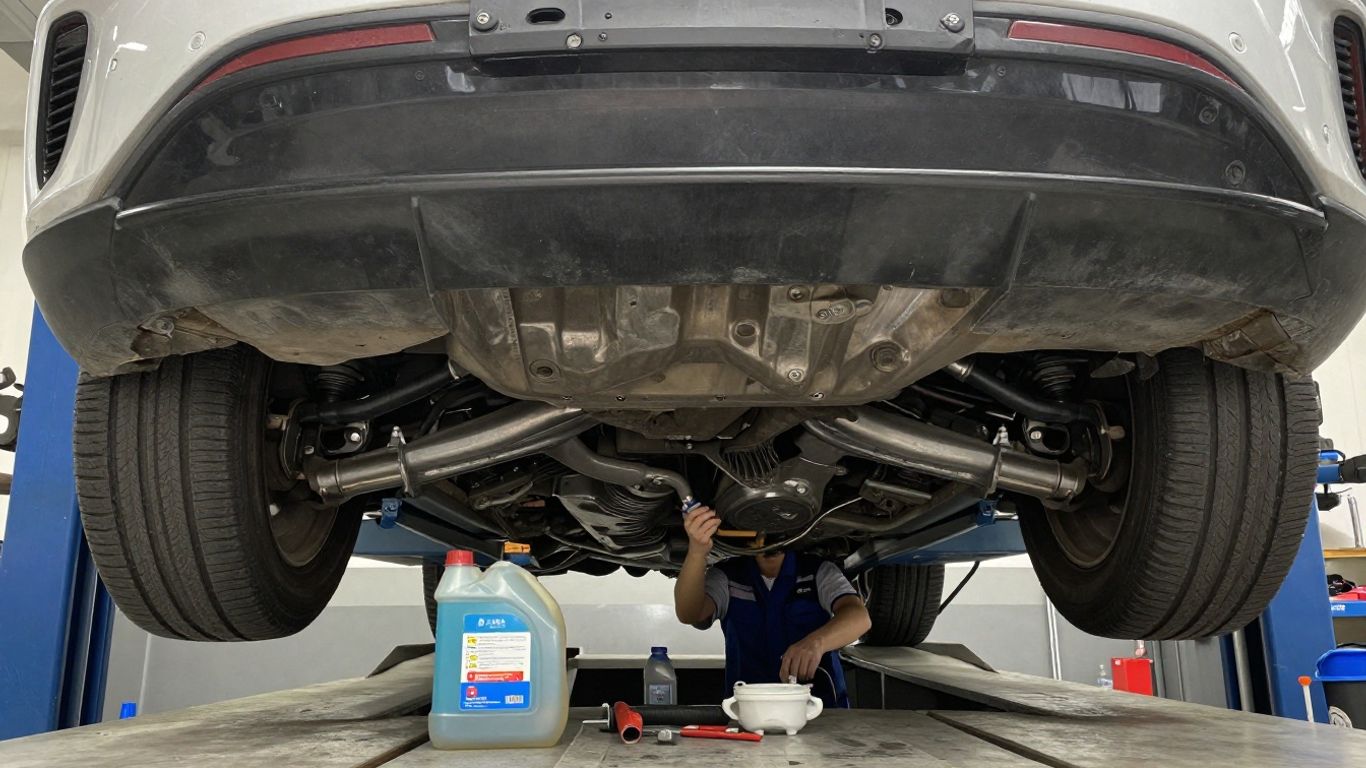
Many transmission symptoms overlap with engine, driveline, electrical, or brake problems, so they should not be self-diagnosed from one noise or one dashboard message. Still, changes in shift quality are useful early clues. Record when the symptom occurs, whether the vehicle is cold or warm, and whether acceleration, hills, or reversing make it worse.
Prompt assessment can prevent a small leak or fluid-level issue from becoming more serious. If the vehicle cannot move safely, is losing fluid rapidly, or produces severe grinding, stop driving and arrange appropriate assistance.
Delayed engagement and slipping gears
Delayed engagement occurs when the vehicle takes noticeable time to move after selecting drive or reverse. Slipping may feel like the engine speed rises without matching acceleration, or like the transmission briefly loses the selected gear. Low fluid, leaks, worn components, control problems, and other faults can produce similar sensations.
These symptoms call for diagnosis rather than an automatic flush. Continuing to drive while the transmission slips can increase heat and wear, particularly in traffic or while towing.
Rough shifting, shuddering, or unusual noises
A harsh shift, hesitation, vibration, or shudder during acceleration can arise from fluid condition, mounts, software, sensors, or internal transmission components. Whining, buzzing, clunking, and grinding also deserve attention, especially if they change with vehicle speed or gear selection.
Describe the symptom precisely to the technician. “It happens during the second-to-third shift when warm” is more useful than simply saying the vehicle feels strange.
Fluid leaks, low levels, and burning smells
Transmission fluid can leak from seals, cooler lines, pan areas, plugs, or other joints. The color varies by fluid and age, so do not rely on color alone to identify a leak. A burning odor may indicate overheated fluid or another component, and a low level can quickly affect lubrication and hydraulic operation.
Do not top up with an arbitrary fluid. The correct specification matters, and the source of the leak should be found rather than repeatedly masked.
Dashboard warning lights and diagnostic codes
A check-engine or transmission warning light may accompany shift problems, but a vehicle can also store a code without an obvious symptom. A scan provides useful direction; it does not by itself confirm that a flush is needed. The code, live data, wiring, fluid condition, and mechanical findings all need to be interpreted together.
A fluid exchange service can be scheduled through providers that advertise inspection and replacement, such as Jiffy Lube, but warning lights should still be discussed before any maintenance procedure begins.
When to schedule transmission maintenance
The right service date comes from the vehicle’s maintenance schedule plus its real operating conditions. Some newer vehicles specify long intervals or condition-based maintenance, while others provide a clear mileage or time recommendation. If the history is unknown, a technician can document the present condition and explain the least risky next step.
Waiting for a symptom is not always wise. Preventive maintenance is easier to plan than an unexpected repair, although service should still match the transmission’s design and condition.
Manufacturer-recommended service intervals
Start with the owner’s manual or official maintenance information for the exact vehicle. The schedule may distinguish between normal and severe use, and it may specify a particular fluid, filter, inspection, or procedure. If the vehicle has already had transmission work, ask whether that repair changes the next service interval.
Keep invoices and note the mileage and fluid specification. A clear record helps the next technician avoid guessing and prevents unnecessary duplicate work.
How driving conditions affect fluid life
Frequent short trips, stop-and-go traffic, high ambient temperatures, steep grades, dusty roads, and heavy loads can increase heat and stress. Towing and repeated low-speed maneuvering can be especially demanding because the transmission may spend more time managing load and heat.
An interval suitable for gentle highway driving may not suit a vehicle used daily in severe conditions. Check the manual’s definition of severe service rather than applying a blanket mileage rule.
Mileage, age, and towing considerations
Mileage is useful, but it is only one part of the picture. Fluid can age with time, seals can deteriorate while a vehicle sits, and a vehicle with modest mileage may still have worked hard in traffic or while towing. Conversely, highway miles may place a different demand on the transmission than repeated loaded starts.
Before scheduling, gather the vehicle’s mileage, age, towing history, previous service records, and any current symptoms. That information makes a shop’s recommendation more specific.
Why some vehicles need service sooner
Vehicles with known heat exposure, repeated heavy use, prior leaks, or uncertain maintenance histories may need earlier inspection. A transmission that already shifts poorly should not be treated like one receiving routine preventive care. In those cases, testing may be more valuable than immediately choosing between a change and a flush.
Fleet operators also need reliable records. Guidance on First Flexi Lease covers return processes and maintenance schedules, a useful reminder that service documentation can matter beyond the individual repair visit.
Choosing between a flush and a fluid change
There is no universal winner between a flush and a fluid change. The choice should follow the manufacturer’s procedure, the transmission’s construction, the fluid’s condition, and the presence or absence of symptoms. A reputable technician should be willing to explain why one option fits the vehicle.
Be cautious of any recommendation based solely on mileage or a sales package. Maintenance history and inspection findings provide better context.
When a fluid change is the safer option
A conventional fluid change may be a reasonable choice when the transmission is operating normally, the service history supports routine maintenance, and the manufacturer specifies a drain-and-fill procedure. It can also be considered when a technician wants to introduce fresh fluid gradually rather than perform a larger exchange.
The exact amount replaced varies by design. Ask what percentage of the system is expected to remain and whether a filter or pan inspection is part of the work.
Situations where a professional flush may help
A professional fluid exchange may be useful when the vehicle and manufacturer procedure support it and a technician has confirmed that the transmission is a suitable candidate. It can replace more of the old fluid than a simple drain-and-fill, including fluid held in parts of the system that do not drain through the pan alone.
The process should use the correct fluid and equipment, with checks before and after the exchange. AAMCO describes fluid exchange services that can include a transmission check, fluid exchange, refill, test drive, and leak check; the precise availability depends on the vehicle and location.
Risks of flushing a severely neglected transmission
A flush does not repair worn clutches, damaged gears, failed solenoids, or a transmission that has already suffered serious overheating. In a severely neglected unit, changing fluid may reveal that existing wear is more significant than previously understood, and symptoms can continue afterward. That does not necessarily mean the service caused the failure.
If the fluid is badly contaminated or the vehicle already slips, bangs, or struggles to engage, diagnosis should come first. The safest plan may involve repair, a limited service, or no fluid exchange until the condition is understood.
How transmission type affects the decision
A continuously variable transmission may require a dedicated fluid and procedure, while a dual-clutch unit can have separate requirements for different circuits. Manual transmissions and automated manuals also vary in fluid type, fill method, and service interval.
Tell the shop the exact vehicle details and ask them to verify the specification before work begins. A service that is correct for one transmission can be unsuitable for another.
What happens during a professional service
A professional visit should have a logical sequence rather than begin with equipment attached immediately. The technician should confirm the customer’s concern, identify the transmission, check service information, and explain the proposed work. You should also receive a clear distinction between included maintenance and possible repair recommendations.
The final outcome should include more than fresh fluid. It should leave you with a record of what was inspected, what was replaced, what fluid was installed, and whether any follow-up is needed.
Initial inspection and diagnostic testing
The first stage may include a visual inspection, fluid-level check, leak assessment, road test, and diagnostic scan. The technician may also review prior service records and ask when the symptoms occur. These steps help separate a maintenance need from a mechanical or electronic fault.
If testing finds a serious issue, the shop should pause and explain the result before proceeding with an optional flush. That protects you from paying for a procedure that cannot address the underlying problem.
Draining or exchanging the old fluid
For a drain-and-fill, the old fluid is removed through the designated drain point or after pan removal, then the system is refilled according to the service procedure. An exchange machine may circulate or replace fluid through the transmission’s fluid circuit. The method must be compatible with the vehicle.
The technician should account for fluid that remains in the system and dispose of used fluid properly. Ask how much new fluid the estimate includes and whether extra fluid may be needed for the final level check.
Replacing filters, gaskets, and related components
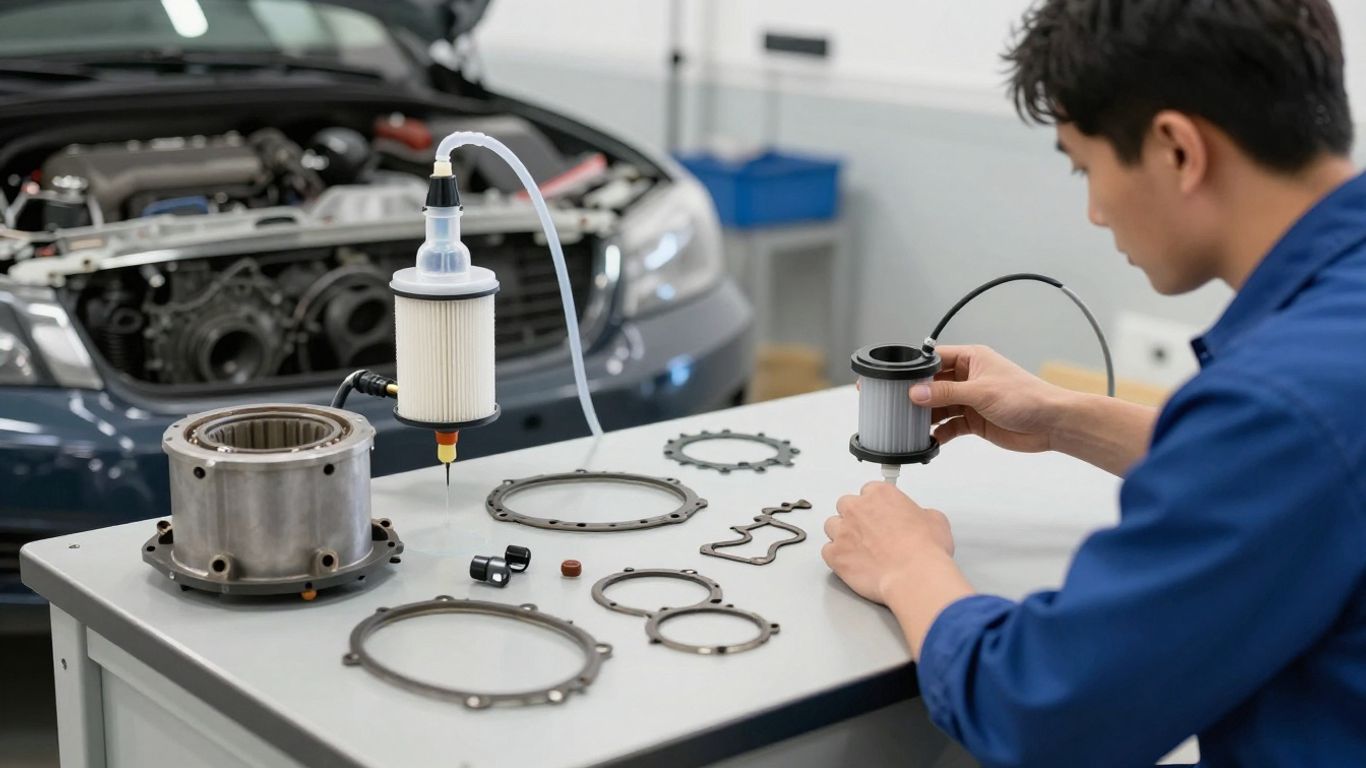
If the design allows it and the service calls for it, the technician may remove the pan, inspect deposits, replace a filter or screen, and install a new gasket or sealing material. Not every transmission has the same accessible components, so “filter service” should be defined on the estimate.
A replacement part is not automatically an upgrade. Fit, specification, and correct installation are what matter, especially where sealing surfaces and fastener procedures are concerned.
Refilling and verifying the correct fluid level
Refilling is a measured process, not simply pouring in a preset amount. Level checks may depend on fluid temperature, vehicle position, engine operation, and a specific plug or dipstick procedure. The technician should verify that the correct fluid specification was used and check for leaks.
A road test or shift verification can confirm basic operation after service. Keep the invoice, since it should record the fluid and work performed.
Transmission flush and service costs
The price of transmission maintenance varies widely because the service itself varies. A simple drain-and-fill is different from an exchange with pan removal, filter replacement, diagnostic testing, or leak repair. Vehicle access, fluid capacity, labor time, and local shop rates also affect the estimate.
Treat an unusually low quote with care if it omits inspection or uses vague language. The least expensive advertised option may not be comparable to a complete service.
Typical factors that influence the price
A quote may reflect labor, fluid volume, equipment use, filter and gasket parts, diagnostic time, and the transmission’s accessibility. Some vehicles require more labor simply because the fill point or pan is difficult to reach. Taxes and disposal charges may also be listed separately.
A written estimate should say whether the price covers a drain-and-fill, fluid exchange, filter work, road test, and leak inspection. That makes competing estimates easier to compare.
Vehicle-specific fluid and parts requirements
Specialty fluids can cost more than broadly used automatic-transmission fluids, and some transmissions require several quarts or liters for a proper exchange. Filters, seals, pan gaskets, and one-time-use fasteners may also be vehicle-specific. Substituting an unapproved fluid to lower the price can create a larger problem.
Before approving work, confirm the fluid specification and ask whether parts are included. This is especially important for CVTs and other transmissions with narrow fluid requirements.
Additional costs for leaks or repairs
A technician may find a leaking line, damaged pan, worn seal, electrical fault, or internal problem during the inspection. Those findings are separate from routine fluid service and can add diagnostic, parts, and labor charges. A fluid change will not correct a leak unless the leaking component is repaired.
Ask the shop to separate approved maintenance from recommended repairs. You can then decide whether to complete everything at once or address urgent issues first.
How to compare quotes from repair shops
Compare the procedure, not only the total. The following questions help identify whether two estimates describe the same work:
- Which fluid specification and quantity are included?
- Is the service a drain-and-fill or a larger exchange?
- Are the filter, gasket, inspection, and leak check included?
- Will the technician perform a road test and document the result?
Once the scope is clear, price differences become easier to understand. For unrelated website administration, WordPress help is a separate kind of support entirely; do not confuse general online service pages with automotive maintenance advice.
How to protect your transmission after service
Fresh fluid helps only when the underlying system is correctly filled and operating properly. Your habits afterward matter as well: notice changes, respond to leaks, and avoid asking a hot or overloaded transmission to do more than it was designed to do. Keep the service record with the rest of the vehicle paperwork.
A short follow-up check can catch problems early. If shifting changes immediately after service, contact the shop and describe exactly what changed.
Using the correct transmission fluid
Use only the fluid specification approved for the transmission, even if another product appears similar. The fluid affects lubrication, hydraulic pressure, clutch friction, and temperature behavior. When topping up, verify the specification rather than relying on color or a generic label.
If you are unsure, check the owner’s manual or ask a qualified technician. Mixing products without confirming compatibility can complicate diagnosis later.
Checking for leaks and abnormal shifting
Park on a clean surface and look for fresh spots after service, without crawling under an unsupported vehicle. Pay attention to delayed engagement, flare between gears, harsh shifts, new vibration, or unusual sounds. A small leak can become a low-fluid condition before a warning light appears.
Contact the servicing shop promptly if a new symptom appears. A quick recheck is preferable to continuing to drive and hoping it disappears.
Maintaining proper fluid levels and temperatures
Follow the vehicle’s prescribed level-check method, since checking at the wrong temperature or with the wrong engine state can produce a false reading. Cooling-system condition also matters because many transmissions exchange heat with the radiator or a dedicated cooler. Overheating can shorten fluid life and worsen shift quality.
Do not add fluid simply because a dipstick reading seems unfamiliar. Confirm the procedure for that vehicle first.
Adapting maintenance for severe driving conditions
If you tow, carry heavy loads, drive in extreme heat, climb steep grades, or spend most of your time in stop-and-go traffic, review the severe-service schedule. Use the recommended cooling and towing practices, and mention those conditions whenever you book service. A service plan should reflect how the vehicle is actually used.
For businesses automating routine client communication, client communication automation is a different maintenance concern, but the same practical principle applies: document the process and review it when conditions change. Vehicle service records deserve that same consistency. Site-use questions belong with the Closr2God Terms, not with a transmission diagnosis.
Conclusion
Transmission flush and service should be chosen from evidence: the manufacturer’s procedure, the vehicle’s history, current symptoms, and a careful inspection. A routine fluid change may be enough for a healthy transmission, while a neglected or symptomatic unit may need diagnosis before any fluid exchange. Clear questions and a written estimate help you pay for the work your vehicle actually needs.
Frequently Asked Questions
Is a transmission flush the same as a fluid change?
No. A fluid change commonly replaces part of the fluid, while a flush or exchange is designed to replace a larger share. The exact method varies by vehicle and shop.
How often should transmission fluid be changed?
Follow the maintenance schedule for your specific vehicle. Driving in heavy traffic, extreme temperatures, mountainous areas, or while towing may require more frequent service.
Can a transmission flush fix slipping gears?
Usually not by itself. Slipping can result from low fluid, leaks, worn internal parts, or electrical and hydraulic faults, so diagnosis should come before choosing a flush.
What does burnt transmission fluid mean?
A burnt smell can point to excessive heat or degraded fluid, but it does not identify the exact fault. The transmission should be inspected, especially if shifting has also changed.
Should the filter be replaced during transmission service?
That depends on the transmission design and the manufacturer’s procedure. Some units have replaceable filters, while others use screens or different service arrangements.
Can I check transmission fluid myself?
Sometimes, but the correct procedure may require a specific temperature, engine state, vehicle position, or fill port. Use the owner’s manual rather than guessing from a generic method.
Is it safe to drive after noticing a transmission leak?
A small seep still needs attention, and a rapid leak or low-fluid condition can cause serious damage. If shifting is affected or fluid is draining quickly, stop driving and arrange an inspection.