

Key Takeaways
A gearbox problem rarely appears without warning. Paying attention to shifting behavior, fluid condition, and unusual sounds can make Toyota Hilux gearbox repair simpler and less expensive.
- Manual and automatic transmissions fail in different ways and need different tests.
- Grinding, slipping, delayed engagement, and leaks should not be ignored.
- A diagnosis should include the clutch, linkage, mounts, driveshaft, and gearbox itself.
- Repair, rebuilding, or replacement depends on damage, vehicle specification, and total cost.
- Correct fluid, sensible towing, and timely servicing can help prevent repeat failures.
Understanding Toyota Hilux gearbox problems
A Hilux gearbox works under demanding conditions, particularly when the truck is used for towing, off-road travel, or regular heavy loads. Problems may begin with a small change in shift quality before developing into internal damage. The right repair depends on whether the vehicle has a manual or automatic transmission, its drivetrain, and the source of the fault. A careful inspection is more useful than replacing parts based on one symptom alone.
Manual and automatic gearbox differences
A manual gearbox relies on the clutch, shift linkage, synchronizers, gears, bearings, and the driver’s input to change ratios. An automatic transmission uses hydraulic pressure, a torque converter, valve body, solenoids, clutch packs, and electronic controls. That difference changes both the symptoms and the diagnostic process. A stiff gear lever may point toward a clutch or linkage issue in a manual, while delayed engagement in an automatic may call for fluid, pressure, or control checks.
Common causes of gearbox failure
Wear can develop in bearings, gears, synchronizers, seals, bushings, or hydraulic components. Contaminated or incorrect fluid can accelerate internal wear, while a damaged mount or driveshaft can create vibration that is mistaken for a gearbox fault. Heat is another concern, especially when a truck works hard for long periods. General background on Toyota Hilux gearbox faults can help owners recognize the range of issues that may affect different automatic transmissions, but a vehicle-specific inspection is still needed.
How mileage, towing, and driving conditions affect wear
Mileage gives useful context, but it does not tell the whole story. A lower-mileage truck that frequently tows, crawls off-road, or carries heavy loads can experience more stress than a higher-mileage vehicle used gently on the highway. Repeated short trips, deep water, dust, and neglected fluid changes can also affect seals and internal surfaces. Driving style matters too: harsh clutch engagement and holding a vehicle on an incline with excessive throttle add avoidable heat and load.
Why early diagnosis can prevent major damage
Early symptoms often involve adjustment, fluid, or a single worn component rather than complete gearbox failure. Continuing to drive through grinding or slipping can spread metal debris through the unit and damage parts that were initially serviceable. Early diagnosis limits uncertainty and gives the owner more repair choices. It also helps separate a gearbox fault from a clutch, mount, or driveshaft problem before expensive work begins.
Recognizing the signs of gearbox trouble
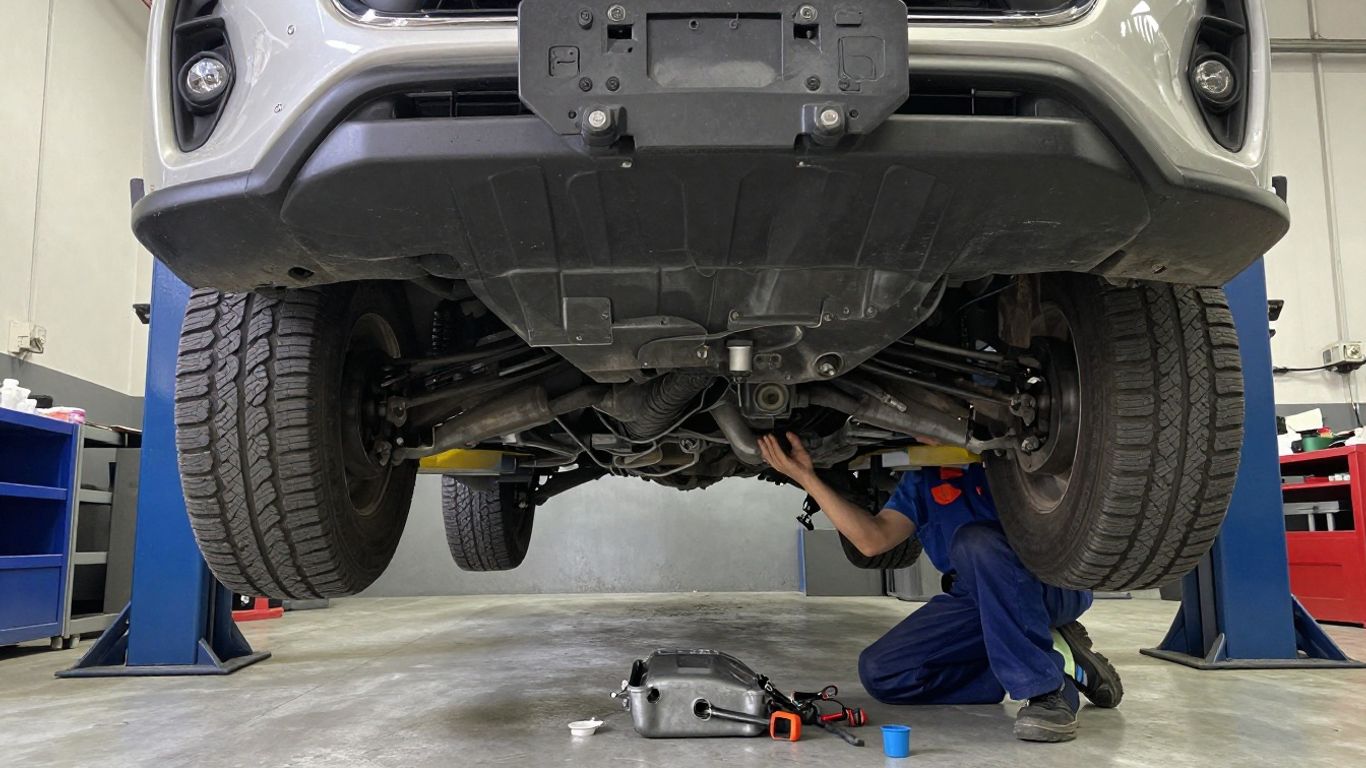
The first signs of gearbox trouble are often changes in how the truck feels rather than a dramatic breakdown. Note when the symptom occurs: during a cold start, under acceleration, while turning, or after the vehicle has warmed up. A useful description helps a technician reproduce the fault. Do not assume every noise or hard shift comes from inside the gearbox.
Difficulty selecting or staying in gear
A manual transmission that resists a particular gear may have worn synchronizers, a clutch that is not releasing fully, or a problem with the shift mechanism. If the lever jumps out under acceleration or deceleration, worn engagement surfaces or a damaged mount may be involved. Automatic vehicles may show a different pattern, such as refusing to select drive or reverse. The timing of the problem and whether it changes with engine speed are useful clues.
Grinding, whining, clunking, and other unusual noises
Grinding during a shift commonly suggests that rotating components are not being matched correctly, although clutch release problems can create a similar sound. A constant whine may relate to bearings, gears, fluid level, or driveline load. Clunks can come from mounts, universal joints, or backlash elsewhere in the drivetrain. Sound location, road speed, selected gear, and throttle position should all be recorded before drawing a conclusion.
Slipping, delayed engagement, and loss of drive
Slipping occurs when engine speed rises without a matching increase in road speed. In a manual vehicle, the clutch may be responsible; in an automatic, worn clutch packs, low fluid pressure, or a torque converter fault may be involved. Delayed engagement after selecting drive or reverse deserves prompt attention, particularly if it worsens when warm. A complete loss of drive means the vehicle should generally be recovered rather than driven to a repair shop.
Gearbox fluid leaks, burning smells, and overheating
Fluid on the ground does not identify the leaking component by itself, since seals, housings, lines, and nearby engine components can all leave similar marks. A burning smell may indicate overheated fluid or clutch material. Rising transmission temperature, harsh shifts, or a change in fluid color can point to excessive heat or contamination. Avoid topping up with an unverified fluid, because the wrong specification can create new shifting problems.
Diagnosing a Toyota Hilux gearbox fault
Diagnosis should move from simple external checks to more involved testing. The aim is to confirm the complaint, identify the system causing it, and estimate the extent of damage. A visual inspection may reveal a loose mount or leak before the gearbox needs to be removed. Good diagnostic work explains not only what failed, but also why the failure occurred.
Inspecting the gearbox fluid and external components
A technician can check fluid level, condition, smell, and signs of metallic debris according to the vehicle’s service procedure. The housing, drain plug, breather, cooler lines, seals, and surrounding areas should also be inspected for leaks. Fluid condition is evidence, not a complete diagnosis, so clean fluid does not rule out mechanical wear. External damage or a blocked breather may also explain a leak that appears to be an internal failure.
Checking the clutch, linkage, mounts, and driveshaft
Manual shifting complaints should begin with the clutch pedal, hydraulic or cable operation, release mechanism, and linkage. The gearbox mounts and driveshaft should be checked for movement, worn joints, looseness, and impact damage. These components can cause vibration, clunks, or poor gear engagement without requiring a gearbox rebuild. Checking them first is both sensible and cost-effective.
Using a road test to identify symptoms
A controlled road test can show whether the fault follows engine speed, road speed, gear selection, temperature, or throttle position. The technician may compare acceleration, overrun, cornering, takeoff, and shifting behavior while listening for changes. The test should be performed safely and stopped if the vehicle loses drive or shows severe slipping. Written notes from the driver make the test more productive, especially when the fault is intermittent.
When electronic diagnostic scanning is required
Automatic transmissions may store fault codes when a solenoid, sensor, wiring circuit, or control strategy is not operating as expected. Scanning can reveal useful information, but a code does not automatically identify the failed part. Live data, wiring checks, fluid-pressure tests, and mechanical inspection may still be necessary. Electronic diagnosis is most valuable when it is combined with the symptoms observed on the road.
Toyota Hilux manual gearbox repair
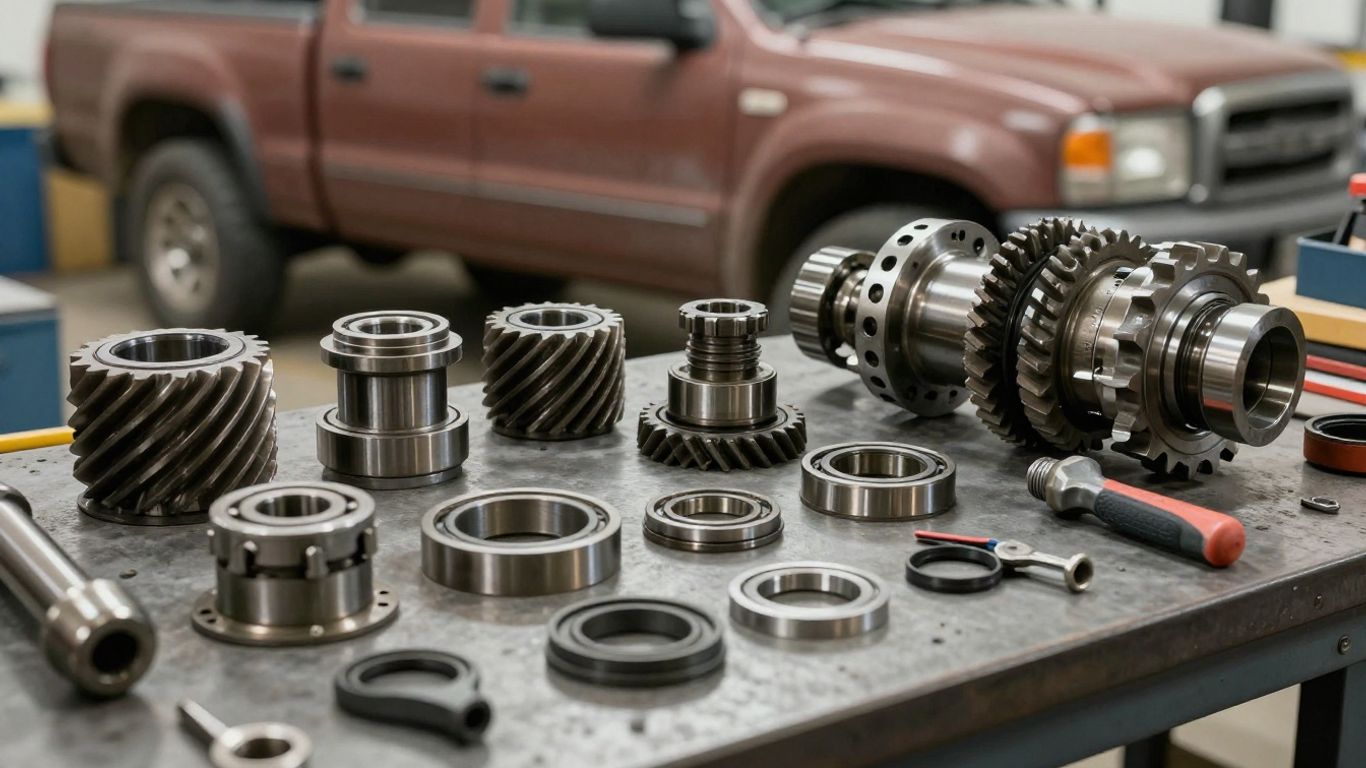
Manual gearbox repair ranges from adjustment and clutch work to a full strip-down. The gearbox must be removed and opened before internal wear can be measured accurately. A repair estimate should distinguish between parts that are visibly damaged and parts that are being replaced as preventative reconditioning. That distinction makes the final cost easier to understand.
Replacing worn synchronizers and shift components
Synchronizers help match shaft and gear speeds during a shift. When they wear, the affected gear may crunch or resist selection, often more noticeably when the oil is cold or the shift is made quickly. Shift forks, hubs, sleeves, detents, and linkage parts should be inspected at the same time. Replacing only the most obvious component may leave the underlying engagement problem unresolved.
Repairing damaged bearings, gears, and shafts
A noisy manual gearbox may require inspection of bearings, gear teeth, shafts, spacers, and seals. Pitting, scoring, discoloration, or excessive play can indicate that a part has been operating without adequate lubrication or under excessive load. For some older applications, a Terrain Tamer bearing kit is listed for selected Hilux LN, RN, and YN series gearboxes, but compatibility must be confirmed by exact model and application. Parts should never be selected from the vehicle name alone.
Diagnosing clutch-related shifting problems
A clutch that drags can make several gears difficult to select even when the gearbox itself is sound. Causes may include hydraulic travel, a warped clutch disc, pressure-plate damage, pilot bearing wear, or incorrect adjustment. A clutch that slips under load creates a different pattern, with engine speed rising without equivalent vehicle acceleration. Testing clutch operation before removing the gearbox can prevent an unnecessary internal repair.
Deciding when a manual gearbox rebuild is worthwhile
A rebuild is often considered when the housing and major shafts are serviceable but bearings, synchronizers, seals, or selected gears need replacement. The decision should account for parts availability, labor, vehicle value, and the expected use of the truck. A proper rebuild includes cleaning, measuring, replacing damaged components, and setting clearances to specification. If the casing or several major assemblies are badly damaged, replacement may be more practical.
Toyota Hilux automatic transmission repair
Automatic transmission repair requires attention to hydraulic, mechanical, thermal, and electronic systems together. A harsh shift does not necessarily mean the entire unit has failed. Fluid pressure, electrical signals, valve movement, and internal clutch operation can produce similar symptoms. Testing in the right order helps avoid replacing a complete transmission when a smaller repair is appropriate.
Identifying valve body and solenoid problems
Solenoids control hydraulic functions, while the valve body directs fluid through passages and valves. Contamination, sticking valves, electrical faults, or wear in the valve body can cause delayed, harsh, or inconsistent shifts. A scan code may help identify a circuit, but pressure testing and inspection are often needed to confirm the cause. Cleaning or replacing one component is only sensible when the rest of the unit is shown to be in usable condition.
Addressing torque converter and shift faults
Torque converter problems may appear as shuddering, slipping, vibration, or poor takeoff. Shift faults can also involve worn clutch packs, damaged drums, seals, or control issues. The symptom should be compared across gears and operating temperatures rather than treated as a generic “automatic problem.” If internal debris is present, a converter replacement alone may not solve the wider failure.
Checking fluid pressure and transmission temperature
Pressure readings can show whether the pump, regulator, valve body, and internal circuits are working within the expected range. Temperature matters because overheated fluid loses protective qualities and can accelerate wear. A technician may compare readings when cold, warm, stationary, and under load. This evidence is more reliable than guessing from shift feel alone.
When an automatic transmission rebuild is necessary
A rebuild becomes more likely when internal clutches, bands, drums, bearings, seals, or hard parts show substantial wear. The unit should be disassembled and inspected so the estimate reflects actual damage. If the failure has spread metal through the fluid circuit, related components may also need cleaning or replacement. A written report should explain which parts are being renewed and what warranty applies to the completed work.
Choosing the right gearbox repair solution
There is no single best repair option for every Hilux. The vehicle’s age, specification, condition, use, and available parts all affect the decision. A low initial price can become expensive if the replacement unit is incompatible or carries no meaningful warranty. Compare solutions by total installed cost and expected reliability, not by the part price alone.
Repairing the original gearbox versus replacing it
Repairing the original unit preserves the known vehicle fit and allows damaged parts to be examined directly. Replacement can reduce downtime when a suitable tested unit is readily available. However, a used gearbox may have unknown wear, while a rebuild may reveal additional damage after disassembly. Ask for the diagnosis, included work, warranty, and treatment of unexpected findings before authorizing either path.
Comparing rebuilt, used, and remanufactured units
A used unit is usually an as-removed component with variable history. A rebuilt unit has been disassembled and had selected worn parts replaced, while a remanufactured unit generally follows a more defined inspection and renewal process, depending on the supplier. These terms are not always used consistently, so request a written description. Warranty length, exclusions, testing, and return arrangements are as important as the label.
Matching parts to the Hilux model, engine, and drivetrain
Transmission compatibility can depend on model year, engine, two-wheel-drive or four-wheel-drive configuration, transmission code, transfer case, sensors, and calibration. Confirm the identification plate or transmission code before ordering parts. For selected later four-wheel-drive automatic applications, a repair kit listing may specify particular GUN126 or GUN125 vehicles, but that does not make it suitable for every Hilux. Exact matching prevents installation delays and incorrect gearing.
Questions to ask a gearbox repair specialist
A specialist should be able to explain the evidence behind the diagnosis in plain language. Before work begins, ask these practical questions:
- What tests confirmed the gearbox is the source of the fault?
- Which parts will be inspected, replaced, or reused?
- Is the quoted price fixed, and how are additional findings handled?
- What fluid, warranty, testing, and break-in guidance are included?
The answers help separate a carefully planned repair from a guess based on one symptom. They also create a clear record if the problem returns.
Toyota Hilux gearbox repair costs and maintenance
Toyota Hilux gearbox repair costs vary widely because a fluid service and a complete rebuild are entirely different jobs. Labor time, access, damage, parts availability, and vehicle specification all affect the estimate. A diagnosis may cost less than a repair but can prevent unnecessary replacement. The most useful quote describes the work, assumptions, and warranty rather than offering only a single unexplained number.
Main factors that influence repair pricing
The largest pricing factors are the type of transmission, the extent of internal damage, removal and installation time, and whether parts must be sourced or reconditioned. Towing equipment, four-wheel-drive components, corrosion, and prior modifications can add labor. A simple external leak may be relatively straightforward, while a damaged gearset can require removal and rebuilding. Prices should be compared only when the scope of work is comparable.
Parts, labor, inspection, and reconditioning costs
An estimate may include an inspection, disassembly, cleaning, bearings, seals, synchronizers, clutch components, fluid, machining, reassembly, and road testing. Some businesses quote diagnosis separately, while others include it if the repair proceeds. Reconditioning charges can change after the casing and shafts are measured. Ask whether taxes, freight, calibration, and post-repair adjustments are included.
Service intervals and correct gearbox fluid
Follow the service schedule for the exact model and operating conditions rather than relying on a universal interval. Towing, dust, water crossings, and severe heat may justify more frequent inspection. Use only the fluid specification approved for that transmission and check the level using the correct temperature and procedure. A fluid change cannot reverse worn parts, but it can help maintain a healthy unit.
Driving habits that help prevent repeat failures
Good habits reduce heat and shock loads without requiring a change in how the truck is used. Avoid forcing a manual shift, resting a hand on the lever, or slipping the clutch unnecessarily. With an automatic, allow engagement before applying heavy throttle and investigate any flare or delay promptly. When towing, use the appropriate range and keep an eye on temperature, because repeated overheating can shorten component life.
A short repair video can make the terminology easier to follow, but it cannot replace model-specific testing. Procedures, fluid levels, and torque settings should come from the correct service information for the vehicle.
Conclusion
Toyota Hilux gearbox repair is most manageable when symptoms are recorded early and the diagnosis covers the complete driveline rather than the gearbox alone. Whether the answer is adjustment, clutch work, internal repair, rebuilding, or replacement, a clear explanation of evidence and cost gives the owner a sound basis for the decision.
Frequently Asked Questions
What is the first sign of a gearbox problem?
A change in shift quality, unusual noise, slipping, delayed engagement, or a new leak is often an early warning. Note when it happens and arrange an inspection before the symptom becomes severe.
Can a clutch problem feel like a gearbox failure?
Yes. A clutch that drags can make gears difficult to select, while a slipping clutch can mimic transmission slip. Clutch operation should be checked before assuming internal gearbox damage.
Is a noisy gearbox always beyond repair?
No. Noise may come from a bearing, low fluid, a mount, or another driveline component. Testing and disassembly are needed to determine whether repair is practical.
How long does a gearbox rebuild take?
Time depends on vehicle access, parts availability, damage, machining, and testing. A specialist can give a more useful estimate after inspection and confirmation of the transmission specification.
Should I keep driving with a slipping transmission?
Continued driving can increase heat and spread damage. If slipping is severe, engagement is delayed, or drive is lost, stop using the vehicle and arrange recovery.
Is a used gearbox a safe replacement?
It can be suitable when the unit is correctly matched, tested, and supported by a meaningful warranty. Its history and condition should be confirmed before installation.
How can gearbox problems be prevented?
Use the correct fluid, follow the service schedule, avoid unnecessary clutch or throttle abuse, monitor leaks and temperature, and investigate new symptoms promptly.