
Key Takeaways
A manual gearbox rebuild is not always the first or only answer to poor shifting. A careful diagnosis can separate clutch, linkage, oil, and internal gearbox faults before repair work begins.
- Grinding, whining, gear slip, and difficulty selecting gears can indicate internal wear.
- Clutch and linkage faults may feel like gearbox problems but require different repairs.
- A rebuild normally involves disassembly, measurement, replacement of worn parts, and testing.
- Brisbane pricing depends on parts, labor, vehicle access, and whether a replacement unit is available.
- Correct oil, smooth shifting habits, and early attention to new symptoms help protect the rebuilt unit.
When a manual gearbox needs rebuilding
A manual gearbox can make unusual noises or become difficult to operate for several reasons. Some faults are minor and external, while others involve gears, synchronizers, bearings, shafts, or seals inside the casing. The right decision starts with observing exactly when the symptom occurs rather than assuming every shifting problem requires a rebuild. This manual gearbox repair guide can also help clarify the difference between clutch, gearbox, and transmission symptoms.
Grinding, whining, and jumping out of gear
Grinding during a shift usually means the rotating components are not being matched smoothly before the gear engages. Worn synchronizers are one possible cause, although clutch drag, incorrect oil, or a shifter problem can create similar sensations. A whine that changes with road speed may point toward bearing or gear wear, particularly if it changes when the clutch pedal is pressed. If the transmission jumps out of gear under acceleration or deceleration, worn engagement components, selector parts, or internal movement deserve attention.
Do not keep forcing a noisy gearbox through each shift. Continued driving can turn a worn synchronizer or bearing into damage affecting gears and shafts, increasing the eventual repair bill. Early diagnosis can limit damage when the original fault is still confined to one area.
Difficulty selecting gears or engaging reverse
Resistance when selecting first or reverse can come from a clutch that is not releasing fully. Reverse often highlights the problem because it may not have the same synchronizing action as forward gears. If the engine is running and the car creeps with the clutch fully depressed, the clutch or its hydraulic system should be checked before the gearbox is removed.
A gear that refuses to engage only when the vehicle is moving suggests a different line of investigation. The workshop may compare stationary and moving shifts, assess clutch travel, and inspect the shift mechanism. These details help distinguish an external control fault from internal gearbox wear.
Clutch problems versus internal gearbox faults
The clutch sits between the engine and gearbox, so its symptoms are easily mistaken for transmission trouble. Slipping under load, a high engagement point, a burning smell, or difficulty disengaging may indicate a clutch assembly or hydraulic fault. Internal gearbox problems more often produce gear-specific grinding, persistent whine, vibration, or a tendency to disengage while driving.
The distinction matters because replacing a gearbox will not cure a worn clutch, and replacing a clutch will not repair damaged synchronizers. A proper inspection should consider the complete driveline rather than focusing on the loudest symptom. For local context, a clutch and gearbox inspection is sensible when crunching, grinding, or slipping appears during normal shifts.
How driving conditions can accelerate wear
Gearboxes wear gradually, but the rate can increase with heavy loads, towing, aggressive launches, and frequent stop-start driving. Resting a hand on the shifter can add pressure to selector components, while holding a vehicle on a hill with the clutch partially engaged creates heat and friction. Repeatedly shifting without fully depressing the clutch can also stress synchronizers and engagement teeth.
Dust, water crossings, leaks, and neglected oil add another layer of risk, especially for vehicles used off-road or for work. A vehicle that spends much of its time carrying loads may need closer attention than one used for light commuting. The symptoms may appear intermittent at first, but a pattern that is becoming more frequent is worth recording and reporting.
How Brisbane workshops diagnose gearbox problems
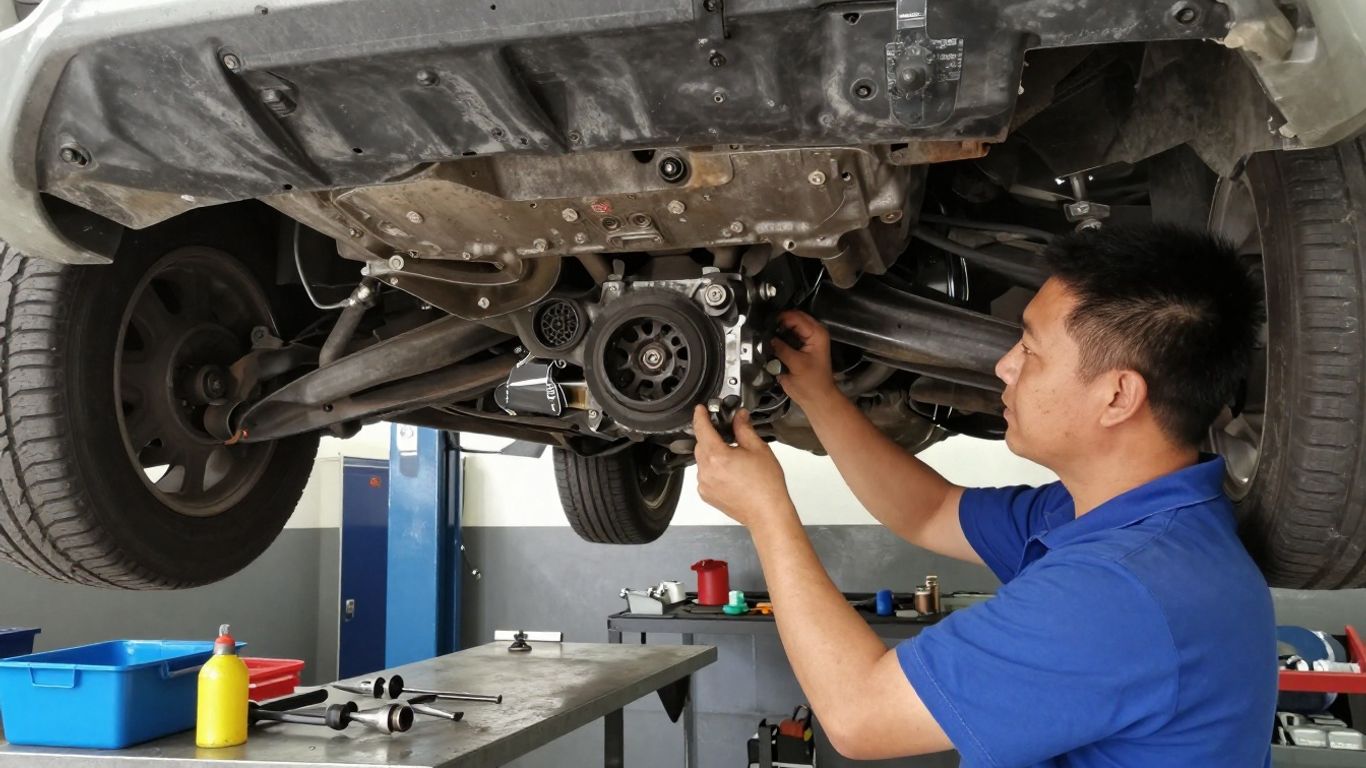
A reliable diagnosis combines the driver’s description with physical checks and a road test. Brisbane conditions can mean heat, traffic, hills, and long commutes, so a workshop should ask when the symptom occurs and whether the vehicle is hot, cold, loaded, or under acceleration. The goal is to identify the source before recommending removal or rebuilding. Diagnosis should also account for the vehicle’s make, model, mileage, and service history.
Road testing and symptom analysis
A technician may drive the vehicle through each gear, noting when noise, resistance, vibration, or disengagement occurs. They may compare acceleration, overrun, coasting, and clutch operation because a sound that appears only under load can point to a different component than one heard in neutral. The timing of a noise is often more useful than its volume.
The driver’s notes are valuable here. Write down the gear involved, vehicle speed, engine temperature, road conditions, and whether pressing the clutch changes the symptom. A clear history can prevent a vague complaint such as “the gearbox is bad” from narrowing the investigation too early.
Inspecting the clutch, shifter, and linkage
Before opening the gearbox, the workshop can inspect clutch pedal travel, hydraulic operation, cable adjustment, mounts, bushings, and the shifter or linkage. Loose linkage may make several gears feel imprecise, while a failed mount can allow the drivetrain to move and affect shift quality. Clutch release problems can make reverse and first gear particularly difficult.
These checks are relatively important because they may identify a repair that does not require internal gearbox work. Where the vehicle uses a hydraulic clutch, leaks or air in the system can alter pedal feel and release. The inspection should also include obvious oil leaks and damage around the casing.
Checking gearbox oil for signs of damage
Gearbox oil provides useful clues about internal condition, although clean-looking oil does not prove that every component is healthy. The technician may check the level, specification, smell, and presence of metallic particles. A drain plug magnet can collect fine debris, while larger fragments or glitter-like material may suggest more serious wear.
The findings need to be interpreted alongside the symptoms. A small amount of paste on a magnetic plug may differ from chips, flakes, or brass-colored material. A simple comparison can help explain why oil inspection is useful but cannot replace a full internal assessment:
| Oil or inspection finding | Possible indication | Usual next step |
|---|---|---|
| Low level with an external leak | Seal, gasket, or casing leak | Locate the leak and correct the level |
| Burnt smell or very dark oil | Overheating, age, or contamination | Confirm oil specification and investigate cause |
| Fine metallic paste | Normal wear or developing component wear | Compare with noise and shift symptoms |
| Larger metal fragments | Gear, bearing, or synchronizer damage | Plan a closer internal inspection |
| Brass-colored debris | Possible synchronizer wear | Assess affected gears and engagement parts |
The table is a guide rather than a diagnosis. Oil evidence becomes much more useful when matched with the road-test pattern and the condition of the clutch and linkage.
When internal inspection is necessary
Internal inspection becomes more likely when symptoms persist after external checks, when oil contains significant debris, or when the gearbox has a consistent gear-specific fault. Removal may also be justified if the unit is leaking heavily, making a deep bearing noise, or repeatedly jumping out of gear. A technician should explain what evidence supports the recommendation.
A strip-down allows the parts to be measured and inspected rather than guessed at from outside the casing. For heavy vehicles, specialist services such as truck gearbox repairs involve different components and loads, so the vehicle’s use should be part of the conversation. The same principle applies to passenger cars: diagnosis must match the actual driveline.
What happens during a manual gearbox rebuild
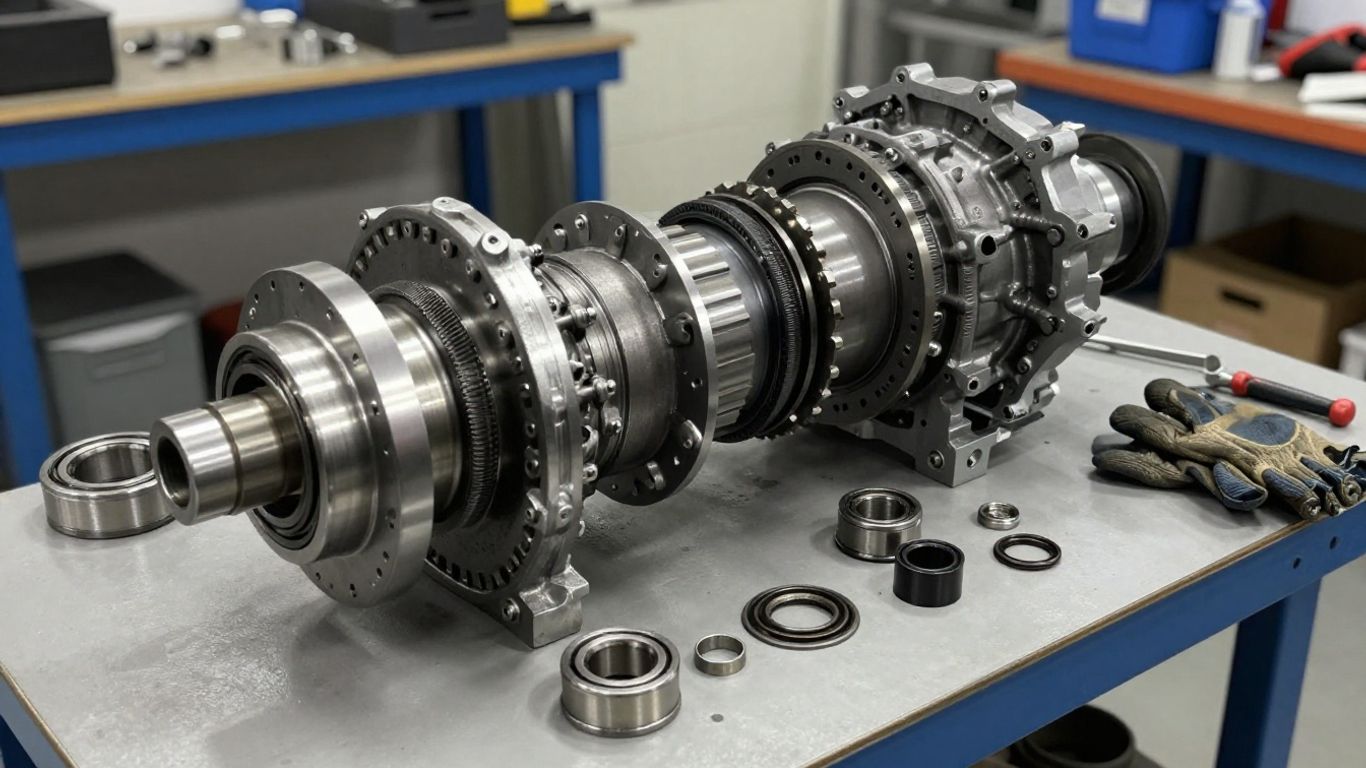
A rebuild is a controlled process, not simply a fluid change or the replacement of one visible part. The gearbox is removed, opened, cleaned, measured, and assessed component by component. The final scope can change once hidden wear is visible, which is why a preliminary quote may carry conditions. Good communication at each stage helps the owner understand what is being replaced and why.
Removing and disassembling the gearbox
The gearbox must usually be separated from the engine and supported safely while associated components are disconnected. Depending on the vehicle, this may involve removing the driveshaft or axles, exhaust sections, crossmembers, starter components, and shifter hardware. Once on the bench, the casing is opened in a clean, organized workspace.
Disassembly should be methodical. Parts are kept in order, mating surfaces are protected, and the technician looks for signs of heat, contamination, fretting, cracks, and previous repairs. Cleaning is more than cosmetic; it makes wear patterns easier to see and reduces the chance of debris entering the rebuilt assembly.
Inspecting gears, synchros, bearings, and shafts
Each gear is checked for chipped teeth, pitting, scoring, and abnormal contact patterns. Synchronizers are examined for worn friction surfaces and damaged teeth, while bearings are assessed for roughness, play, discoloration, and noise. Shafts, keys, hubs, selectors, and cases also need inspection because a new gear will not solve a bent shaft or damaged engagement mechanism.
Measurements are compared with the vehicle manufacturer’s specifications where available. Clearances and end float matter because a gearbox can sound acceptable on the bench yet fail early if parts are assembled too tightly or too loosely. This stage is where the difference between a basic repair and a thorough rebuild becomes apparent.
Replacing worn or damaged components
The replacement list depends on the inspection, the parts available, and the intended use of the vehicle. Bearings, seals, gaskets, synchronizers, gears, selector components, and damaged shafts may all be considered, but not every unit needs every part. Reusing a serviceable component can be reasonable when it meets the required measurements and condition.
Parts quality and compatibility should be discussed before work proceeds. A vehicle used for towing or off-road work may place different demands on the rebuilt unit than a small commuter car. If the vehicle is a specialized 4WD or performance application, a driveline specialist may be relevant to the type of gearbox and use involved.
Reassembling and testing the rebuilt unit
During reassembly, the technician uses suitable lubricants, correct torque settings, new seals where required, and careful adjustment of end float and selector operation. The casing surfaces and fasteners must be prepared properly so that leaks do not undermine the repair. The clutch, mounts, linkage, and oil level should also be checked during installation.
Testing may include checking gear selection on the bench and carrying out a road test after installation. The technician should listen for abnormal noise, confirm that each gear engages, and check for leaks. After handover, the owner should know whether a bedding-in period, follow-up inspection, or oil check is recommended.
Manual gearbox rebuild costs in Brisbane
The price of a manual gearbox rebuild in Brisbane varies because the job is shaped by the vehicle and the damage found inside it. Removal and installation can be a substantial part of the bill, especially where access is difficult. A quote made before disassembly may therefore be an estimate rather than a fixed final figure. Ask what is included and what would trigger approval for additional work.
Parts that have the biggest impact on price
A single worn synchronizer may cost far less to address than multiple damaged gears, shafts, and bearings. Parts availability also matters: common components may be easy to source, while older or unusual gearboxes can require more searching or specialized supply. Seals, gaskets, bearings, and oil add smaller individual amounts that still contribute to the total.
The condition of the casing and differential, if incorporated into the unit, can also alter the scope. A clean casing with limited internal wear is a different job from one contaminated by broken teeth. The final parts list should be tied to the inspection findings rather than presented as a generic package.
Labour, removal, and installation charges
Labor includes more than the time spent opening the gearbox. It can cover vehicle diagnosis, removal, cleaning, measuring, rebuilding, refitting, adjustment, road testing, and any follow-up checks. Some vehicles require more disassembly around the driveline, and rust or seized fasteners can add time.
Ask whether the quoted labor includes clutch inspection while the gearbox is out. It may be practical to address a clearly worn clutch at that stage, but the decision should remain separate and transparent. A workshop should also explain whether oil, consumables, machining, and disposal charges are included.
Rebuild versus replacement gearbox costs
A replacement gearbox can reduce the vehicle’s downtime, but its history and condition need to be understood. A used unit may have unknown wear, while a remanufactured or exchange unit may carry different coverage and availability. Rebuilding the original can preserve known compatibility, but it may take longer if parts must be sourced.
There is no universal winner between the options. Compare the total installed price, expected condition, warranty, turnaround time, and suitability for the vehicle’s use. For European automatic transmissions, specialist pricing and service intervals are a separate subject, so European transmission servicing should not be used as a direct benchmark for a manual gearbox rebuild.
Questions to ask for an accurate quote
A useful quote explains the assumptions behind the number. Before approving work, ask for the diagnostic findings and the likely repair range, then clarify what happens if additional damage is found. These questions keep the conversation practical:
- Is the price for diagnosis, removal, rebuilding, and installation, or only one stage?
- Which parts are expected to be replaced, and which are being inspected for reuse?
- Is the clutch being checked while the gearbox is removed?
- What oil, seals, machining, and consumables are included?
- What warranty applies, and what conditions or exclusions should I understand?
The answers make quotes easier to compare than a single headline price. They also reveal whether the workshop has thought through the complete repair rather than only the internal parts.
How to choose a gearbox specialist
The right workshop should be comfortable explaining both the fault and the proposed remedy. Technical confidence matters, but so does a process that gives the owner a clear point of approval before costs expand. A specialist may not recommend a rebuild if inspection shows that an external repair is enough. Look for evidence, clarity, and experience relevant to the vehicle.
Experience with your vehicle make and model
Gearbox design, access, parts supply, and common failure points vary between makes and models. Ask whether the workshop regularly handles your vehicle and whether it understands any towing, four-wheel-drive, commercial, or performance demands placed on it. Familiarity can make diagnosis more efficient, but it should be supported by an explanation of the actual fault.
Bring service records and describe previous repairs honestly. Information about modified engines, altered clutch systems, or repeated fluid changes can affect the assessment. A good specialist will ask questions rather than rely only on a quick sound check.
Warranty coverage and replacement parts
Warranty terms should identify the covered work, duration, distance limits if any, and exclusions. Confirm whether coverage applies to parts, labor, or both, and ask what maintenance is required to keep it valid. A warranty is useful only when its conditions are understandable before the repair begins.
Also ask whether parts are new, reconditioned, used, or machined. The answer does not automatically determine quality, but it should be part of an informed decision. Written documentation of the parts and work performed will help if a follow-up issue arises.
Workshop equipment and diagnostic capability
A suitable workshop should have safe lifting equipment, gearbox supports, measuring tools, cleaning facilities, and the ability to test or adjust the relevant components. Diagnostic capability includes more than electronic scanning; it also means interpreting mechanical symptoms and verifying clearances during a rebuild.
For a work truck or fleet vehicle, the repair process may involve different equipment and parts from a passenger car. Make sure the workshop’s experience matches the application. A specialist should be able to explain how the unit will be tested after assembly and installation.
Customer reviews and transparent pricing
Reviews can reveal patterns about communication, punctuality, workmanship, and how a workshop handles problems after collection. Read them as supporting evidence, not as a substitute for asking technical questions. A transparent business will normally be willing to explain its diagnostic process and quote assumptions.
Be cautious of a price that is dramatically lower without a clear reason. It may exclude removal, use a different parts standard, or assume that no additional damage will be found. A fair comparison considers the complete installed repair and the support provided afterward.
How to protect a rebuilt manual gearbox
The first months after a rebuild are a good time to pay attention to operation and maintenance. A rebuilt unit still works within a clutch, linkage, mount, and driveline system, so protecting it involves more than changing oil. Follow the workshop’s specific instructions, especially if the repair includes new gears, synchronizers, or bearings. Small changes in noise or shift feel should not be dismissed.
Using the correct gearbox oil
Use the grade and specification recommended for the vehicle and rebuilt components. Manual gearboxes do not all use the same lubricant, and an oil that seems suitable may affect synchronizer friction or component protection. Check the level on the recommended schedule and inspect for leaks around seals, plugs, and casing joints.
If the workshop specifies an initial oil change after a bedding-in period, record the distance and have it completed as advised. Do not add additives or substitute fluids without checking first. Correct fluid is one of the simplest ways to support the rebuilt unit.
Improving clutch and shifting habits
Fully depress the clutch before changing gear and avoid using the shifter as a hand rest. Shift at a sensible engine speed instead of forcing a gear, and do not hold the vehicle on an incline with clutch slip. When towing or carrying heavy loads, use the clutch smoothly and avoid repeated hard launches.
These habits reduce heat and unnecessary contact between engagement components. They also make it easier to notice a new fault because the gearbox is being operated consistently. Smooth operation is not about driving slowly; it is about applying control at the right time.
Following the recommended service schedule
Keep records of oil checks, leak inspections, clutch work, and any follow-up testing. Service intervals may vary with the vehicle, lubricant, mileage, and workload, so the owner’s manual and rebuilding workshop are better references than a generic interval. Commercial, off-road, and towing vehicles may need closer inspection.
Regular maintenance also catches related problems. A worn mount, leaking clutch cylinder, or loose linkage can place extra strain on the rebuilt gearbox and make its operation feel abnormal. Addressing those issues early protects the work already completed.
Recognising early warning signs after the rebuild
Contact the workshop if grinding returns, a gear becomes difficult to select, a new whine develops, or oil appears beneath the vehicle. A slight change during an initial bedding-in period may be expected, but the workshop should define what is normal for the specific repair. Do not wait for a minor symptom to become a breakdown.
A short record of when the sound occurs can help the technician reproduce it. Note whether the gearbox is hot or cold, which gear is involved, and whether the clutch changes the noise. Prompt feedback gives the workshop a better chance to resolve an adjustment, leak, or part concern before secondary damage develops.
Conclusion
A manual gearbox rebuild Brisbane drivers can rely on begins with accurate diagnosis, not an assumption based on one noise or difficult shift. Separating clutch and linkage faults from internal wear makes the repair more focused, while a clear quote and proper post-rebuild maintenance help protect the investment. Take persistent symptoms seriously, ask what the inspection found, and choose a workshop that can explain the complete process in plain language.
Frequently Asked Questions
How long does a manual gearbox rebuild take?
Turnaround depends on vehicle access, the extent of damage, parts availability, machining requirements, and the workshop’s schedule. The final timeframe is often clearer after disassembly and inspection.
Can a clutch problem feel like a gearbox problem?
Yes. Clutch slip, incomplete release, hydraulic faults, and incorrect adjustment can cause difficult shifting or gear engagement symptoms. The clutch should be assessed before assuming the gearbox needs internal repair.
Is grinding always a sign that the gearbox needs rebuilding?
No. Grinding can result from clutch drag, linkage problems, incorrect oil, or worn synchronizers. A road test and inspection are needed to identify the actual cause.
Is it cheaper to rebuild or replace a manual gearbox?
It depends on the parts required, labor, availability, and condition of the replacement unit. Compare the complete installed cost, warranty, expected condition, and turnaround time rather than the parts price alone.
How can I tell if gearbox oil is contaminated?
Unusual darkness, a burnt smell, incorrect level, or metallic debris can be warning signs. Oil should be assessed with the vehicle’s symptoms and inspection findings because appearance alone cannot confirm internal damage.
Should the clutch be replaced during a gearbox rebuild?
Only if inspection shows that it is worn or unsuitable for continued use, but the gearbox removal provides convenient access. Ask for a separate recommendation and price so the decision remains clear.
What should I do if a rebuilt gearbox starts making noise?
Stop forcing the affected gear, record when the noise occurs, and contact the rebuilding workshop promptly. Check for obvious leaks, but avoid continued driving if the noise is severe or the vehicle cannot select gears safely.