

Key Takeaways
Automatic transmission problems are easier and usually less costly to address when symptoms are investigated early. A careful diagnosis should come before any decision about repair, reconditioning, or replacement.
- Notice slipping, delayed engagement, harsh shifts, leaks, odors, and warning lights.
- Ask for fault-code checks, fluid assessment, road testing, and pressure testing where appropriate.
- Compare a targeted repair, full reconditioning, and replacement transmission on more than price alone.
- Request a written estimate that explains parts, labor, warranty, and possible changes after disassembly.
- Use the correct fluid and follow the maintenance schedule for your vehicle and transmission.
Recognizing signs of automatic transmission problems
Automatic transmissions often give several clues before a serious failure occurs. A car may still move normally while an internal, hydraulic, or electronic fault is developing. For anyone searching for automatic transmission repair Sydney, recording exactly when the symptom happens can make the first workshop assessment much more useful.
Delayed engagement and slipping gears
Delayed engagement happens when the vehicle takes noticeably longer than usual to move after selecting Drive or Reverse. Slipping may feel like the engine speed rises without a matching increase in road speed, particularly during acceleration or when climbing a hill. These symptoms can relate to fluid pressure, worn friction material, or a control problem, so they should not be diagnosed by feel alone.
Shifting shocks, hesitation, and unusual noises
A healthy transmission generally changes gears without a sharp bang, prolonged hesitation, or repeated flare in engine speed. Thumps may come from hydraulic control issues, worn mounts, incorrect fluid, or internal wear, while whining, humming, or grinding deserves closer inspection. Note whether the noise changes with road speed, engine speed, temperature, or gear selection.
Transmission fluid leaks, odors, and warning lights
A reddish, brown, or unusually dark fluid mark under the vehicle is worth investigating, although fluid color varies by specification and age. A burnt odor can indicate overheated fluid or stressed friction material, while a transmission warning light may point to an electronic or hydraulic fault. Do not assume a warning light is harmless simply because the vehicle still drives.
When drivability issues require immediate attention
Stop driving and arrange professional advice if the transmission refuses to engage, loses drive, produces grinding sounds, leaks heavily, or causes the vehicle to behave unpredictably. Continuing to drive with a slipping transmission can increase heat and damage. A tow may be cheaper than turning a limited repair into a complete rebuild.
Understanding common automatic transmission faults
Faults can originate in the fluid, mechanical assemblies, hydraulic controls, or electrical systems. Several causes can create the same road symptom, which is why replacing a visible part without testing the wider system can be misleading. The useful question is not simply what failed, but why it failed and whether related parts were affected.
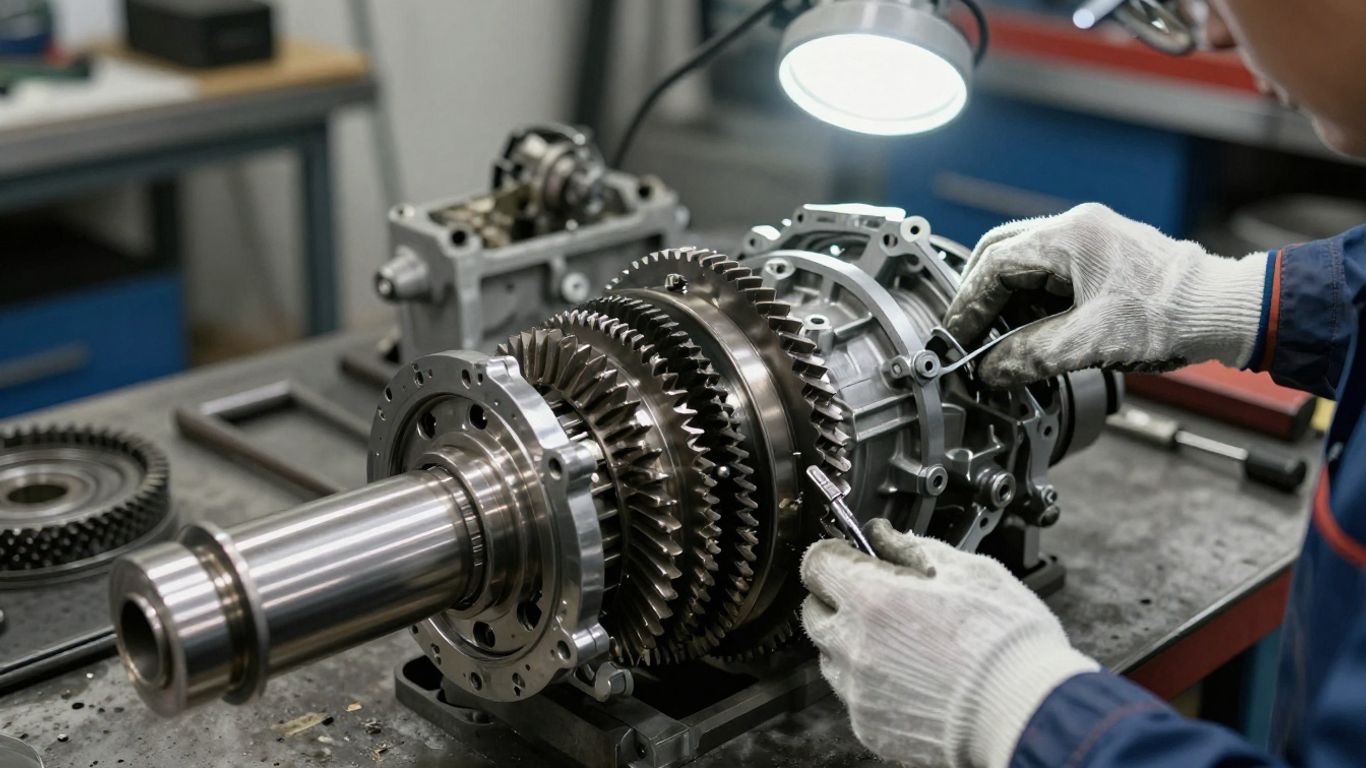
The image above reflects the kind of complex assembly a technician may need to assess; the actual repair path depends on the vehicle and test results.
Low or contaminated transmission fluid
Low fluid can reduce hydraulic pressure and contribute to delayed engagement, slipping, or overheating. Contamination may come from clutch material, metal wear, water entry, or an unsuitable service procedure. Fluid should be checked using the manufacturer’s specified method, since level procedures differ between transmissions.
Worn clutch packs, bands, and internal components
Friction components gradually wear, especially when a vehicle has experienced heat, heavy use, neglected maintenance, or repeated slipping. Bearings, bushings, seals, and planetary gears may also deteriorate. If internal wear is confirmed, a simple fluid service will not restore the damaged parts, although it may still be relevant to the broader repair plan.
Faulty solenoids, sensors, and valve bodies
Solenoids regulate transmission functions through electronically controlled fluid passages, while sensors report speed, temperature, or position. A sticking solenoid, restricted valve body, or inaccurate sensor can cause harsh shifts and incorrect gear selection. Testing should distinguish a failed component from a wiring, fluid, or pressure issue that produces a similar code.
Electronic control module and wiring problems
Modern transmissions rely on communication between modules, sensors, actuators, and the vehicle’s wiring harness. Corrosion, damaged wiring, poor grounds, or software-related faults can interrupt that communication. A scan result is a starting point rather than proof that the named component must be replaced.
How automatic transmission repair is diagnosed in Sydney
A sound diagnosis builds from the driver’s description to physical checks and controlled testing. Workshop location matters less than the technician’s process, equipment, and familiarity with the specific transmission. Specialist services such as McGraw Transmissions describe experience with servicing and repairing complex gearboxes, but any workshop should explain how it reached its recommendation.
Initial vehicle inspection and symptom assessment
The first stage usually covers the vehicle’s history, warning lights, recent services, towing use, leaks, and the conditions that trigger the fault. The technician may inspect mounts, driveshafts, cooling components, and external connectors because not every shift complaint originates inside the transmission. A clear timeline often saves unnecessary parts replacement.
Computer scanning and fault-code analysis
A scan can reveal stored or pending codes and provide live data from the transmission control system. Codes help narrow the investigation, but they need to be interpreted alongside symptoms and physical testing. Clearing codes before an appointment may remove useful evidence, so it is better to record them and leave diagnosis to the workshop.
Fluid checks, road testing, and pressure testing
Fluid condition, level, and smell can provide useful clues, while a controlled road test helps reproduce the complaint. Pressure testing may show whether the hydraulic system is producing the required pressure in different conditions. The results should be explained in plain language, including what has been ruled out.
A practical diagnostic sequence often includes:
- Confirming the customer’s symptom and checking the service history.
- Scanning the vehicle before clearing any stored information.
- Inspecting fluid, leaks, connectors, mounts, and cooling components.
- Road testing under safe, repeatable conditions.
- Measuring pressure or removing components only when the evidence supports it.
This sequence keeps the investigation proportionate. It also gives the owner a clearer basis for approving further work rather than guessing from a single symptom.
When the transmission must be removed for inspection
Removal may be necessary when tests indicate internal damage, when a converter or housing requires examination, or when an external repair cannot explain the symptoms. Disassembly can reveal worn friction plates, damaged hard parts, seal deterioration, or contamination that was not visible from outside. The workshop should seek approval before substantial additional labor begins.
Choosing between transmission repair, reconditioning, and replacement
The best option depends on the confirmed fault, vehicle value, parts availability, expected use, and warranty offered. A targeted repair can make sense for an isolated external or electronic fault, while extensive internal wear may justify reconditioning. Replacement is another route, but the lowest initial price does not automatically provide the best long-term value.
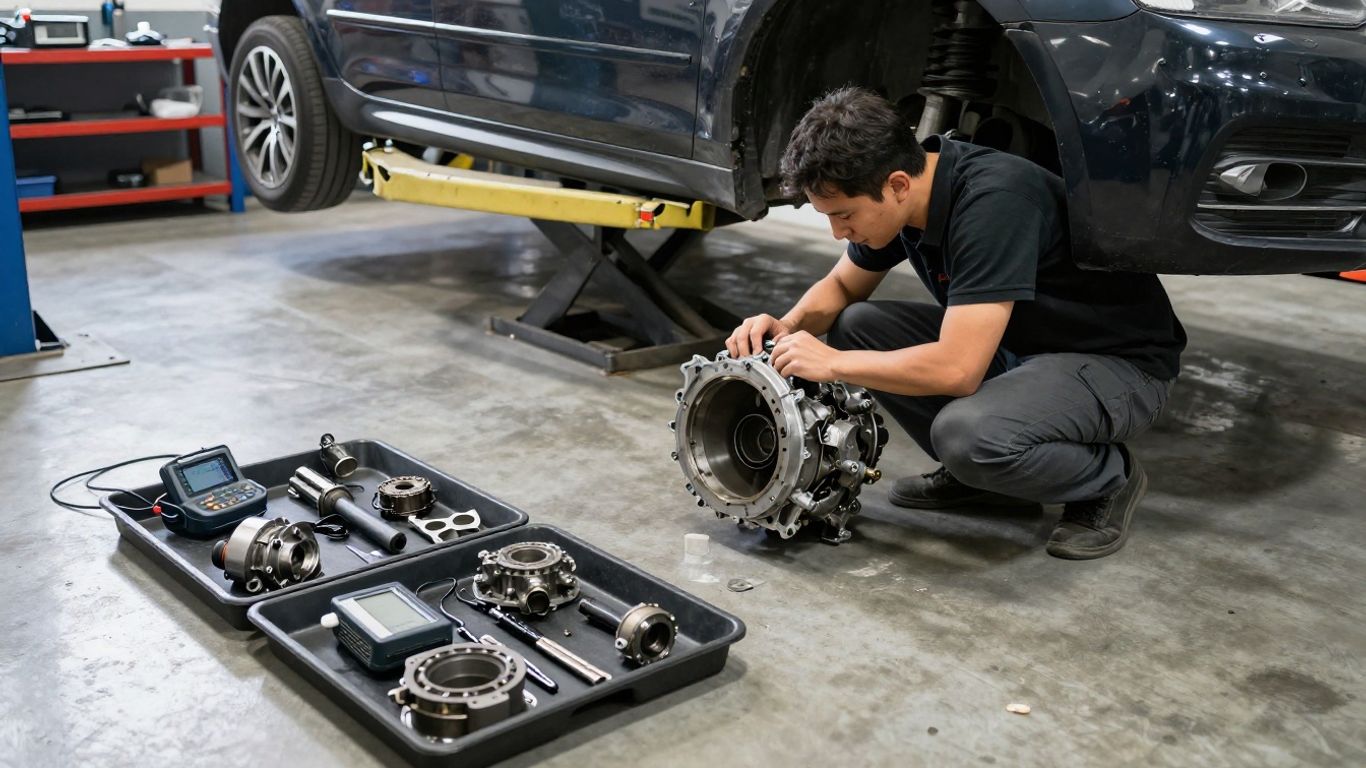
A workshop such as Auto Trans Australia describes services covering automatic, dual-clutch, CVT, and other transmission types; that breadth can be relevant when a vehicle uses a less familiar design, but the proposed work still needs to match the diagnosis.
When a targeted repair is the most practical option
A targeted repair may suit a failed solenoid, sensor, seal, connector, cooler line, or other accessible component when testing shows that the main assembly remains serviceable. It can avoid the cost and disruption of removing and rebuilding the entire transmission. The recommendation should still address the reason the component failed and whether old fluid or debris has affected other parts.
What transmission reconditioning includes
Reconditioning generally involves removing and inspecting the transmission, replacing worn or damaged parts, renewing seals and friction materials as needed, and checking related components. The exact scope varies, so ask whether the torque converter, valve body, cooler, electronics, and external lines are included. A written list is more useful than relying on the word “reconditioned” by itself.
Comparing a replacement transmission with a rebuild
A replacement may be new, remanufactured, reconditioned, or used, and those descriptions carry different risks. A rebuild keeps the vehicle’s original unit but allows a technician to inspect its condition directly. Ask about source, mileage where relevant, testing, included components, programming, installation, and warranty before comparing the totals.
Factors that affect reliability and long-term value
Reliability depends on repair quality, correct parts, fluid specification, cooling, installation, and how the vehicle is used afterward. The transmission’s design and the availability of specialist knowledge also matter. A slightly higher quote can be sensible if it includes better inspection, related repairs, clearer warranty terms, and proper post-repair testing.
Estimating automatic transmission repair costs in Sydney
There is no dependable single price for automatic transmission repair because the same symptom can come from a minor external fault or major internal damage. Sydney labor rates, vehicle access, parts supply, transmission design, and diagnostic time all influence the estimate. Treat an early figure as a decision-making guide until the fault has been confirmed.
Parts, labor, diagnostics, and specialist fees
An estimate may include scanning, inspection, fluid, seals, solenoids, friction materials, machining, removal and installation, testing, and shop supplies. Some repairs need specialized equipment or programming. Ask which costs are fixed, which are provisional, and whether tax, towing, or post-repair fluid service is included.
Why the initial quote may change after disassembly
External testing can identify a likely fault without showing every worn or damaged internal part. Once the transmission is opened, the technician may find additional damage or contamination that affects reliability if left untreated. A responsible workshop should contact you with evidence and options before exceeding the approved amount.
How vehicle type and transmission design affect pricing
A compact hatchback, four-wheel drive, luxury vehicle, hybrid, and commercial van may require different procedures, parts, and labor time. CVTs, dual-clutch units, older hydraulically controlled transmissions, and modern multi-speed designs also have different diagnostic and rebuild requirements. Parts availability can further affect both price and turnaround.
Questions to ask before approving the repair
A written quote should make the proposed outcome easy to understand. You may wish to ask:
- What fault has been confirmed, and what evidence supports it?
- Which parts and services are included in the price?
- What could cause the quote to change after disassembly?
- What warranty applies, and are there usage or servicing conditions?
- Will the vehicle be road-tested and checked for leaks before collection?
These questions do not require technical expertise. They simply establish what you are buying and how disagreements about scope will be handled.
Finding a reliable automatic transmission specialist
Choosing a workshop is about more than finding the cheapest advertised price. Look for a clear diagnostic process, relevant experience, transparent communication, and a warranty that is explained before work starts. Online research can help you compare options; for example, AutoGuru transmission listings can be used to search and book mechanics while reviewing service examples and customer feedback.
Verifying experience with your vehicle and transmission
Ask whether the workshop regularly works on your make, model, and transmission family. This is particularly useful for dual-clutch, CVT, European, performance, older, or electronically complex units. A technician should be willing to explain the likely tests without promising a repair before seeing the vehicle.
Checking warranties, credentials, and customer reviews
Read warranty conditions carefully: coverage may depend on fluid servicing, approved repairs, exclusions, or the use of the vehicle. Reviews are most helpful when they describe communication, diagnosis, timing, and how a problem was resolved rather than offering only a star rating. Memberships and credentials can provide useful context, but they do not replace a detailed quote.
Comparing independent workshops with dealerships
Dealerships may offer direct access to manufacturer procedures and vehicle-specific systems, while independent specialists may focus more narrowly on transmission work. Neither choice is automatically right for every fault. Compare the proposed diagnosis, included work, warranty, and total cost rather than comparing hourly rates alone.
Preparing for your appointment and service discussion
Bring service records, recent invoices, scan results, and a short description of when the problem occurs. Mention towing, modifications, warning lights, fluid changes, and any previous repairs. You can also review automatic transmission parts and repairs as a reminder to ask whether the workshop has experience with your vehicle’s parts and configuration.
Preventing future automatic transmission problems
Prevention is mostly consistent maintenance and early action, not a complicated driving ritual. Follow the vehicle maker’s schedule, keep the cooling system in good condition, and investigate small changes before they become a breakdown. Good habits are especially valuable after a repair because they protect the work already completed.
Following fluid inspection and replacement schedules
Some transmissions specify regular fluid replacement, while others have condition-based or more particular service requirements. Use the correct checking procedure and do not assume a “sealed” unit never needs inspection. Keep records of the date, mileage, fluid used, and any filter or pan work.
Using the correct transmission fluid specification
Transmission fluids are not interchangeable simply because they look similar. The wrong specification can affect friction behavior, seals, shift quality, and component life. Confirm the exact requirement from the vehicle or transmission documentation and use a technician who can explain the service procedure.
Managing towing, heavy loads, and stop-start driving
Towing, steep terrain, heavy payloads, and constant stop-start traffic increase heat and operating demand. Use the vehicle’s approved towing limits, maintain cooling components, and follow any guidance about transmission temperature or service intervals. Avoid using repeated acceleration to mask slipping or delayed engagement.
Monitoring early symptoms after a repair
Pay attention to shift quality, engagement time, leaks, odors, and warning lights during the first days and weeks after service. A short settling period may be normal for some work, but a worsening symptom should be reported promptly. Keep the invoice and warranty documents available, and ask the workshop before authorizing unrelated additional repairs.
For broader planning, unrelated online guides such as choosing the right camping light, planning an ideal wedding date, technical SEO agency selection, Toronto web design agencies, and commercial business transfer illustrate why clear criteria and written comparisons matter—but they are not substitutes for transmission-specific advice.
Conclusion
Automatic transmission repair Sydney decisions become much easier when symptoms are documented, diagnosis is evidence-based, and repair options are compared by scope, warranty, and expected service life. A careful specialist should explain what has been tested, what has failed, and what remains uncertain before asking you to approve major work.
Frequently Asked Questions
What are the most common signs of automatic transmission trouble?
Common signs include delayed engagement, slipping, harsh or hesitant shifts, unusual noises, fluid leaks, burnt odors, and transmission warning lights. A single symptom can have several causes, so professional testing is advisable.
Can low transmission fluid cause slipping?
Yes, low fluid can reduce hydraulic pressure and contribute to slipping or delayed engagement. The leak or underlying cause should also be identified, and the level must be checked using the correct procedure.
Is a transmission flush always the right repair?
No. A fluid service may be appropriate in some situations, but it will not repair worn internal components or every hydraulic and electronic fault. The service should follow the transmission maker’s requirements and the diagnosis.
How long does automatic transmission repair take?
Timing varies with diagnosis, parts availability, vehicle access, and whether the unit must be removed and rebuilt. A workshop can provide a more useful timeframe after inspecting the vehicle and confirming the scope.
Should I rebuild or replace a failed transmission?
The choice depends on internal condition, replacement-unit quality, cost, warranty, vehicle value, and expected use. Compare the complete options rather than the headline price alone.
What should a transmission repair warranty cover?
Ask what parts and labor are covered, how long the warranty lasts, what servicing is required, and which exclusions apply. Confirm whether removal, reinstallation, related components, and replacement fluid are included.
Can I drive with a slipping automatic transmission?
It is best to limit driving and seek advice, particularly if slipping is worsening, the vehicle loses engagement, the fluid is leaking, or warning lights appear. Continued use can increase heat and internal damage.