Key Takeaways
A reliable used gearbox begins with precise identification, not a quick search and the lowest advertised price. Check the unit, seller, freight, installation requirements, and warranty as one purchase decision.
- Record the vehicle details and gearbox code before contacting sellers.
- Compare recyclers, wreckers, private sellers, and specialist suppliers carefully.
- Ask for testing information, identification numbers, photos, and condition details.
- Calculate freight, fitting, fluids, labor, and possible return costs.
- Inspect the gearbox on delivery and keep all warranty documents.
Understand your gearbox requirements
Finding used gearboxes for sale Australia-wide is easier when you know exactly what must fit your vehicle. The registration number can provide a starting point, but it rarely replaces the technical information on the vehicle and transmission itself. Gather the details before you request prices, because a seller can only confirm a match from accurate information.
Identify the vehicle, model, and transmission type
Write down the make, model, build year, engine size, fuel type, body style, and drivetrain. Small differences between model years can affect mounting points, sensors, software, or internal ratios. Also confirm whether the vehicle has a manual, conventional automatic, automated manual, or CVT transmission.
If possible, photograph the vehicle identification plate and the existing gearbox label. A mechanic or transmission specialist can often identify useful details from those images, especially when several transmissions were fitted to the same model range.
Match the gearbox code and specifications
The gearbox code is one of the strongest identifiers in a used-parts search. Compare it with the code on your current unit, then check the number of gears, torque capacity, transfer-case arrangement, final-drive relationship, and any listed engineering revisions. Do not assume that a gearbox from the same model name is interchangeable.
Ask the seller to confirm the code in writing on the quotation or invoice. That simple record gives both sides a clear reference if questions arise later, and it is more useful than relying on a broad description such as “fits several models.”
Choose between manual, automatic, and CVT gearboxes
Manual, automatic, and CVT units have different operating requirements and failure patterns. A manual replacement may still require a compatible clutch, flywheel, release mechanism, or hydraulics. An automatic may need a matching torque converter, cooler lines, control module, or adaptation procedure, while a CVT can be particularly sensitive to fluid type and calibration.
Ask whether the advertised price covers the transmission alone or includes related components. The right choice is not simply the transmission type; it is the complete combination that matches the engine, electronics, and drivetrain.
Check whether you need a complete unit or replacement parts
Before buying an entire gearbox, establish what has actually failed. You may need a complete tested unit, a transfer case, a valve body, a mechatronic assembly, a differential component, or a smaller replacement part. A workshop diagnosis can prevent paying for a heavy assembly when a serviceable component is the real issue.
A complete unit is usually simpler to source and install, but it still needs inspection and compatibility confirmation. If you are comparing field service management software for a workshop or mobile repair operation, the same practical principle applies: define the operational requirement before comparing solutions.
Know where to buy used gearboxes in Australia
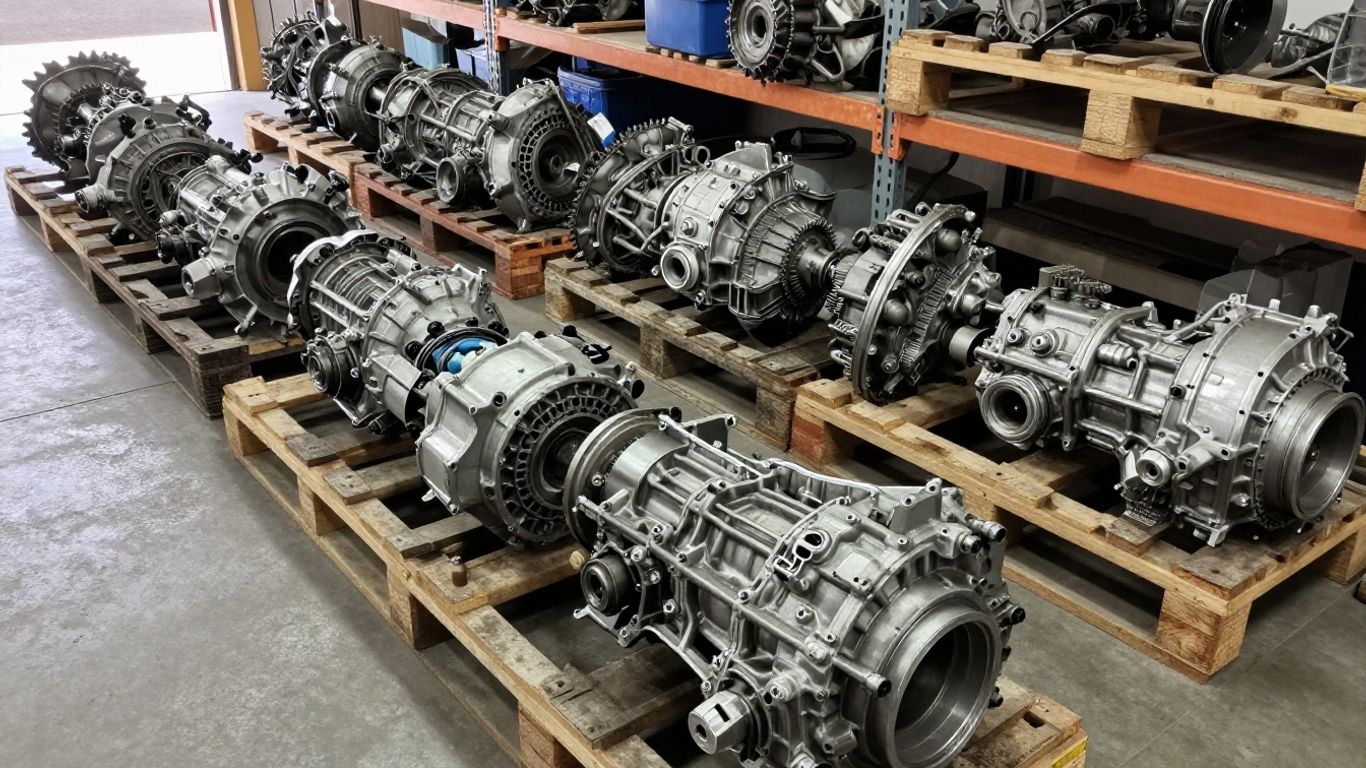
The seller type affects the information you receive, the available warranty, and how easily a problem can be resolved. Specialist recyclers may document donor vehicles and test procedures, while private sellers may offer less history but a lower initial price. A local supplier can simplify inspection, although Australia-wide delivery may widen the available inventory.
Compare specialist recyclers, wreckers, and private sellers
Specialist recyclers and wreckers generally have established processes for dismantling, cataloging, and dispatching parts. Ask how the gearbox was removed, whether the donor vehicle was running, and what checks were completed. Private sellers may know the vehicle’s story, but you will need to verify condition and return arrangements more carefully.
For a broad online starting point, All Good Parts describes low-mileage used manual and automatic transmissions that have been quality tested. Treat any listing as a lead for questions rather than as proof that a particular unit suits your vehicle.
Evaluate local suppliers versus Australia-wide delivery
Local collection lets you examine the casing, tags, and visible damage before paying for freight. Interstate purchasing can provide more choice, but ask about delivery to your postcode, tail-lift requirements, depot collection, packaging, and damage reporting. A gearbox is heavy, so freight terms can materially change the purchase decision.
Second-hand Toyota gearboxes are one example of a listing category that may offer Melbourne delivery and Australia-wide shipping by arrangement. Confirm the current delivery conditions directly, especially if the part must travel to a rural or remote location.
Consider industrial gearbox and commercial equipment suppliers
Not every gearbox search concerns a passenger vehicle. Industrial units are identified by ratio, input and output shaft dimensions, power rating, mounting arrangement, duty cycle, and application. A vehicle transmission should not be substituted with an industrial gearbox merely because both listings use the word “gearbox.”
For machinery buyers, industrial gearboxes can be searched by application and specifications such as reduction ratio, power rating, and delivery location. The useful lesson for automotive buyers is to compare technical identifiers, not just the component’s general name.
Verify the seller’s reputation and business details
Check that the seller provides a physical business identity, working contact details, a written invoice, and clear terms for freight and returns. Search for consistent customer feedback, but give more weight to specific comments about communication, packaging, accuracy of descriptions, and warranty handling than to vague star ratings.
Be cautious if a seller will not provide a gearbox code, donor details, or a written condition statement. If a purchase is made remotely, keep screenshots of the listing and every message exchanged before payment.
Inspect the condition before you buy
Used gearboxes vary widely because mileage alone does not tell the whole story. Towing, poor servicing, overheating, water entry, and long periods of storage can all affect a unit. A sensible inspection asks what is known, what has been tested, and what remains uncertain.
Review mileage, age, and vehicle history
Request the donor vehicle’s approximate mileage, build date, service history, and reason for dismantling. A lower-mileage unit is not automatically better if it came from a neglected or damaged vehicle. Conversely, a higher-mileage gearbox with documented maintenance and careful testing may be the more transparent option.
Ask whether the vehicle was involved in flood, fire, collision, or heavy commercial use. These details may affect bearings, wiring, casing alignment, and internal contamination even when exterior damage is not obvious.
Ask about testing, inspection, and refurbishment
Ask exactly what “tested,” “inspected,” “reconditioned,” or “rebuilt” means in the listing. Does the seller check shaft rotation, selector operation, end float, pressure, electronic faults, or fluid contamination? The answer should describe a process, not just repeat a reassuring adjective.
A rebuilt, reconditioned, and remanufactured unit can mean different things from one supplier to another. Request a written scope of work and ask which parts were replaced, measured, or retained before treating refurbishment as a reason to pay more.
Check for leaks, damaged housings, and worn components
Look for cracks, broken mounting ears, stripped threads, corrosion, dented pans, damaged connectors, and oil residue around seals. A small amount of residual fluid may be normal after removal, but active leakage or a damaged housing deserves an explanation before purchase.
If you can inspect the unit in person, rotate accessible shafts only as advised by a qualified technician and avoid forcing selectors. A professional inspection is worthwhile when the freight and installation costs would make a mistaken purchase expensive.
Request clear photos, videos, and identification numbers
Ask for photographs of every identification tag, the bellhousing, mounting faces, connectors, casing, shafts, and fluid pan. A short video can sometimes show selector movement or shaft rotation, although it cannot replace a proper bench or road test. Make sure the images are of the actual unit, not a catalog example.
Record the identification numbers before payment and compare them with the invoice. That small step helps prevent confusion when a seller handles several similar units at once.
Compare prices and total purchase costs
A quoted gearbox price is only one part of the replacement budget. Freight, taxes, workshop time, fluids, seals, programming, and related components can change the final figure substantially. Compare like with like, especially when one listing includes a torque converter or warranty and another does not.
Understand what affects used gearbox prices
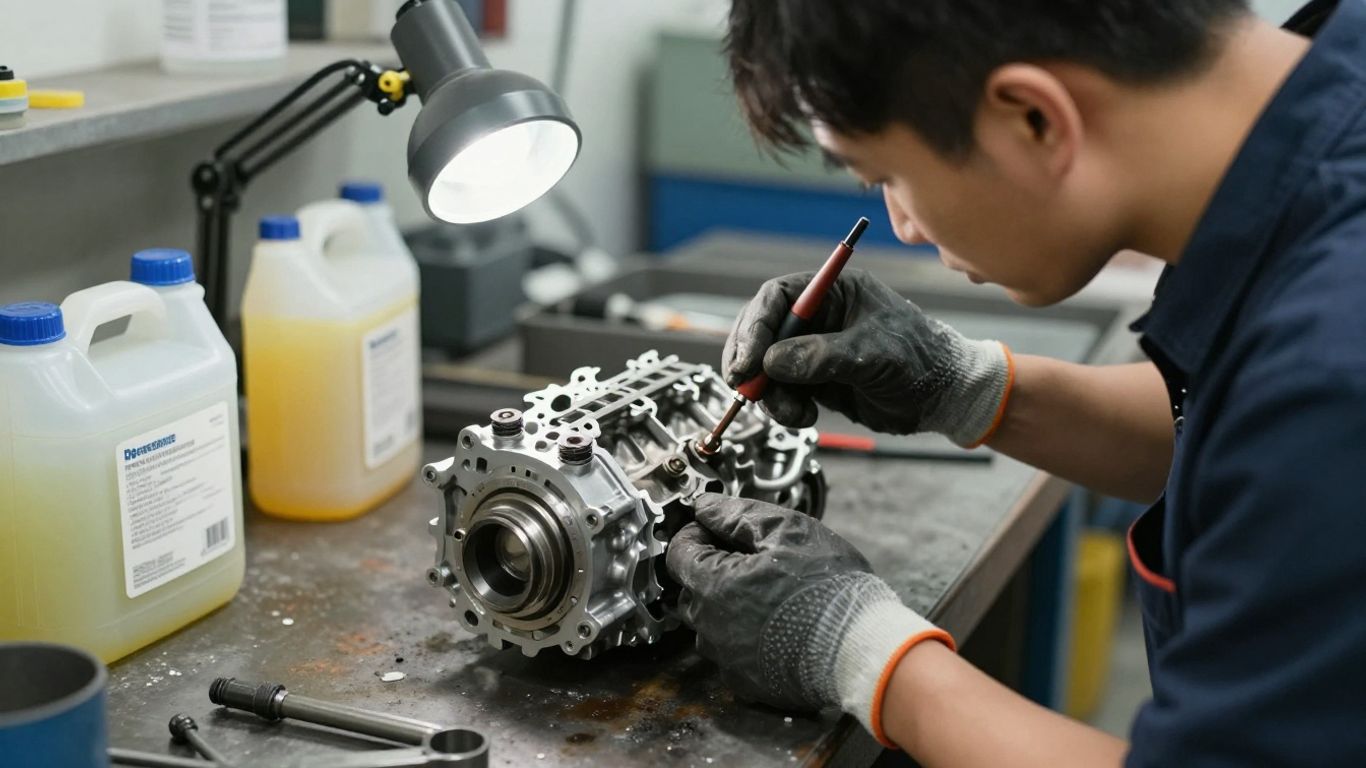
Price is shaped by supply, demand, vehicle age, mileage, transmission type, availability, donor history, testing, refurbishment, and warranty length. Rare or electronically complex units may cost more even when their physical size is modest. Heavy four-wheel-drive and commercial units can also attract higher handling and freight charges.
When comparing wind turbine gearboxes, for example, the relevant factors include application, specification, condition, and logistics rather than a passenger-car price benchmark. The comparison is useful only as a reminder that “used gearbox” covers very different markets.
Include shipping, fitting, fluids, and labour
Create a complete estimate before accepting an offer. A workshop should identify likely incidental parts and labor, including seals, mounts, clutch or torque-converter work, fluids, filters, calibration, and disposal of the old unit. Ask whether the freight quote is to the door, a depot, or a business address with unloading equipment.
For a quick comparison, separate the costs into these practical categories:
- Purchase price and applicable taxes.
- Freight, insurance, unloading, and depot charges.
- Removal, fitting, fluids, seals, and workshop labor.
- Diagnostics, programming, adaptation, and road testing.
This makes a cheaper-looking listing easier to compare with a better-documented unit. It also leaves room for costs that are easy to overlook when the initial advertisement is doing most of the talking.
Compare warranty coverage and return policies
Read the warranty before payment, including its duration, exclusions, labor coverage, and claim process. Some warranties cover the part only, while others require professional installation or approved fluids. Confirm who pays return freight if the unit is faulty or incorrectly supplied.
A return policy should explain time limits, inspection requirements, restocking fees, and the condition in which the unit must be returned. Keep the invoice, delivery record, installation paperwork, and fluid receipts because they may be needed for a claim.
Recognize unusually low prices and hidden risks
An unusually low price may reflect missing accessories, unknown mileage, no testing, damaged casing, limited warranty, or a unit that is sold strictly for parts. It is not automatically a bad deal, but the reason should be clear and recorded. If the seller avoids basic questions, the saving is probably not worth the uncertainty.
When reviewing a pricing or procurement decision, even a manufacturing pricing consultant guide can be a useful reminder to look beyond the headline number. The gearbox decision still depends on mechanical evidence, but the same discipline—separating price from total cost—helps keep comparisons honest.
Confirm compatibility and installation requirements
A gearbox can look identical to another unit and still fail to fit or operate correctly. Compatibility includes physical dimensions, internal ratios, electronics, software, and the surrounding drivetrain. Confirm these details before freight is arranged, not after the replacement is sitting in the workshop.
Match mounting points, sensors, and electrical connections
Compare bellhousing patterns, mount locations, input and output shafts, sensors, plugs, cooler fittings, shifter mechanisms, and wiring lengths. A connector that looks similar may use different pin assignments or communicate with a different control system. Ask for photographs and technical confirmation when the listing is not specific.
Do not assume that accessories from the original gearbox will transfer without inspection. Damaged threads, mismatched sensors, and incompatible mounts can add both parts cost and workshop delay.
Check compatibility with the engine and drivetrain
Confirm the gearbox was paired with the same engine family or an officially compatible variant. Torque output, bellhousing design, clutch or torque-converter dimensions, control modules, and final-drive ratios all matter. A transmission that bolts up physically may still produce poor shift behavior or drivetrain stress.
Give the workshop the vehicle identification information and gearbox code together. That allows it to check the complete system rather than judging the transmission in isolation.
Verify four-wheel-drive and differential specifications
Four-wheel-drive vehicles need additional checks for transfer-case fitment, output orientation, differential ratios, axle compatibility, and electronic control. Even a small ratio mismatch can create driveline tension or handling problems. Confirm whether the listing includes the transfer case and whether it matches the front and rear differentials.
Ask for the exact ratio and code, and have a specialist verify them against the vehicle. This is especially important when a replacement comes from a different trim, engine, or production period.
Plan professional removal and installation
Transmission removal often requires substantial access, lifting equipment, and correct support. Installation may also involve fluid filling, bleeding, calibration, fault-code clearing, adaptation, and a controlled road test. Use a qualified workshop when the job exceeds your equipment or experience.
A written installation plan helps coordinate freight, hoist availability, ancillary parts, and warranty requirements. It also reduces the temptation to rush the job simply because the replacement has arrived.
Protect your purchase after delivery
The purchase is not complete when the freight company drops off the gearbox. Inspect it before installation and keep the packaging until you know the unit is correct and undamaged. Good records make a legitimate warranty or freight claim much easier to manage.
Inspect the gearbox when it arrives
Check the crate or pallet for impact damage, then compare the unit with the listing and invoice. Photograph the packaging, labels, casing, connectors, shafts, and any visible marks before unpacking everything. If damage is apparent, notify the carrier and seller promptly rather than fitting the unit first.
Do not discard documentation or alter the component before reporting a discrepancy. The seller may need photographs, serial numbers, or an inspection by its nominated workshop.
Follow storage and handling recommendations
Keep the gearbox covered, stable, and protected from moisture until installation. Use suitable lifting equipment and never rely on fragile shafts, sensors, or fittings as lifting points. If the unit contains fluid, store it in the orientation recommended by the seller or technician.
Avoid leaving the assembly exposed on a workshop floor where dirt can enter openings. Clean, capped connections and careful handling reduce avoidable contamination and damage.
Complete break-in and fluid checks
Use the specified fluid and quantity, and replace related seals or filters when the workshop recommends it. Check for leaks after filling, then follow the supplier’s or manufacturer’s procedure for initial operation. Early warning signs include abnormal noise, slipping, harsh engagement, delayed selection, and warning lights.
A gradual road test gives the technician an opportunity to verify engagement, shift quality, temperatures, and fault codes. Record the installation date, mileage, fluid used, and any observations.
Use warranty and return options correctly
Read the claim procedure before a problem occurs. Stop using the vehicle if continued operation could worsen the fault, and contact the seller with a clear description, diagnostic results, photographs, and installation records. Do not disassemble the gearbox unless the warranty terms or seller authorize it.
Follow the agreed return instructions and retain freight receipts. A calm, documented claim is more likely to be resolved efficiently than a dispute based only on a verbal conversation.
Avoid common buying mistakes
Most costly mistakes happen before the gearbox is paid for. Buyers may identify the vehicle correctly but skip the transmission code, or compare only the advertised price while ignoring freight and fitting. A short verification routine can prevent a long and expensive correction later.
Relying only on the vehicle registration number
A registration number may help a seller locate basic vehicle information, but it may not reveal every transmission variation. Engines, gearboxes, drivetrains, and production revisions can differ within one registration category. Use the registration as supporting information, not as the sole compatibility test.
Provide the VIN, build details, engine information, drivetrain type, and photographs where available. The more precise the initial enquiry, the less likely it is that a near-match will be presented as a confirmed fit.
Buying without confirming the gearbox code
A listing that says “compatible with your model” is not enough when several codes were offered. Ask for the code on the actual unit and compare it with the number on your existing gearbox or the workshop’s diagnosis. Save that confirmation in writing.
If no code is visible, ask how the seller identified the unit and what alternative checks support the claim. A transparent answer is more valuable than a confident but unsupported promise.
Ignoring regional freight and delivery limitations
Freight to a capital city may be straightforward while delivery to an island, remote area, residential address, or location without unloading equipment may require special arrangements. Confirm the destination, delivery method, estimated timing, insurance, and who handles damage claims.
Build freight into the comparison before choosing a supplier. A local collection option may be preferable even when its listed price is slightly higher, particularly if it allows inspection and avoids a difficult return shipment.
Choosing price over condition and warranty support
The lowest price can become expensive after fitting, failed diagnostics, replacement fluids, and return freight are added. Compare the unit’s evidence, testing, documentation, warranty, and seller responsiveness alongside the dollar amount. Clear evidence reduces risk more effectively than a bargain headline.
For businesses arranging repairs, a guide to attic insulation services is obviously not a gearbox resource, but its broader procurement lesson is still familiar: define the work, confirm the scope, and request a clear plan. For this purchase, keep that principle focused on the transmission and the workshop responsible for fitting it.
Conclusion
Reliable used gearboxes for sale Australia-wide are found through careful identification, realistic cost comparison, condition checks, and written communication. Confirm the gearbox code, investigate the seller, plan freight and professional installation, and document the unit from delivery onward. That process takes a little longer than choosing the first low-priced listing, but it gives you a much better chance of buying a compatible part with support when you need it.
Frequently Asked Questions
How do I identify the correct used gearbox for my vehicle?
Collect the VIN, make, model, build date, engine details, transmission type, drivetrain information, and the code on the existing gearbox. Have a qualified technician or specialist confirm the match before payment.
Is a used gearbox better than rebuilding the original?
It depends on the original unit’s damage, the availability of replacement parts, the cost of labor, and the evidence supporting the used gearbox. Compare both options using total installed cost and warranty coverage.
What should I ask a gearbox seller before buying?
Ask for the exact gearbox code, donor mileage and history, testing or refurbishment details, included components, visible damage, warranty terms, return conditions, and freight arrangements.
Does a vehicle registration number confirm gearbox compatibility?
No. It can help identify the vehicle, but it may not distinguish between engine, transmission, drivetrain, or production variations. Confirm the gearbox code and technical specifications as well.
What extra costs should I budget for?
Allow for freight, unloading, removal and installation, fluids, filters, seals, clutch or torque-converter work, diagnostics, programming, adaptation, and possible return freight.
Should I buy a gearbox from interstate?
Interstate purchasing can provide more choice, but confirm delivery access, packaging, insurance, unloading requirements, and the process for reporting damage or returning an incompatible unit.
What should I do if the gearbox arrives damaged?
Photograph the packaging and component immediately, keep all delivery records, and contact both the carrier and seller promptly. Follow the written claim instructions and avoid installing or disassembling the unit before receiving guidance.