Key Takeaways
Torque converter trouble can begin with a brief shudder or a delayed shift, then develop into slipping, heat, and costly transmission damage. Careful diagnosis helps separate a converter fault from a broader transmission problem.
- Watch for shuddering, slipping, delayed engagement, noises, leaks, or warning lights.
- Check fluid level and condition before assuming the converter has failed.
- Use scan data and safe testing to narrow down the cause.
- Simple fluid or control-system service may solve some complaints.
- Persistent slipping, overheating, or internal damage usually needs professional repair.
Recognize the symptoms of torque converter problems
A torque converter problem rarely announces itself in only one way. The sensation may appear during a particular shift, at a steady cruising speed, or when the vehicle is asked to accelerate under load. Pay attention to when the symptom occurs, whether the engine is cold or warm, and whether the transmission fluid has recently been serviced. Those details can save time during diagnosis.
Shuddering during acceleration or cruising
A shudder often feels like a rapid vibration through the seat or floor, almost as though the vehicle is passing over a rough surface. It may happen during light acceleration or steady cruising when the lockup clutch is trying to engage. A brief, repeatable vibration does not prove the converter is at fault, but it is a useful clue, especially when the engine speed rises and falls slightly at the same time. Keep a note of the speed, throttle position, road grade, and transmission temperature when it happens.
Delayed engagement when shifting into drive
When there is a pause after selecting Drive before the vehicle moves, hydraulic pressure may be slow to build or a component may not be applying correctly. A delay can be more noticeable after the vehicle has been parked overnight, although it can also occur when warm. Do not repeatedly raise the engine speed to force engagement; that can increase shock loads once the gear finally applies. Check the fluid and have the delay assessed if it becomes longer, harsher, or more frequent.
Slipping, overheating, or inconsistent power delivery
Slipping feels different from a normal shift: the engine revs climb without a matching increase in road speed, or power seems to fade during acceleration. A failing converter can contribute to inefficient power transfer, but worn transmission clutches, low fluid, and control faults can feel similar. Heat makes the situation more urgent because degraded fluid loses protective qualities and can accelerate wear. If the temperature warning appears or the vehicle enters a reduced-power mode, stop driving when it is safe to do so.
Unusual noises, fluid leaks, and warning lights
Whining, rattling, or a rhythmic scraping sound may point to a bearing, pump, or other rotating component rather than the converter alone. Red or brown fluid beneath the vehicle deserves prompt attention, particularly if the level is falling. A check-engine or transmission warning light can store useful information even when the vehicle still seems driveable. The common torque converter symptoms guide can help you compare shuddering, slipping, and delayed engagement before arranging an inspection.
Understand what causes torque converter failure
A torque converter works in a hot, pressurized environment and depends on clean fluid and correctly controlled clutch engagement. Failure may result from wear inside the converter, a problem elsewhere in the transmission, or a combination of both. That is why replacing the converter without identifying the original cause can lead to a repeat failure. The most useful question is not simply what part feels bad, but what condition allowed it to deteriorate.
Worn clutch components and lockup problems
Many automatic transmissions use a lockup clutch to reduce converter slip once conditions are suitable. Friction material can wear, the clutch can apply unevenly, or its piston and damper components can lose their ability to hold smoothly. The result is often a shudder during light throttle rather than a dramatic failure. Electrical or hydraulic control problems may also make a healthy clutch apply at the wrong time.
Low, contaminated, or incorrect transmission fluid
Fluid provides lubrication, cooling, and hydraulic force, so its level and specification matter. A low level can allow aeration and pressure loss, while dirty fluid can carry abrasive material through the converter and valve body. Water or moisture contamination is another concern in some applications; the GM torque converter shudder discussion describes how moisture-affected fluid can contribute to clutch-related vibration. Use the vehicle’s service information rather than guessing from fluid color alone.
Damaged bearings, seals, or internal parts
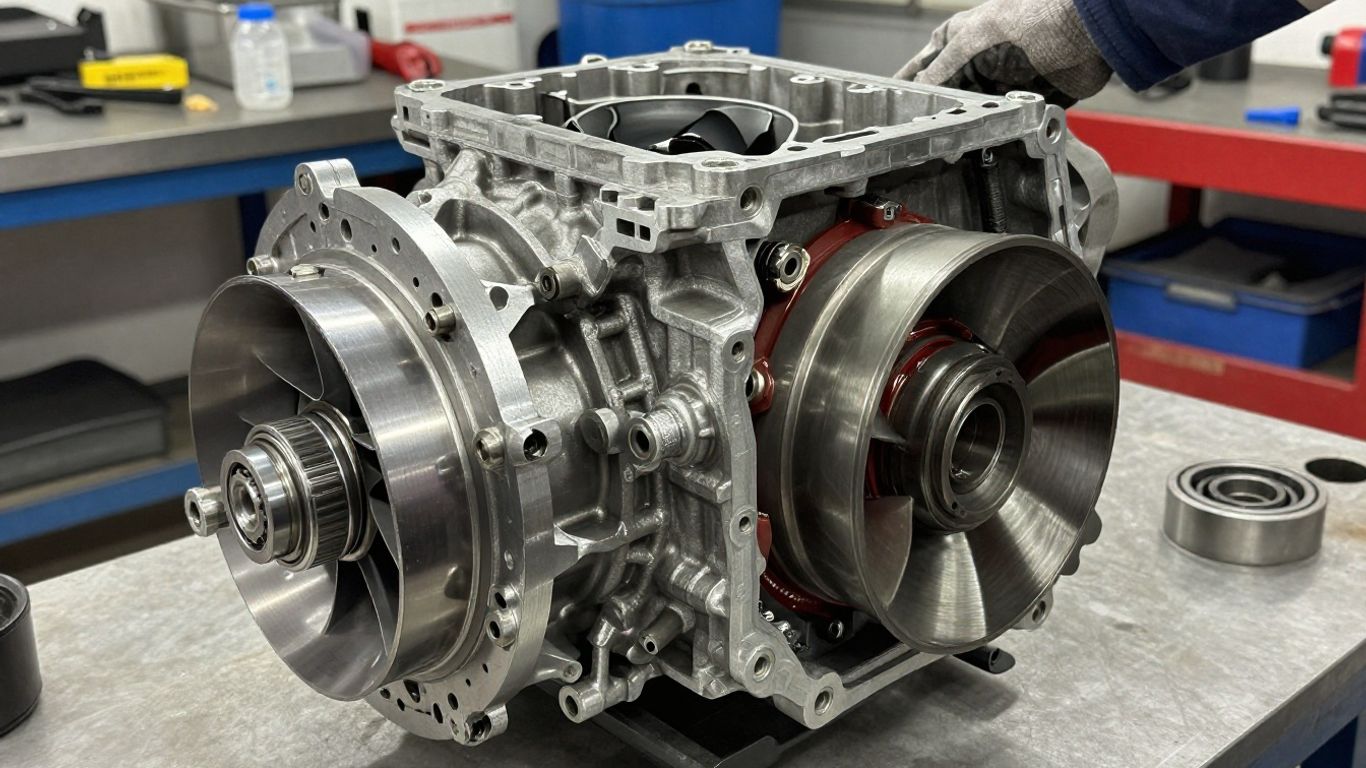
A converter contains several moving parts, including a pump, turbine, stator, clutch, bearings, and seals. A damaged bearing may create noise, while a failed seal can affect pressure or allow fluid to escape. Internal damage may also send metallic debris into the transmission, where it can harm the valve body and other friction components. Once debris is present, a narrow repair may not be enough.
Transmission overheating and neglected maintenance
Repeated towing, heavy traffic, steep grades, restricted cooling, or low fluid can push transmission temperatures beyond a safe range. Heat hardens seals, breaks down fluid, and speeds up clutch wear. A general overview of torque converter failure causes also highlights overheating, contaminated fluid, and lockup-clutch problems as recurring concerns. Maintenance cannot prevent every failure, but it can reduce the conditions that make one more likely.
Diagnose the problem before making repairs
Diagnosis should proceed from simple observations to controlled tests. Start with the vehicle’s maintenance history and a clear description of the symptom, then inspect fluid, scan the control modules, and test only when the procedure is safe for that vehicle. A converter is connected to the rest of the powertrain, so one symptom can have several possible sources. The goal is to gather evidence before authorizing an expensive repair.
Check the transmission fluid level and condition
Follow the manufacturer’s exact procedure because some transmissions require a specific temperature, engine state, or level plug rather than a traditional dipstick. Look for the correct level, unusual odor, visible particles, or signs of water contamination. Do not top off with a universal fluid unless the service information explicitly permits it. A small correction may help a low-fluid complaint, but it will not repair worn internal parts.
Scan for diagnostic trouble codes
A scan tool can reveal converter-clutch performance codes, solenoid faults, temperature readings, and communication problems. Codes do not automatically identify the failed part; they show what the control system observed. Compare the code with the driving symptom and live data where possible. The torque converter and transmission diagnosis guide is useful for keeping those two related but distinct fault areas in view.
Perform a stall-speed test safely
A stall-speed test briefly measures engine speed with the transmission engaged and the vehicle restrained, but it creates substantial heat and stress. It should be performed only according to the vehicle manufacturer’s procedure, with the brakes, tires, and surrounding area checked first. Never hold the throttle down longer than specified, and never attempt the test on an unsafe surface. A result outside the expected range is a clue, not a complete diagnosis.
Distinguish torque converter faults from other transmission issues
A converter issue often changes with lockup operation or engine load, while a worn clutch pack may show a particular gear slip. Engine misfires, damaged axles, bad mounts, and control-system faults can also feel like shuddering. Compare symptoms in different gears and conditions, but avoid aggressive road testing once the vehicle is slipping or overheating. This distinction is central when deciding whether to fix torque converter issues or pursue a broader transmission repair.
Try appropriate torque converter fixes
The right repair depends on what the inspection and testing reveal. Some complaints respond to fluid correction or a control-system repair, while others involve friction material, bearings, or structural damage inside the converter. Begin with the least invasive remedy that is supported by evidence, not with a parts swap based on a single symptom. Record the fluid type, amount, codes, and post-repair behavior.
Correct the fluid level or replace degraded fluid
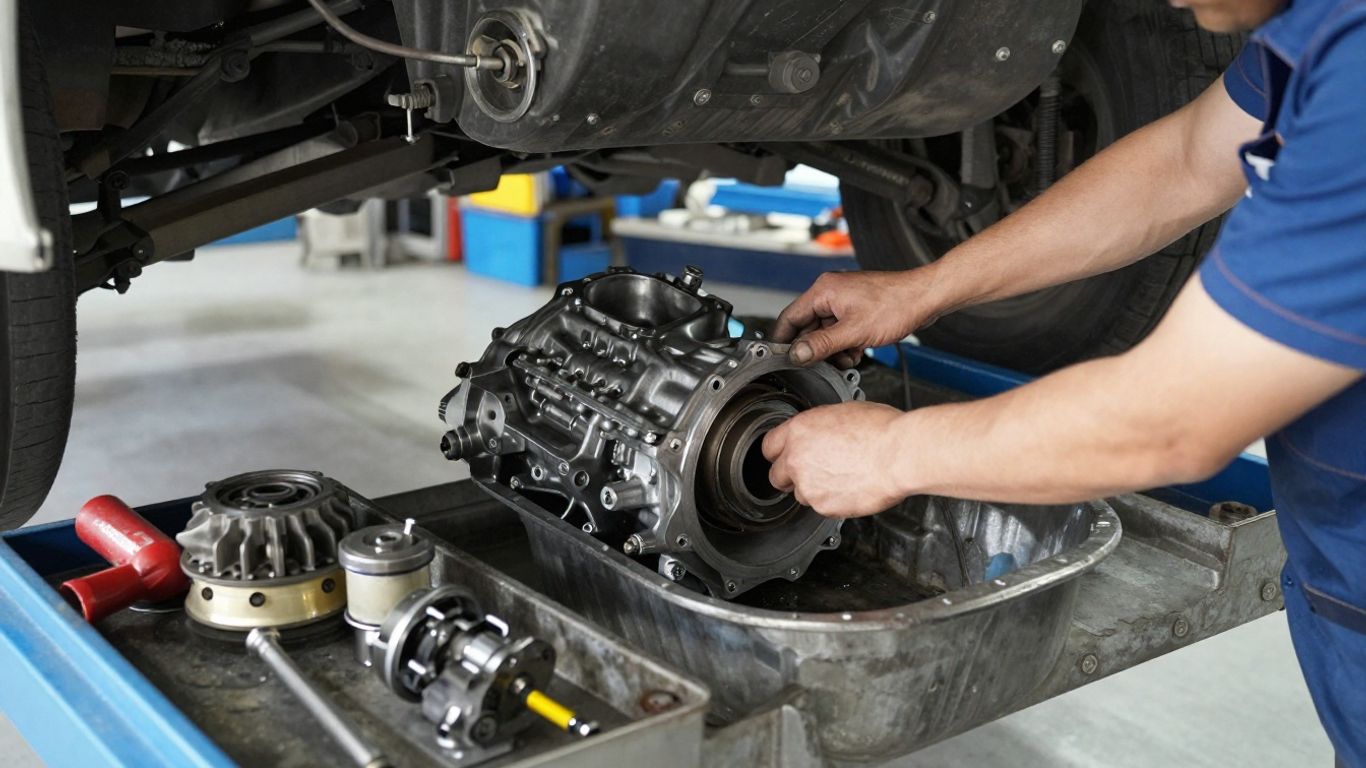
If the level is low, find and repair the leak before setting it correctly. If the fluid is degraded, use the specified replacement method and fluid type; a drain-and-fill may be appropriate for one vehicle, while another may require a more controlled service. A flush is not automatically safer or better, especially when the unit already contains heavy debris. After service, verify the level at the required temperature and road-test gently.
Service the transmission filter and pan
A filter service can restore flow when restriction is contributing to pressure problems, and removing the pan may reveal clutch material or metal particles. Inspect the magnet and pan contents rather than treating the service as a routine fluid change with no diagnostic value. Replace gaskets and fasteners as specified, then recheck for leaks. If the pan contains substantial debris, continued driving may spread damage beyond the converter.
Address solenoid, valve body, or software issues
The converter clutch is controlled by hydraulic passages, solenoids, and electronic commands. A sticking valve, weak solenoid, wiring problem, or outdated calibration can create an engagement complaint that resembles internal converter wear. A qualified technician can compare commanded and actual operation before recommending replacement. In some vehicles, a manufacturer-approved software update or control repair may be enough to correct the behavior.
Use a manufacturer-approved shudder treatment when appropriate
A friction-modifying treatment may be considered only when the vehicle maker permits it and the evidence points to a fluid-friction issue rather than mechanical damage. It should not be used to mask severe slipping, burnt fluid, metal contamination, or a failing bearing. Follow the product and service instructions precisely, including the amount and fluid compatibility. Improvement should be monitored rather than assumed to be permanent.
To keep the repair decision grounded, compare the symptom with the evidence collected so far:
| Finding | Possible direction | Sensible next step |
|---|---|---|
| Mild shudder, clean fluid, no major codes | Fluid or clutch-control concern | Verify specification and scan data |
| Delayed engagement with low fluid | Leak or pressure concern | Repair leak and set level correctly |
| Metallic debris in pan | Internal wear | Stop unnecessary driving and inspect further |
| Slipping with high temperature | Converter or transmission damage | Arrange professional diagnosis promptly |
This table is only a starting point, not a substitute for vehicle-specific test values. A repair decision should account for mileage, service history, fluid condition, and whether the symptom changes after a controlled service.
Know when professional repair is necessary
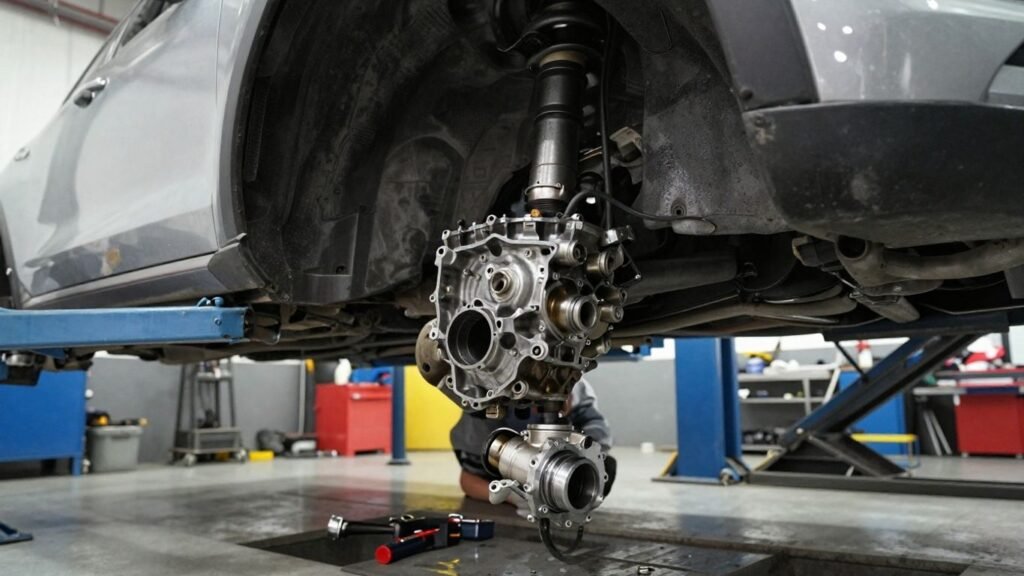
Some torque converter work cannot be completed through the dipstick tube or under the vehicle. The converter sits between the engine and transmission, and access often requires substantial disassembly. Continuing to drive while the unit slips can turn a localized repair into a transmission rebuild. When the symptoms are severe, an experienced transmission specialist is usually the safest next step.
Signs that the torque converter must be rebuilt or replaced
Persistent shudder after the fluid and control system have been checked, repeated slipping, abnormal mechanical noise, and heavy debris are strong reasons for deeper inspection. A converter with damaged clutch material, bearings, seals, or other internal parts generally needs rebuilding or replacement. The correct choice depends on the vehicle, parts availability, and the condition of the rest of the transmission. Ask for the evidence supporting that recommendation.
When transmission removal is required
If the converter itself must be removed, the transmission usually has to be separated from the engine. That allows the technician to inspect the converter, pump, input components, seals, and surrounding hardware. Removal is labor-intensive, so the estimate should include related seals, fluid, filter, and any damaged parts found during inspection. A careful shop will also consider why the original converter failed before installing another one.
How towing, driving, and overheating affect repair urgency
A vehicle that is mildly shuddering but maintains fluid level and temperature may be moved only as necessary for diagnosis. A vehicle that is slipping badly, leaking, making loud noises, or overheating should not be used for routine driving or towing. Reduce load and stop if warning indicators appear. The owner experiences with a torque converter issue illustrate why assumptions about mileage or warranty status should not replace a proper evaluation.
Questions to ask a transmission specialist
Before approving work, ask what tests were performed, what was found in the fluid or pan, and whether the diagnosis is limited to the converter or includes the transmission. Request a written estimate that separates labor, parts, fluid, programming, and warranty coverage. Also ask whether the cooler and lines will be inspected or flushed, since contamination can affect replacement parts. Clear answers are a better sign than a confident diagnosis based only on a short test drive.
Prevent future torque converter issues
Prevention is mostly consistent care and early response. Automatic transmissions are sensitive to heat, fluid condition, and the quality of replacement parts. Service intervals can vary widely by vehicle and use, so generic advice should not override the owner’s manual. Small changes in shift quality are worth recording before they become a breakdown.
Follow the vehicle manufacturer’s fluid service schedule
Use the specified interval and procedure, including any severe-service schedule for towing, frequent stop-and-go driving, or extreme temperatures. Keep receipts and note the fluid specification and mileage. A service history helps a technician distinguish an old maintenance issue from a new failure. It also prevents well-intentioned but incompatible fluid changes.
Keep transmission temperatures under control
Use the correct cooling equipment, keep the radiator and transmission cooler clear, and avoid overloading the vehicle. During demanding towing or mountain driving, watch for temperature warnings and allow the drivetrain to cool when the vehicle maker recommends it. Heat management is especially important when a transmission already shows a shudder or delayed engagement. Do not treat an added cooler as a cure for an unresolved mechanical fault.
Use the correct fluid and replacement parts
Transmission fluids are not interchangeable simply because they have a similar color or viscosity. The wrong friction characteristics can affect lockup-clutch operation and shift quality. Filters, seals, gaskets, and converters should match the vehicle and transmission application. Keep packaging or part numbers so the repair record remains traceable.
Respond early to shuddering, slipping, or engagement delays
Early inspection gives you more options and may reveal a fluid or control issue before friction material and hard parts are damaged. Useful habits include:
- Record when the symptom occurs and whether the vehicle is hot or cold.
- Check for leaks without crawling beneath an improperly supported vehicle.
- Avoid towing or hard acceleration while slipping or overheating is present.
- Arrange a scan and fluid inspection when symptoms repeat.
These steps do not guarantee that a converter will last indefinitely, but they reduce guesswork and help prevent a minor complaint from becoming a larger repair.
Conclusion
Torque converter symptoms overlap with many other automatic transmission faults, so the safest path is to observe carefully, check fluid and codes, and test methodically before replacing parts. Mild problems may respond to correct fluid or control-system service, while persistent slipping, heat, noise, or contamination calls for professional inspection. Acting early is usually the most practical way to fix torque converter issues without allowing related damage to spread.
Frequently Asked Questions
Can I drive with a failing torque converter?
Short trips for diagnosis may be possible when symptoms are mild, but slipping, overheating, loud noises, or a major fluid leak make continued driving risky. Towing the vehicle is safer when power delivery is unreliable.
What does torque converter shudder feel like?
It often feels like a quick vibration or rumble during light acceleration or steady cruising. The sensation may come and go as the lockup clutch applies and releases.
Does changing transmission fluid fix a torque converter?
Fluid service can help when the level, condition, or friction characteristics are causing the complaint. It cannot repair worn clutch material, damaged bearings, broken seals, or other internal damage.
How long can a torque converter last?
Service life varies with vehicle design, fluid care, heat, towing, driving conditions, and the health of the transmission. There is no universal mileage point at which replacement is required.
Is a torque converter the same as a transmission?
No. The converter connects the engine’s rotating power to the automatic transmission, while the transmission supplies different gear ratios and transfers power onward to the driveline.
Can a scan tool confirm a bad torque converter?
A scan tool can identify related codes and show control-system data, but it usually cannot prove that the converter’s internal parts have failed by itself. Fluid inspection and mechanical testing may still be needed.
Is rebuilding better than replacing a torque converter?
Either option can be appropriate. The decision depends on the converter’s damage, the quality of the replacement or rebuild, the condition of the transmission, cost, and the warranty offered by the repair provider.