

Key Takeaways
Addressing a lag in power delivery early can save your vehicle’s complex internal components from catastrophic wear. Following these maintenance steps helps you maintain control and reliability over your driving experience.
- Check transmission fluid levels and condition regularly as part of routine maintenance.
- Scan for diagnostic codes to identify potential sensor or electronic failures immediately.
- Inspect external links and filters for debris that might restrict hydraulic flow.
- Evaluate shifting behavior to distinguish between engine power loss and true transmission lag.
- Consult professional diagnostic services when recurring issues persist despite basic checks.
Understanding the signs of transmission hesitation
How hesitation feels while driving
When you press the gas pedal, you expect an immediate response from your drivetrain. Instead, you might notice a brief pause or a disconcerting surge before the vehicle actually accelerates. This sensation is often described as the car ‘thinking’ before it decides to shift, which is a classic symptom of an automatic transmission hesitation fix being required for your vehicle’s health.
Why early diagnosis prevents permanent damage
Ignoring these subtle delays often leads to accelerated wear on internal seals and clutch surfaces. You might be tempted to overlook the behavior if it only happens during cold mornings, but internal components remain under strain regardless of the ambient temperature. Proactive monitoring ensures that minor pressure irregularities do not escalate into a complete system failure that requires a costly rebuild.
Differentiating between engine misfires and transmission lag
Distinguishing between a struggling engine and a sluggish transmission is critical to an effective automatic transmission hesitation fix. An engine misfire typically produces a sputtering sensation accompanied by a check engine light that flashes under load. Conversely, transmission lag feels like an engine revving up freely while the vehicle struggles to maintain forward momentum or exhibits a harsh, delayed engagement when moving between gears.
Checking fluid levels and quality
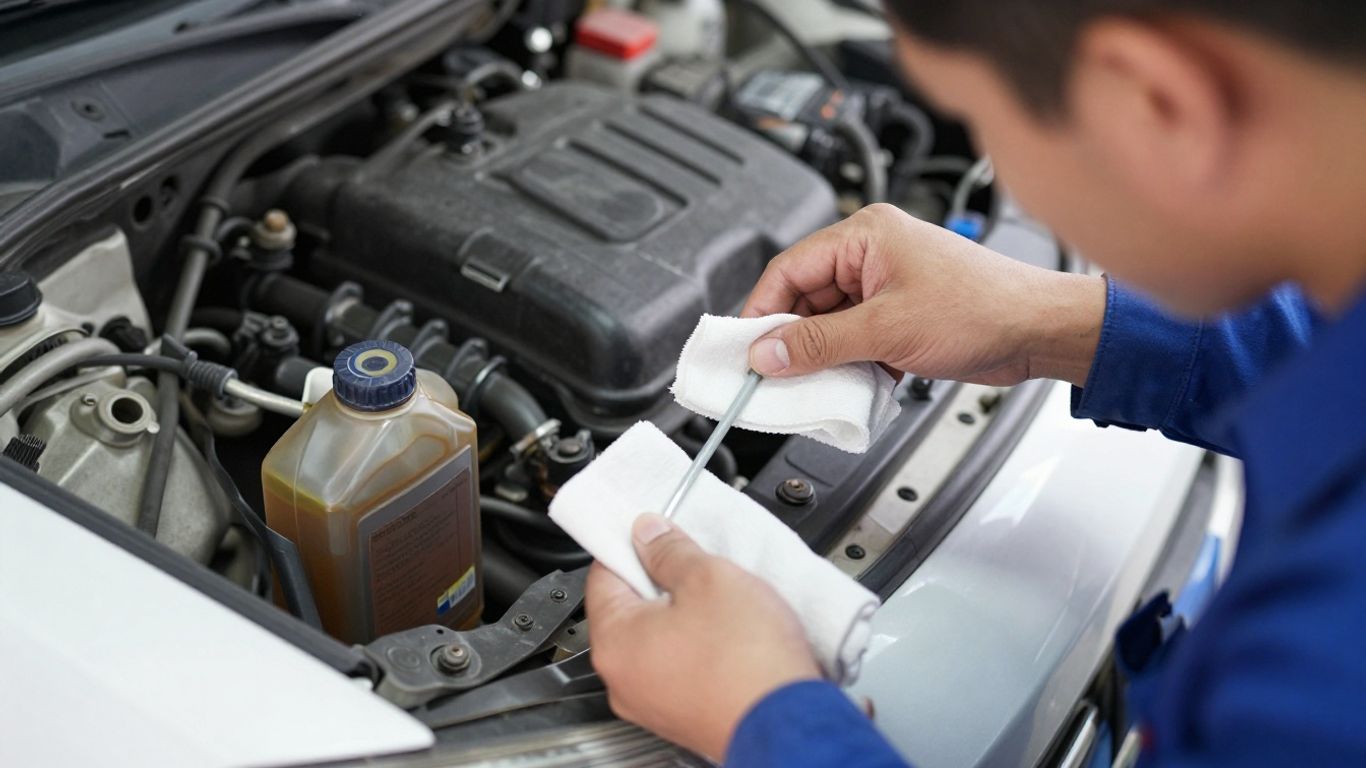
The role of ATF in gear engagement
Automatic Transmission Fluid serves as both a hydraulic medium and a cooling agent for your drivetrain. It creates the necessary pressure to actuate the clutch packs and helps manage the thermal load generated by the torque converter during operation. When the fluid degrades, the entire hydraulic circuit struggles to maintain the timing required for seamless gear shifts.
How to check your dipstick properly
To accurately assess your transmission health, ensure the vehicle is parked on flat ground and the engine has reached operating temperature. Many modern vehicles require the engine to remain running while you check the level, so consult your owner’s manual before pulling the dipstick. You want the fluid level to sit precisely within the ‘hot’ designated range on the tool.
Identifying signs of burnt or oxidized fluid
Healthy transmission fluid typically presents as a bright, translucent red color. If you pull the dipstick and notice a dark brown hue, or if you catch a distinct burnt odor, the fluid is likely oxidized and needs immediate replacement. The following table provides a breakdown of how fluid condition correlates to your driving experience.
| Fluid Condition | Appearance | Action Required |
|---|---|---|
| Healthy | Vibrant Red | Routine Monitoring |
| Oxidized | Dark Brown | Schedule Flush |
| Burnt/Clogged | Black or Gritty | Immediate Service |
After observing these fluid characteristics, it becomes clear that preventing contamination is the most effective way to protect your transmission’s longevity.
When to perform a flush versus a simple drain
A simple drain and fill procedure merely replaces the fluid currently in the pan, which accounts for only a fraction of the total system capacity. Performing a full fluid exchange is often necessary if the existing lubricant has been contaminated or run at high temperatures for extended periods. Professional services like those suggested by AAMCO can evaluate if a full system flush is safer for your transmission’s unique internal state.
Common mechanical culprits
Clogged transmission filters restricting flow
The transmission filter works diligently to trap metallic shavings and debris resulting from normal friction wear. Over time, these particles accumulate to a point where they physically restrict the flow of fluid to the valve body. A restricted filter manifests as sluggish shifts because the pump cannot achieve the required operating pressure fast enough to satisfy the demands of your engine’s power output.
Faulty torque converter engagement
The torque converter acts as the fluid-based coupling between the engine and the gearbox. If the internal lock-up clutch fails to engage smoothly, you may feel shuddering or a noticeable slip that makes it feel as though the transmission is stuck in a loop of indecision. This component often requires specialized diagnostic equipment to verify internal electrical and mechanical integrity.
Worn clutch packs and internal seals
Inside the gearbox, various clutch packs engage and disengage to facilitate different gear ratios. Exposure to heat and dirty fluid eventually causes these components to lose their grip, leading to a loss of power transfer. When these parts reach the end of their operational lifecycle, they often begin to slip during hard acceleration, causing that familiar hesitation.
Valve body failure and pressure issues
The valve body serves as the ‘brain’ of the transmission, routing pressurized fluid to the correct hydraulic circuits based on inputs. It contains multiple valves and springs that can become stuck due to varnish buildup over thousands of miles. Once internal pressure is no longer consistent, the transmission may feel confused about which gear to select, resulting in delayed responses during normal driving.
Electronic and sensor-related issues
Impact of speed sensors on shift timing
Modern transmissions rely heavily on input and output speed sensors to determine the optimal moment for a shift. If these sensors provide erratic signals due to loose connections or metal debris buildup on the magnetic tips, the computer board may delay gear changes. This creates a perceived hesitation that is actually a lack of sufficient data reaching the control system.
Troubleshooting transmission control module errors
The Transmission Control Module is the digital hub for your vehicle’s shifting behavior. Integrating services from Chris Gulli Group can sometimes help manage the digital overhead of modern vehicle maintenance. When the module encounters internal software conflicts or faulty memory registers, it may enter a ‘limp’ mode or exhibit inconsistent shift timing until the firmware is properly revalidated.
Throttle position sensor calibration effects
Your engine’s computer monitors how deeply you depress the accelerator to adjust transmission downshifting. If the Throttle Position Sensor is miscalibrated, your car might think you are cruising when you are actually requesting rapid acceleration. This disagreement between your foot’s intent and the engine’s sensor reading causes a noticeable pause while the transmission recovers from the incorrect signal.
Software updates and computer resets
Sometimes, the simplest path to fixing hesitation involves a factory software update rather than a mechanical repair. Manufacturers periodically release patches to improve shift logic, particularly for vehicles known for ‘hunting’ for gears or hesitating at low speeds. Your local service center can verify if your vehicle’s computer is running the latest configuration.
Advanced diagnostic procedures
Using an OBD-II scanner for transmission codes
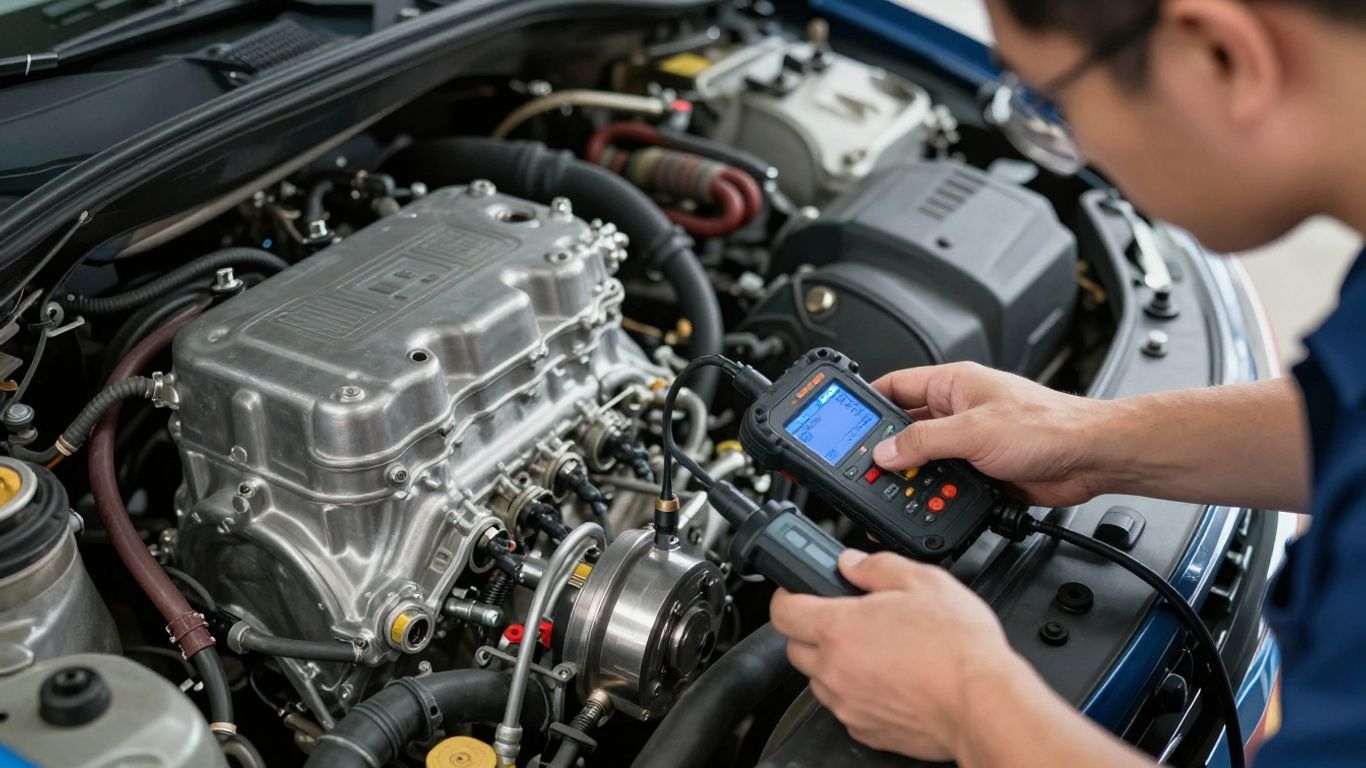
An OBD-II scanner provides the first line of defense in narrowing down a transmission issue. By reading manufacturer-specific codes, you can identify if the delay is caused by a faulty solenoid, a cooling fan error, or an actual mechanical slip.
Performing a stall test safely
A stall test is an advanced mechanical procedure that measures engine RPM against a locked transmission. This test is performed in short, controlled bursts to avoid overheating internal components. Because this procedure puts extreme stress on the entire drivetrain, it should only be attempted by technicians who fully understand the limits of your specific transmission model.
Pressure testing the transmission system
Technicians use specialized pressure gauges to verify that every clutch pack and hydraulic circuit is receiving the correct force. By reading these pressure values during a road test, a professional can see exactly which line is leaking or which clutch circuit is underperforming. This level of granular visibility ensures that you aren’t guessing at potentially expensive repairs.
Consulting with a professional transmission shop
When you suspect that the issue requires internal component replacement, professional intervention is your safest route. Experts bring years of experience to differentiate between a simple computer glitch and a failing hard part. They can provide an accurate transmission slipping diagnosis that prevents you from wasting resources on the wrong patch.
Conclusion
Maintaining the seamless operation of your car requires a mix of attentive observation and standard mechanical care. By checking your fluid levels regularly and listening for shifts that feel off-tempo, you effectively manage your vehicle’s longevity. Remember that catching small lags now is always more affordable than a full transmission overhaul, ensuring your ride stays smooth for years to come.
Frequently Asked Questions
Why does my car lurch during cold mornings?
Transmission fluid becomes more viscous at lower temperatures, which can delay hydraulic pressure buildup until the engine and oil reach proper operating heat.
Can a bad battery cause transmission shifts to go wrong?
Modern transmissions rely on stable voltage to power sensors and the control module, so a failing battery can indeed cause unpredictable signals and sluggish gear engagement.
Should I add transmission additives to fix a delay?
While some additives claim to seal leaks or clean varnish, they rarely fix mechanical wear and can sometimes interfere with the delicate balance of your transmission’s original chemical composition.
How often should my transmission fluid be changed?
Most manufacturers recommend a service interval every 60,000 to 100,000 miles, but driving in stop-and-go traffic often necessitates more frequent maintenance to prevent heat degradation.
What do metallic shavings in the fluid mean?
Finding metal flakes in your fluid indicates that internal gears or clutches are physically grinding against each other, which usually requires immediate professional disassembly and inspection.
Is it normal to feel a tiny bump when the car shifts?
Some vehicles have firmer shift profiles by design, but if the bump is getting progressively harder or is accompanied by a delay, it suggests a pressure or solenoid regulation issue.
Does high mileage mean my transmission is doomed?
High mileage does not guarantee failure, provided you have kept up with fluid exchanges and avoided overheating the system throughout the life of the vehicle.