Key Takeaways
Identifying gearbox clunking involves a careful look at your vehicle’s drivetrain and internal mechanical state. Addressing these sounds early often prevents expensive failures downstream.
- Gearbox noise frequently originates from worn driveline components or mounts.
- Internal transmission issues like fluid degradation are common culprits for shifting clunks.
- Regular physical inspections help distinguish between external mounts and internal gear failure.
- Persistent clunking increases safety risks, such as unpredictable handling during heavy acceleration.
- Timely intervention is the most effective strategy for preserving the long-term utility of the powertrain.
Understanding why your gearbox clunks when shifting
The mechanics of the gear shift process
When you shift gears, your vehicle undergoes a series of rapid mechanical engagements governed by the transmission. This process relies on various synchronized parts working under tight tolerances to move torque from the engine to the wheels efficiently.
Identifying the exact timing of the noise
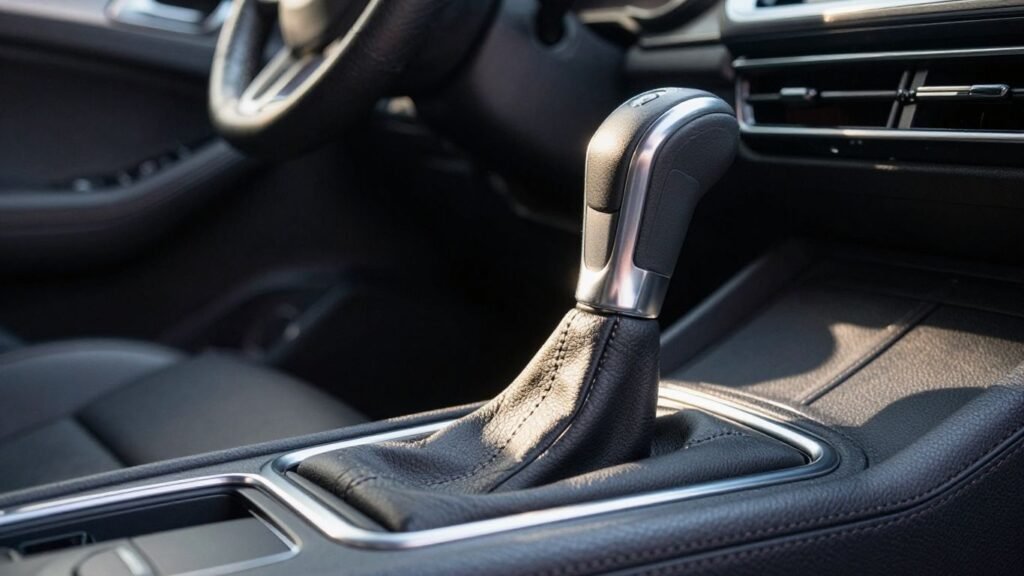
Determining when the sound occurs acts as a diagnostic lens. If you notice it specifically during the transition between drive and reverse, it often points to slack within the drivetrain, whereas noise during gear changes while accelerating at speed can suggest internal wear within the transmission housing.
Why clunking indicates mechanical play
Mechanical play, sometimes described as lash, is essentially extra space between parts that should be held tightly together. When these components move or click against each other, the result is a distinct thud or clunk. Addressing this early detection of issues is vital to keeping your car reliable and preventing catastrophic failure.
Common drivetrain issues causing noise
Worn universal joints and CV joints
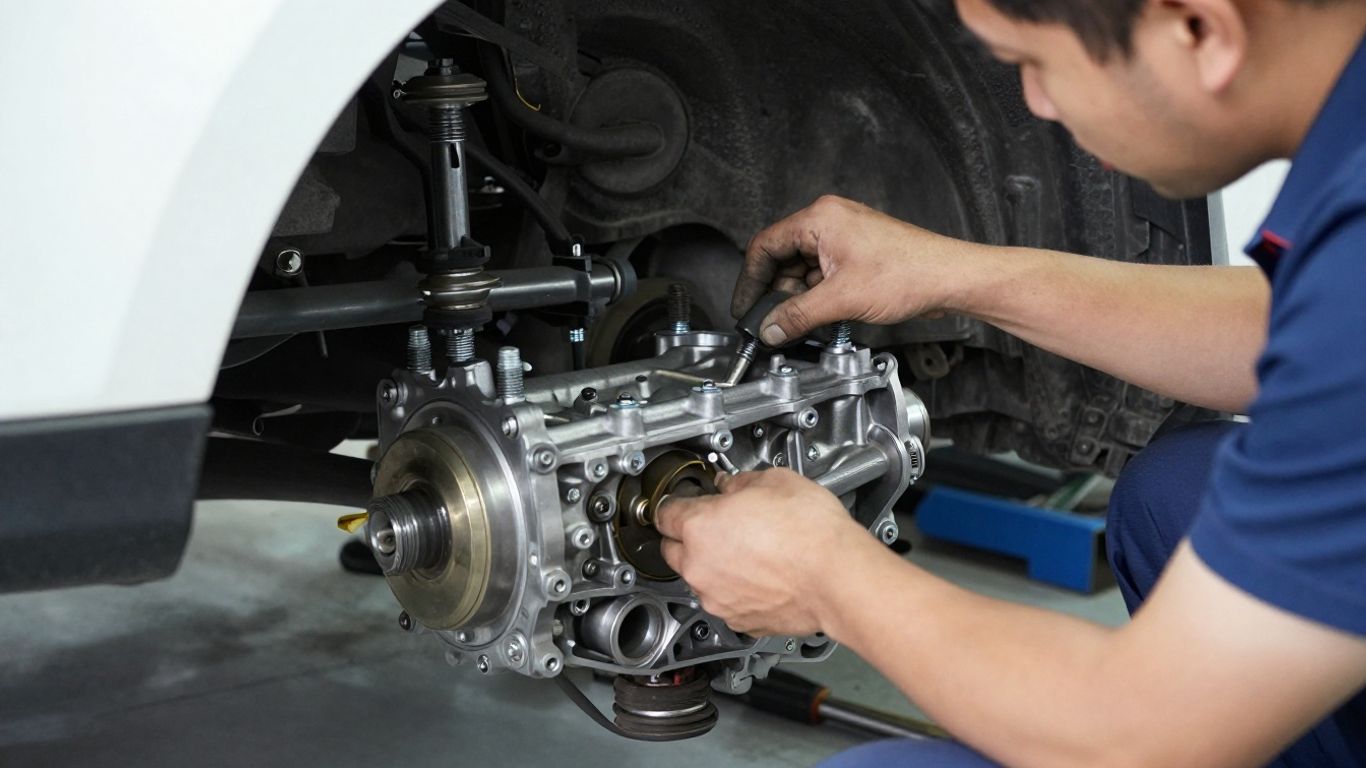
Constant velocity joints and universal joints absorb the physical strain of turning and suspension movement. Over time, these joints develop play, leading to a loud, metallic clunk whenever the drivetrain is placed under sudden load.
Excessive backlash in the differential
Backlash refers to the movement or gap between the gears in your differential. When this gap increases beyond factory settings, the gears clash upon engagement, resulting in a shudder or audible noise that resonates through the chassis.
Damaged engine or transmission mounts
Engine and transmission mounts hold your powertrain stable while isolating vibrations. When rubber bushings degrade, the entire assembly may shift during gear changes, creating a clunk as components knock against the engine bay walls. Common issues reported by owners include:
- Significant cracking in the rubber mount housing
- Visible oil leaks originating from fluid-filled mounts
- Increased engine vibration felt through the cabin
- Excess movement of the engine block during revving
Prompt repair of these supports often resolves the noise immediately.
Internal transmission failures to consider
Worn synchromesh rings and dog clutches
In manual gearboxes, synchromesh rings are designed to match the speed of the gear before engagement. When they fail, the dog clutches struggle to lock onto the gears, causing a clunking impact that you will feel directly through the gear lever.
Low or degraded transmission fluid
Transmission fluid is the lifeblood of your transmission causes as it provides both lubrication and cooling. Without the correct viscosity and pressure, internal parts suffer from friction and overheating. The table below outlines how fluid conditions correlate to common performance issues.
| Fluid Condition | Common Symptom | Potential Impact |
|---|---|---|
| Low Level | Hard shifting | Internal gear wear |
| Burnt/Discolored | Clunking noises | Valve body failure |
| Excessive Metal | Erratic behavior | Total system failure |
Checking your fluid quality is a straightforward way to monitor transmission health. By keeping fluid fresh, you avoid the premature hardening of seals and clutch material.
Broken gear teeth or internal debris
If a piece of metal breaks off within the gearbox, it can circulate between working gears. This interaction creates intermittent clunking that tends to occur in specific gears where the chipped tooth engages, signaling that the unit requires a full teardown.
Diagnostic steps to pinpoint the problem
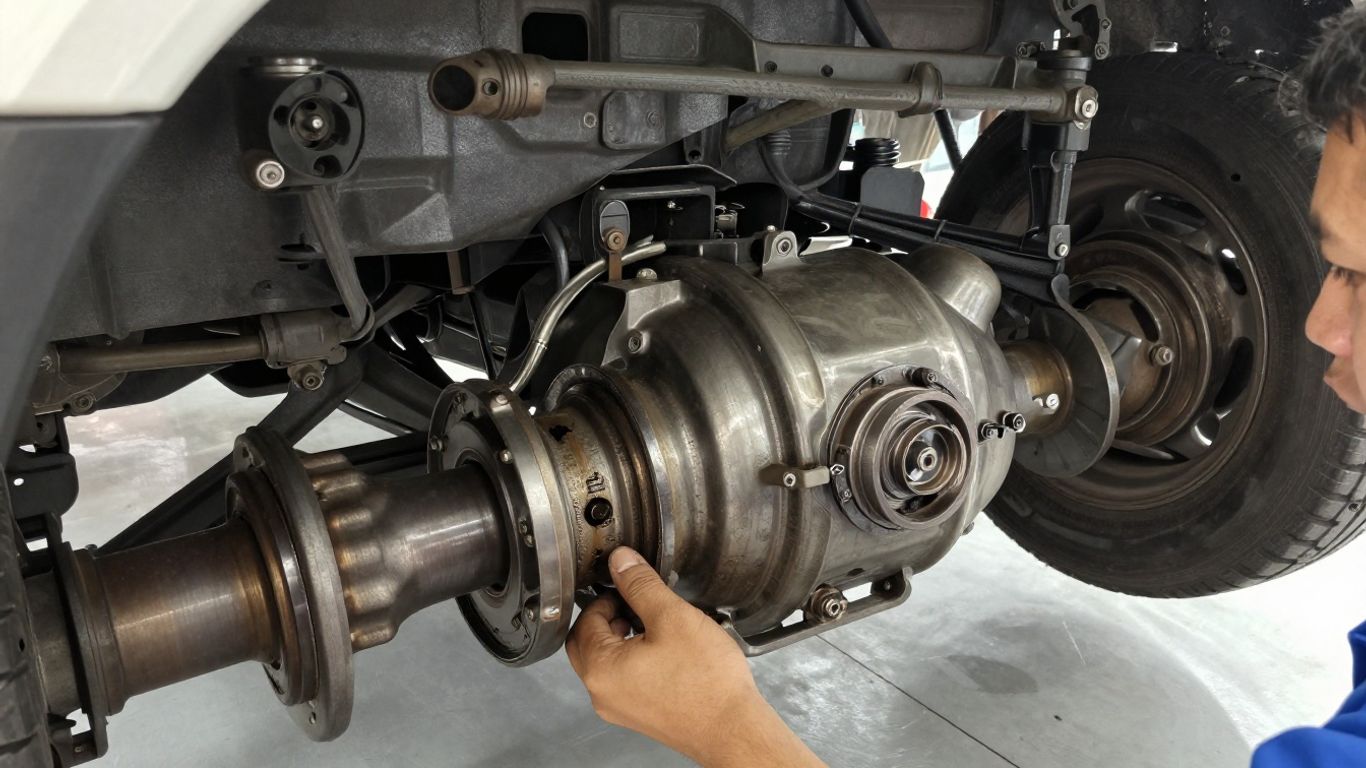
Performing a physical inspection of the chassis
Professional diagnosis often begins with checking the underside for loose bolts and failed bushings. You might consult an MB Scottsdale guide for specific torque settings or common failure points relevant to your vehicle model.
Testing the vehicle in different gear ratios
Driving through various gears helps isolate the fault since internal transmission components usually act differently under different torque loads. If the noise is present in every gear, the issue likely sits in the differential; if it is gear-specific, it points directly toward the inner transmission stack.
Monitoring for vibrations during acceleration
When a drivetrain component is failing, it often creates rhythmic pulses that manifest as vibrations throughout the vehicle. This is often an indication that clunking noise sources are not just isolated to the gearbox but are affecting the entire driveshaft equilibrium.
Deciding between transmission repair and replacement
Evaluating the cost of a transmission rebuild
Rebuilding a transmission involves replacing all seals, bearings, and clutches to restore the unit to factory specs. While this is cheaper than a full replacement, it is labor-intensive and requires high precision to ensure reliability.
Assessing the wear on surrounding drivetrain components
Before you commit to a transmission rebuild, evaluate the rest of the car. It is often cost-effective to replace failing mounts concurrently rather than having to drop the transmission twice.
When to opt for a complete gearbox replacement
Sometimes, the cost of labor to diagnose and repair internal damage exceeds the value of finding a donor gearbox. A swap is generally preferred when the housing itself is cracked or when electronic failure has compromised long-term internal stability.
Safety concerns and long-term driving impacts
Risks of continued operation during clunking
Driving with a clunking transmission risks sudden component failure at speed. If a joint or mount lets go entirely, you lose the ability to modulate your vehicle’s speed and direction safely.
Impact on vehicle handling and load distribution
Suspension and handling are intimately tied to the drivetrain. A clunk indicates that torque is not being delivered linearly, which can destabilize the vehicle when you are rounding corners under load.
Warning signs of total transmission failure
Be mindful of symptoms like burnt smells, warning lights appearing on the dash, or the feeling that the vehicle is stuck in a single gear. These are final indicators that the gearbox is reaching its mechanical limit.
Conclusion
Addressing a clunking gearbox is an essential aspect of vehicle ownership that protects both your wallet and your safety on the road. Whether the cause is a simple loose mount or a more complex internal mechanical failure, taking immediate action allows for precise repairs rather than a full system failure. By staying vigilant about new noises and performing regular inspections, you ensure that your vehicle remains a reliable machine for years to come.
Frequently Asked Questions
Can I keep driving if I hear a light clunk?
It is strongly advised to have the vehicle inspected immediately as even minor clunks often hide issues that deteriorate rapidly.
Is low fluid the most common cause of clunking?
It is a very common and easily reparable cause, but other drivetrain issues like worn mounts should also be ruled out by a professional.
Does weather affect transmission shifting noise?
Yes, extreme cold can influence fluid viscosity, which might make internal wear or low fluid levels more noticeable during the first few minutes of driving.
Will a clunking gear lead to a totaled transmission?
If ignored, the mechanical damage caused by the clunking will eventually destroy the gear teeth, potentially making the transmission non-repairable.
Should I trust a dealer for initial diagnostics?
They have the tools and specific engineering data relevant to your model, making them a good starting point for identifying complex electronic or mechanical faults.
How much does a typical mount repair cost?
Cost varies significantly based on vehicle type and labor requirements, though it is usually much cheaper than any internal transmission work.
Can bad driving habits cause these clunks?
Abrupt shifting and aggressive torque application accelerate the wear on mounts, joints, and synchronizers, which directly leads to mechanical play.