

Key Takeaways
A rebuilt transmission can be a sensible repair, but the warranty is only as useful as its written terms and the supplier’s willingness to honor them.
- Confirm whether the unit is rebuilt or remanufactured, and ask what was replaced.
- Compare parts coverage with parts-and-labor coverage, including mileage limits.
- Price installation, shipping, core charges, fluid, programming, and related repairs.
- Verify compatibility and follow the installer’s fluid and break-in instructions.
- Keep invoices, diagnostic reports, and service records in case a claim is needed.
Understand what rebuilt transmissions include
The word “rebuilt” does not describe one universal standard. It usually means a transmission was disassembled, inspected, and repaired with attention given to worn or failed components, but the exact process varies by supplier. Before comparing rebuilt transmissions with warranty coverage, find out what the seller actually means by the term.
A careful buyer does not need to assume that every rebuild is poor or that every remanufactured unit is identical. The useful question is whether the workmanship, parts selection, testing, and documentation match the vehicle’s needs.
How rebuilding differs from remanufacturing
A rebuild generally focuses on repairing or replacing problematic and worn components while retaining serviceable original parts. Remanufacturing is usually a more comprehensive process in which original components are restored or replaced to a defined standard. Terminology can vary, so ask for the supplier’s written definition rather than relying on the label alone.
A rebuilt-remanufactured comparison can help clarify the vocabulary, but its general descriptions should not replace the seller’s own parts list and warranty document. Those details determine what you are actually buying.
Components commonly replaced during rebuilding
A technician may replace seals, gaskets, clutches, bands, bearings, bushings, or other worn pieces, depending on the inspection. Some rebuilds also address valve-body problems or damaged hard parts, while others do not. The invoice should identify the work performed instead of using only a broad phrase such as “fully rebuilt.”
Ask whether the torque converter is included, inspected, or replaced. It is a related component that can carry old contamination or damage into the replacement unit if it is overlooked.
When a rebuilt transmission is a practical choice
A rebuild can make sense when the vehicle is otherwise sound, the correct unit is available, and a reputable shop can explain the repair clearly. It may also suit an older vehicle whose value does not justify a more extensive replacement strategy. The decision should be based on total installed cost, expected use, and the quality of available support.
The cheapest quote is rarely enough information. A transparent supplier that identifies the unit, installation requirements, and warranty obligations may offer better value even when its initial price is higher.
Warning signs of low-quality workmanship
Vague answers about parts, testing, or compatibility deserve caution. So do unusually short warranties, pressure to pay before the details are clear, and prices that exclude essential installation work without saying so. A supplier should be able to explain what happens if the unit fails and who pays for diagnosis, removal, shipping, and reinstallation.
Look for a traceable business address, reachable support staff, and paperwork that names the vehicle or transmission code. Clear records protect buyers because they turn a verbal promise into evidence.
Compare transmission warranty coverage
Warranty language can change the financial outcome of a transmission failure. Two units with similar prices may leave the owner with very different bills once labor, freight, fluids, and diagnosis are considered. Read the coverage before ordering, not after the vehicle is already on a lift.
The most useful comparison is not simply the number of months. It is the combination of covered parts, covered labor, claim procedures, exclusions, and the party responsible for approving the repair.

Parts-only versus parts-and-labor protection
Parts-only coverage may replace or repair the failed transmission component while leaving the owner responsible for removal, installation, diagnosis, and other charges. Parts-and-labor coverage can be more valuable, but it may still contain labor-rate caps, approved-shop rules, or deductibles. Ask for examples of costs that would remain yours after a covered failure.
A warranty that covers freight or towing may also reduce exposure, although those benefits must be stated explicitly. Never infer them from friendly sales language.
Warranty length, mileage limits, and exclusions
Check both the time limit and mileage limit, along with the date from which each begins. Some warranties exclude commercial use, towing, racing, modifications, overheating, contamination, or improper fluid. Others require maintenance at specified intervals or limit repairs to the original purchaser.
Write down the conditions that matter to your driving. A long term is not necessarily broad protection if ordinary use, local labor, or a related component is excluded.
In-house warranties versus manufacturer-backed plans
An in-house warranty is administered by the seller or rebuilding shop, so the quality of support depends heavily on that business’s records and financial stability. A manufacturer-backed plan may provide a wider service network, but it can still require authorization and approved procedures. The name of the warranty provider matters less than the actual obligations it accepts.
For comparison, JASPER describes remanufactured automatic and standard transmissions as ready for installation and publishes warranty information through its own materials. That is a specific product statement, not a reason to assume every rebuilt unit has the same preparation or coverage.
Why written terms matter before purchase
A written warranty should identify the covered unit, duration, mileage, labor rules, exclusions, claim process, and responsibility for shipping. It should also explain whether the supplier may choose repair, replacement, or reimbursement. If a promise appears only in a phone call, ask for it in the contract or invoice.
Use a simple comparison sheet while shopping. The service terms example is not an automotive warranty, but it illustrates why payment terms, performance expectations, exclusions, and cancellation language deserve attention in any service agreement.
Evaluate the transmission supplier
Supplier quality is part of warranty quality. A well-written policy is less reassuring if the business cannot identify who rebuilt the unit, where claims are handled, or how technical questions are answered. Spend time assessing the seller before spending money on the transmission.
Online reviews can help, but they are only one signal. Combine them with direct questions, business-history checks, a detailed quote, and a clear explanation of the installation requirements.
Questions to ask about the rebuilding process
Ask what inspection steps are performed, which parts are routinely replaced, whether hard parts are measured, and how the unit is tested before shipment. Confirm whether the torque converter, sensors, seals, and software-related requirements are included. The answers should be specific enough that another technician could understand the scope of work.
If the supplier cannot provide a parts or process summary, ask why. A concise answer is fine; an evasive answer is not.
How to verify technician experience and certifications
Experience should be relevant to the transmission family and vehicle application, not just general automotive work. Ask how long the shop has rebuilt similar units and whether technicians receive ongoing training. Certifications can be useful, but they should supplement—not replace—evidence of consistent procedures and testing.
A supplier that can explain diagnostic methods and installation requirements is easier to work with when a problem appears. That practical knowledge often matters more than a polished sales page.
Checking reviews, complaints, and business history
Read recent reviews for patterns involving fitment, delayed claims, repeat failures, or unexplained fees. Check whether complaints receive substantive responses and whether the business has a stable way to contact it. You can also assess how clearly a supplier communicates online; a local visibility guide offers general research ideas, though automotive reviews and warranty records remain the relevant evidence here.
Be wary of treating one glowing testimonial or one angry review as definitive. Repeated, specific experiences are more useful than isolated praise or criticism.
Comparing local shops, dealers, and online suppliers
A local shop may offer easier inspection and installation support, while an online supplier may provide broader inventory or ship directly to an installer. A dealer may have strong vehicle-specific knowledge but a different pricing structure. Compare the complete service path rather than the box price alone.
Before ordering online, identify the installer who will receive and inspect the unit. For a local purchase, ask whether the same business handles both rebuilding and warranty diagnosis. That continuity can simplify a claim.
Calculate the real cost of a rebuilt transmission
The advertised transmission price is only one line in the repair budget. Installation, diagnosis, fluid, programming, freight, core handling, and related components can materially change the final amount. Get an itemized estimate before approving the work.
It is also wise to compare the cost of a rebuild with the vehicle’s condition and expected ownership period. A repair that is reasonable for several more years of use may be difficult to justify if other major systems are already failing.
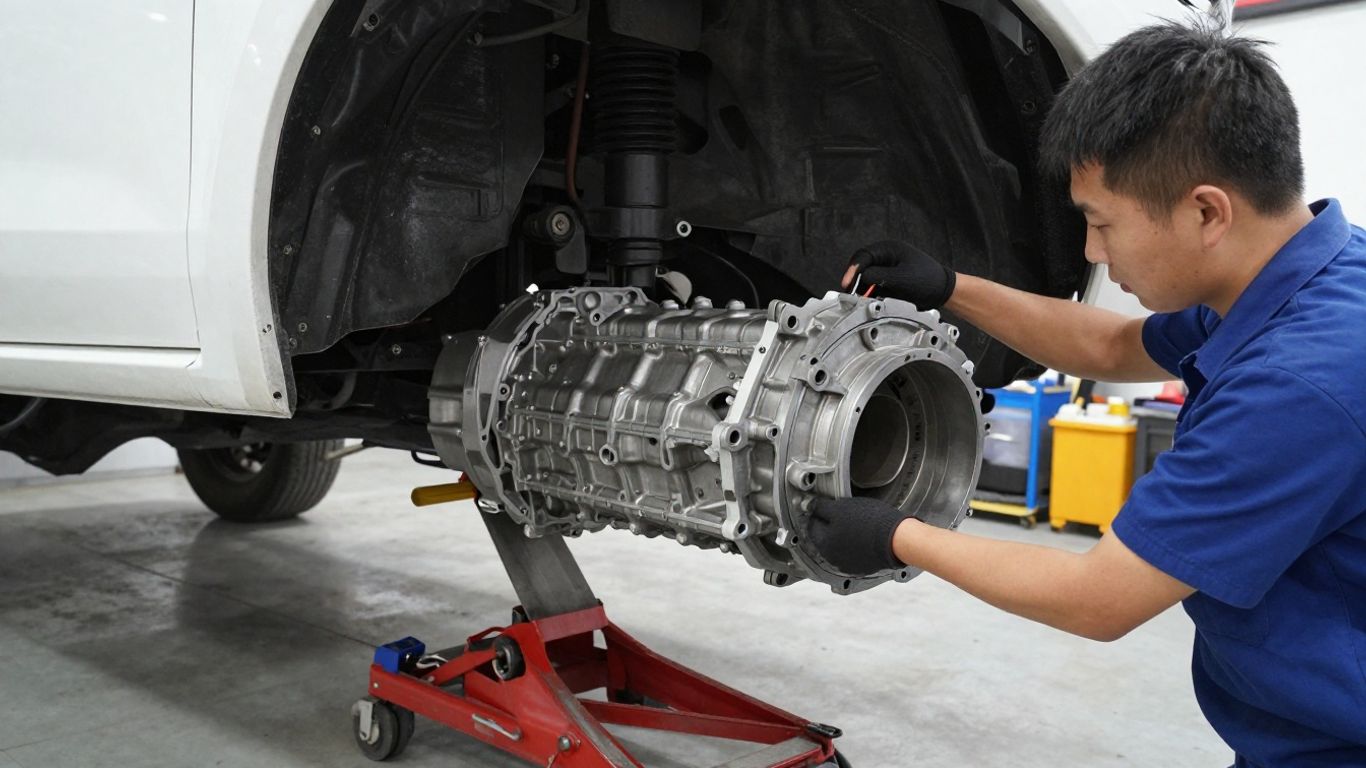
Upfront pricing and installation charges
Ask whether the quote includes removal of the old unit, installation of the replacement, road testing, fluid, filter, adjustments, and diagnosis. Labor may be priced as a fixed amount or an estimate, and extra time may be billed if rust, broken fasteners, or prior modifications complicate the job.
Request written approval rules for additional work. This prevents a low initial quote from becoming an unexpectedly large invoice.
Core deposits, shipping, and return policies
A core deposit may be charged until the old transmission is returned and accepted. Shipping can involve separate outbound and return charges, while damage in transit may create disputes about responsibility. Ask how the core must be packaged, how quickly it must be returned, and what conditions reduce the refund.
These details are especially important when ordering from a distant supplier. Keep photographs of the core and packaging if the seller requires a return.
Additional parts that may need replacement
A transmission repair can expose problems in the cooler, lines, mounts, wiring, sensors, or torque converter. Some vehicles also require programming or adaptation after installation. These are not automatically signs of an unfair charge, but they should be diagnosed and explained before the work proceeds.
A sensible estimate separates required work from recommended work. That distinction helps you decide without confusing maintenance with an unexpected failure.
How warranty coverage affects long-term value
A broader warranty can reduce risk, but only if its conditions fit your driving and the supplier remains accessible. Compare the likely out-of-pocket cost of a claim with the price difference between available units. A plan covering parts, labor, and freight may be worth more than a longer parts-only term.
For perspective, TRCL publicly describes a 3-year/100,000-mile nationwide warranty covering parts, freight, and labor on its automatic transmissions. That is a documented offering from that supplier; it should be used as a comparison point, not treated as a standard for all rebuilt transmissions.
Prepare for installation and break-in
Even a properly rebuilt transmission can fail prematurely if the vehicle has an unresolved cooling, electrical, or driveline problem. Installation is therefore part of the reliability decision, not a separate afterthought. Give the installer the warranty instructions before work begins.
Ask for a written installation checklist and keep a copy with the invoice. Small procedural details can determine whether coverage remains available later.
Confirm vehicle compatibility before ordering
Match the year, make, model, engine, drivetrain, transmission code, wiring, and calibration requirements. A similar-looking unit may not communicate correctly with the vehicle or may require different mounting and control components. Provide the vehicle identification number and any diagnostic information requested by the supplier.
Do not rely on a catalog photograph alone. Compatibility should be confirmed in writing, especially when the unit is being shipped.
Inspect related components before installation
The installer should inspect the cooler and lines, mounts, electrical connectors, driveshaft or axles, and torque converter where applicable. The cooling system may need flushing if the old transmission failed catastrophically. Finding contamination or damage before installation is cheaper than sending it into a replacement unit.
Ask the shop to record any rejected related parts and explain why replacement is recommended. That documentation can also help with a later warranty claim.
Follow fluid, programming, and adjustment requirements
Use the specified fluid and filter, fill the unit correctly, and complete any required programming, relearn, or adjustment procedures. A transmission may shift poorly when the mechanical installation is sound but the electronic setup is incomplete. The installer should road-test the vehicle and check for leaks and fault codes.
A short video about remanufactured transmission installation may be useful background, but the supplier’s instructions and the vehicle’s service information should control the actual repair. The linked page discusses remanufactured transmissions, so apply only guidance that matches the specific unit.
Keep service records for warranty protection
Save the purchase invoice, installation invoice, diagnostic reports, fluid receipts, mileage, and all communication with the supplier. Record the date and mileage of the installation, along with the unit or serial number. These details make it easier to show that the required procedures were followed.
A digital folder with photographs and scanned documents is usually enough. Do not wait until a failure occurs to reconstruct the repair history.
Handle warranty claims and common problems
A transmission problem after installation does not automatically prove that the rebuilt unit is defective. Symptoms can come from wiring, programming, mounts, cooling, fluid level, or another driveline component. Prompt diagnosis helps separate those possibilities and protects the claim timeline.
Follow the warranty’s notice and authorization rules. Continuing to drive after a serious symptom can worsen damage and give the supplier a reason to question the claim.
Symptoms that may indicate a transmission issue
Watch for slipping, delayed engagement, harsh or erratic shifts, unusual noise, fluid leaks, burning odor, or warning lights. A vehicle that loses drive or enters a limited operating mode should be stopped safely rather than driven farther. Note when the symptom occurs and whether the vehicle was hot, cold, loaded, or towing.
A symptom log gives the technician useful context. It also creates a clearer record than a general statement that the vehicle “does not feel right.”
Steps to take when a failure occurs
First, stop using the vehicle if continued driving could increase damage. Contact the installer and warranty provider promptly, describe the symptoms, and ask whether authorization is required before diagnosis or removal. Have the vehicle inspected by an approved facility when the policy requires one.
A practical claim sequence is:
- Record the mileage, warning lights, leaks, and driving conditions.
- Photograph the vehicle, fluid leaks, serial labels, and relevant parts.
- Obtain a written diagnostic report before authorizing removal.
- Ask for claim approval and shipping instructions in writing.
These steps reduce confusion between the installer, supplier, and warranty administrator. They also preserve evidence if the parties disagree about the cause.
Documentation needed to support a claim
Most claims are easier when supported by the original invoice, warranty certificate, installation records, maintenance receipts, diagnostic codes, and communication history. The report should explain the observed failure and distinguish it from unrelated vehicle problems. Keep copies of everything submitted.
If the supplier asks for the failed unit to be returned, clarify who pays freight and how the inspection will be handled. A verbal agreement should be followed by an email or written claim note.
Situations that can void warranty coverage
Common exclusions may involve incorrect fluid, neglected maintenance, unauthorized modification, racing, overloading, overheating, contamination, or installation by an unapproved shop. The exact rules vary, so read the policy rather than assuming a general industry standard. Ask questions before modifying the vehicle or changing the service arrangement.
A business’s service agreement may also reveal how exclusions and liability are worded; the contract terms guide is a general example from another service category, not an automotive warranty. For longer-term health of the vehicle, some owners also explore a longevity stack, but that unrelated subject has no bearing on transmission warranty eligibility.
Conclusion
Choosing rebuilt transmissions with warranty is less about finding the largest promise and more about matching documented coverage to a careful rebuilding process, qualified installation, and realistic ownership costs. Compare the unit, supplier, warranty, and installation as one package, then keep the records that prove how the work was done.
Frequently Asked Questions
Is a rebuilt transmission the same as a remanufactured transmission?
Not necessarily. Rebuilt usually refers to repairing or replacing worn or failed components, while remanufactured often describes a more comprehensive process with defined restoration standards. Sellers may use the terms differently, so request a written explanation.
What should a transmission warranty cover?
Ideally, the policy clearly states whether it covers parts, labor, freight, diagnosis, towing, and related components. It should also explain mileage limits, exclusions, deductibles, authorization rules, and the process for obtaining service.
How long should a rebuilt transmission warranty last?
There is no single correct term. Compare the duration and mileage limit with the vehicle’s expected use, then examine exclusions and labor coverage. A shorter warranty with broad, practical protection may be more useful than a longer parts-only promise.
Can installation affect warranty coverage?
Yes. Some policies require approved installers, specified fluids, cooler flushing, programming, or documented maintenance. Failure to follow those requirements may limit or void coverage.
What is a core charge?
A core charge is a deposit collected until the old transmission is returned and accepted. Ask about the deadline, packaging, shipping responsibility, and conditions that could reduce or prevent the refund.
What should I do if the transmission starts slipping after installation?
Stop driving if continued use could cause more damage, record the symptoms and mileage, and contact the installer or warranty administrator promptly. Follow the policy’s authorization rules before paying for removal or repairs.
Are rebuilt transmissions worth the cost?
They can be, particularly when the vehicle is otherwise dependable and the supplier provides transparent workmanship, fair installation support, and useful written coverage. Judge the total installed cost and risk, not the advertised unit price alone.