

Key Takeaways
A gearbox cooling system works best when its parts are understood and its condition is checked consistently. Use the equipment maker’s guidance as your baseline, then respond to changes in operation.
- Identify how the gearbox sheds heat and which components move or remove it.
- Follow the manufacturer’s service intervals and increase checks when conditions change.
- Inspect fluid condition, circulation, hoses, fittings, and signs of leakage.
- Keep coolers clear and protect fans, fins, and airflow paths during cleaning.
- Stop and seek qualified help if temperatures rise or the cause of a fault is unclear.
Understand the cooling system and its components
A gearbox produces heat as its moving parts transmit power, and the cooling arrangement helps carry that heat away. The design varies by machine: some rely on the gearbox housing and surrounding air, while others circulate lubricant through an external cooler. Before maintenance begins, trace the system so you know what should be inspected and what should remain sealed.
How heat moves out of the gearbox
Friction between moving parts and the movement of lubricant both contribute to heat inside a gearbox. The lubricant carries some of that heat to the housing, where it can dissipate into the surrounding air; a separate cooling circuit may move it to a heat exchanger instead. The cooling system must work alongside lubrication, since low or degraded lubricant can affect both heat transfer and component protection.
Common cooling system designs
A simple arrangement relies on the gearbox casing to release heat to the air. Other designs circulate lubricant through a fan-cooled or liquid-cooled heat exchanger, with a pump or other means of maintaining flow. Vehicle transmissions use their own cooling arrangements, and a guide to transmission cooler designs can help explain how different exchanger forms move heat, though the correct design for any gearbox depends on its equipment specifications.
Key components to identify before servicing
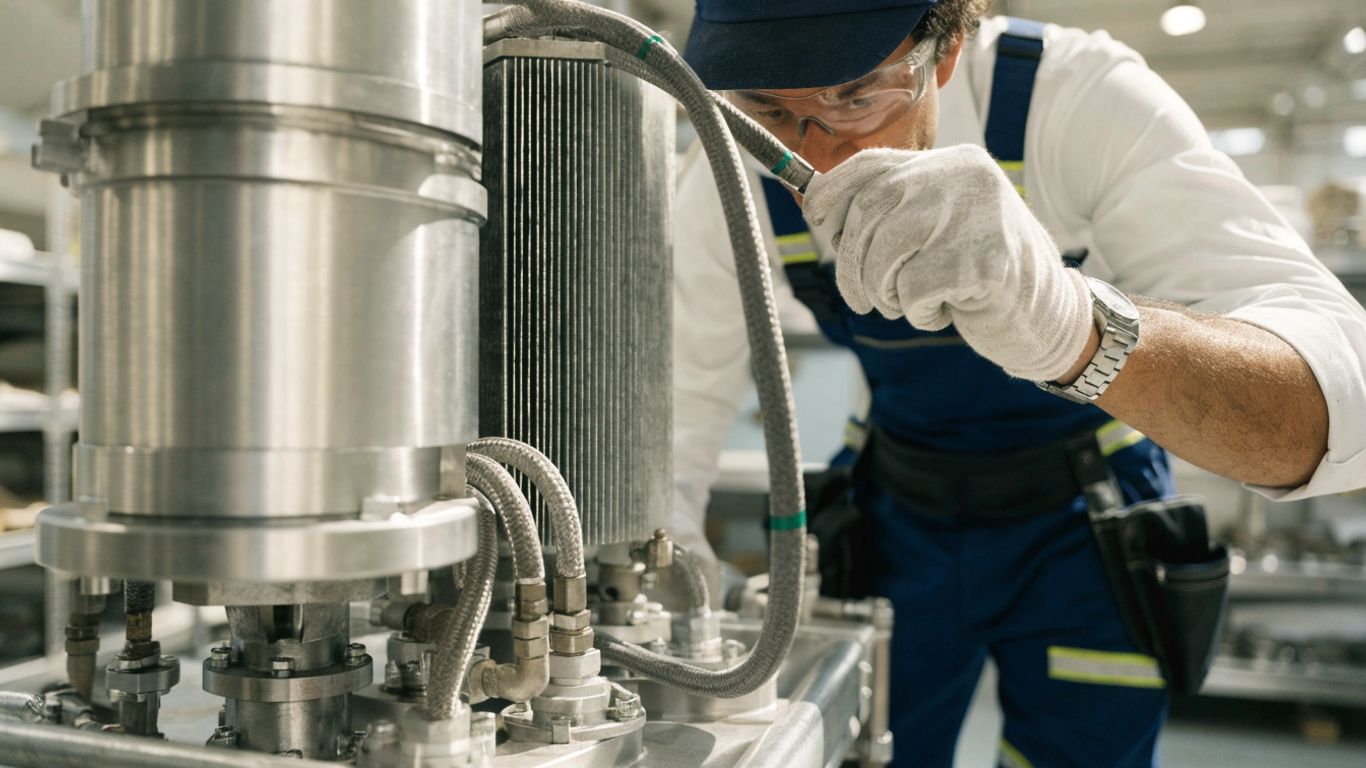
Locate the gearbox, any external cooler, hoses or pipes, pump, fan, temperature indicators, and fluid-level or drain points. Their arrangement determines where a blockage, leak, or loss of circulation might show up. Knowing what is fitted also helps prevent a routine inspection from becoming an accidental opening of a sealed circuit.
Set an inspection and maintenance schedule
A reliable schedule combines the equipment maker’s instructions with observations from the actual operating environment. A machine that runs for long periods, carries heavy loads, or faces high ambient temperatures may need closer monitoring than one used intermittently. Regular gearbox cooling system maintenance is easier to sustain when checks are assigned, recorded, and tied to clear follow-up actions.
Follow the equipment maker’s service intervals
Start with the manual or maintenance plan for the specific gearbox and cooling arrangement. It should set the requirements for lubricant checks, fluid changes, filter service, and any inspection or testing; avoid substituting a generic interval for the maker’s guidance. For cooling tower equipment, a resource on gearbox oil intervals offers related background on lubrication and inspection, but the equipment’s own instructions remain the controlling reference.
Adjust checks for load, temperature, and operating conditions
Scheduled checks are a baseline, not a reason to ignore changing conditions. Increase attention after a major change in load, a hot spell, a blocked ventilation path, or a sign that the system is behaving differently. Practical cooling methods can also depend on the drive and its duty cycle, as described in this gear-drive cooling overview.
Keep service records and track changes over time
A short, consistent record can reveal a gradual temperature rise or recurring fluid loss before it becomes an obvious failure. Note the date, operating conditions, readings, fluid condition, work performed, and any unresolved concern. The same habit of recording readings appears in other settings, including the Elaré tracking sheet; for machinery, the useful detail is the reading alongside the machine’s operating context.
| Record | What to note | Why it helps |
|---|---|---|
| Temperature | Reading, location, and operating state | Makes later comparisons meaningful |
| Fluid | Level, appearance, and service date | Helps identify changes or missed service |
| Cooling path | Flow, fan operation, and visible blockage | Points to possible circulation or airflow issues |
| Follow-up | Finding, action, and person responsible | Keeps unresolved concerns from being overlooked |
Use the same measurement points and method where possible, so comparisons are fair. A log is most useful when it records both normal readings and deviations, rather than only major repairs.
Check fluids, flow, and connections
A cooling system can look intact from the outside and still fail to move heat effectively. Check the condition of the fluid, the route it takes, and the connections that keep it contained. The right inspection details differ between lubricant-cooled gearboxes and systems with a separate coolant circuit, so identify the specified fluid before opening anything.
Inspect lubricant or coolant levels and condition
Check levels using the maker’s method, including any required temperature, shutdown, or settling conditions. Look for changes in color, clarity, odor, or consistency, while remembering that appearance alone cannot confirm fluid performance. Use the recommended test or service process if the fluid’s condition is uncertain, and do not top up with an unverified substitute.
Look for leaks, contamination, and fluid mixing
Inspect the housing, seals, drain points, cooler, and joints for fresh wetness, residue, or a falling level. Dirt, water, metal particles, or an unexpected change in fluid appearance can signal a problem that needs investigation. In some designs, separate fluids pass through the same heat exchanger; a damaged barrier can allow mixing, so unexplained level or condition changes warrant prompt attention. Cleanliness is also central to transmission cooling circuits, where cooler-line service is part of maintaining proper flow.
Check hoses, fittings, pumps, and circulation
Look for cracked or swollen hoses, loose fittings, chafing, corrosion, and signs of movement at supports. If the design uses a pump, confirm that it operates as specified and that there is no clear evidence of restricted flow; avoid loosening a connection to test circulation unless the service procedure calls for it. Visible corrosion on exposed metal parts deserves attention, and this overview of tratamientos anticorrosivos covers preventive approaches for metal structures, though gearbox repairs should follow the equipment maker’s requirements.
Clean heat exchangers and protect airflow
Cooler surfaces need open passages for heat to escape, but cleaning should not damage the parts that make heat transfer possible. Dust, oil residue, leaves, and other debris can collect on the face of a cooler or radiator, especially where airflow is limited. Inspect the whole path, not just the visible front surface, and use the machine’s instructions to choose a safe cleaning method.
Remove debris from coolers and radiator surfaces
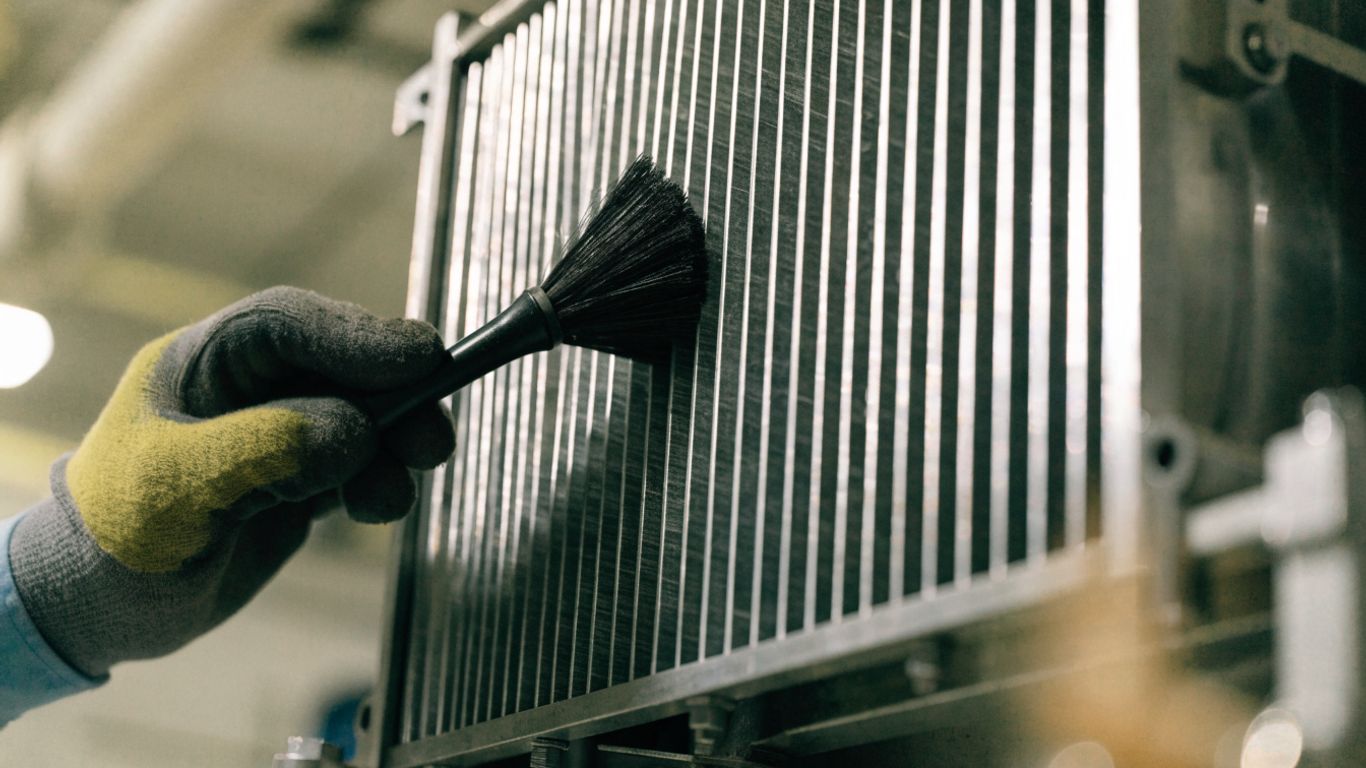
With the equipment safely stopped, check for loose debris and buildup on the cooler surface and around nearby openings. Remove material in a way that does not push it deeper into the fins or into moving components. Clearing roof gutters and surrounding debris is a similar routine task in LaFayette roof tips, although the tools and precautions for a gearbox cooler must suit the equipment itself.
Inspect fans, guards, and ventilation paths
Check that the fan is secure, its guard is intact, and surrounding openings are not blocked by stored materials or debris. Do not reach through a guard or remove one while the machine can start. Poor ventilation around a cooler can reduce its ability to release heat even when the cooler itself is clean, so leave adequate clearance as specified by the manufacturer.
Choose cleaning methods that won’t damage fins or seals
Before cleaning, identify delicate fins, seals, electrical parts, and any limits in the service instructions. Use a method and pressure appropriate to those components; aggressive force can bend fins, force debris inward, or damage nearby connections. A simple sequence helps keep the work controlled:
- Stop and isolate the equipment according to its procedure.
- Remove loose debris by a method approved for the cooler.
- Inspect fins, seals, and nearby connections for damage.
- Confirm the airflow path is clear before returning the machine to service.
After cleaning, check that guards and access panels are back in place and that no tools or loose material remain nearby. Care instructions vary by material and finish; a comparison of quartzite countertops is one example of why cleaning choices should match the surface, not just the appearance of dirt.
Spot signs of cooling system trouble
Cooling faults often develop gradually, and a change from the machine’s normal behavior may be more useful than a single reading in isolation. Compare temperatures, noise, flow, and fluid condition with the equipment’s baseline and operating conditions. A persistent deviation deserves investigation rather than repeated resetting or topping up.
Recognize rising temperatures and overheating
A temperature that climbs beyond the maker’s limits, rises unusually quickly, or fails to settle under normal conditions can indicate a cooling problem. Check the reading method and operating state first, then look for restricted airflow, low fluid, a leak, or reduced circulation. Stop operation if the manufacturer’s limits or safety instructions require it; continued running can turn a manageable fault into damage.
Check for unusual noise, vibration, or pressure changes
A new pump noise, fan vibration, or unexpected pressure indication may point to a loose component, obstruction, or circulation issue. Record when it occurs and whether it changes with load or temperature rather than relying on memory. A short visual explanation can help orient an inspection, but it cannot replace equipment-specific procedures.
If these signs appear together, or worsen quickly, stop and assess the machine using the approved troubleshooting steps. Avoid opening a pressurized circuit or making adjustments while the system is running unless the procedure explicitly allows it.
Distinguish cooling faults from gearbox problems
Overheating may arise from poor heat removal, but it can also accompany excessive friction, a mechanical fault, or unsuitable operating conditions. Look for related clues such as abnormal gear noise, vibration, lubricant changes, or a load pattern that has shifted. If the cause is not clear, treat the temperature rise as a symptom to diagnose rather than assuming that cleaning the cooler will resolve it.
Service the system safely and decide when to get help
Cooling equipment may contain hot fluid, moving fans, electrical connections, or stored pressure. Before service, identify the hazards and follow the machine’s isolation and cooldown requirements. If a task goes beyond routine inspection, or the cause of a symptom is uncertain, a qualified technician can test the system without relying on guesswork.
Isolate equipment and allow hot components to cool
Shut down and isolate the equipment using the approved procedure, and prevent an unexpected restart while work is underway. Allow hot surfaces and fluids to cool before touching or opening components. Wear the protective equipment required for the task, and do not remove a cap, plug, or fitting from a hot or pressurized circuit.
Use compatible fluids and replacement parts
Confirm the exact fluid specification and part requirements for the gearbox and cooling circuit before servicing. Fluids that appear similar may not be compatible, and an unsuitable hose, seal, or filter can affect reliability or circulation. Follow the maker’s instructions for filling, bleeding, disposal, and replacement rather than relying on general assumptions.
Know when testing or repairs require a qualified technician
Seek qualified help for recurring overheating, suspected fluid mixing, a damaged heat exchanger, unusual internal noise, or a problem that remains after basic checks. Pressure testing, electrical diagnosis, and internal gearbox work may require specialist equipment or training. Keep the machine out of service when its condition is uncertain and the risks of continued operation are not understood.
Conclusion
A sound maintenance routine starts with knowing how the gearbox sheds heat, then checking fluid, flow, connections, and airflow against the equipment maker’s requirements. Consistent records make gradual changes easier to spot, while safe work practices help keep routine care from creating new problems. When symptoms persist or the diagnosis is unclear, pause operation and bring in a qualified technician.
Frequently Asked Questions
How often should a gearbox cooling system be inspected?
Use the equipment maker’s service intervals as the baseline. Increase inspection frequency when load, temperature, duty cycle, or operating conditions change, or when symptoms appear.
What are common signs of gearbox overheating?
A rising temperature, repeated operation above the specified limit, a new noise or vibration, or a change in fluid condition can indicate trouble. Compare observations with normal readings and the manufacturer’s limits.
Can a dirty cooler cause a gearbox to overheat?
Restricted airflow across a heat exchanger can reduce its ability to release heat. Check for debris and blocked ventilation, but also investigate fluid levels, circulation, and mechanical causes.
Should I use any gear oil that matches the viscosity?
No. Follow the equipment maker’s full fluid specification, not viscosity alone. Compatibility can depend on the gearbox design and operating requirements.
What should I check if the fluid level keeps dropping?
Look for leakage around seals, hoses, fittings, the cooler, and drain points. Repeated fluid loss needs investigation, since topping up without finding the cause can leave the underlying fault unresolved.
Is it safe to clean a gearbox cooler while the machine is running?
Do not clean near moving parts or while equipment can start unexpectedly. Isolate it and follow the maker’s shutdown, cooldown, and cleaning instructions.
When should I call a qualified technician?
Get help for repeated overheating, suspected fluid mixing, damaged components, persistent abnormal noise, or any fault that basic checks do not explain. Testing and repairs may require specialist tools and training.