

Key Takeaways
A careful transmission inspection does more than confirm that a vehicle shifts. It connects the driver’s symptoms with physical evidence, test results, and repair choices.
- An inspection may include visual checks, fluid assessment, road testing, and computer diagnostics.
- Delayed engagement, slipping, grinding, leaks, odors, and warning lights deserve attention.
- Technicians should separate transmission faults from engine, axle, differential, and other drivetrain problems.
- A useful report explains evidence, safety risks, likely causes, and repair urgency.
- Estimates should be compared by scope, warranty, parts quality, and expected reliability—not price alone.
What an expert transmission inspection covers
An expert transmission inspection follows a process rather than relying on one symptom or one scan result. The technician typically combines what the driver noticed with what can be seen, measured, and reproduced. That broader approach helps distinguish a maintenance need from internal damage. It also gives the vehicle owner a clearer basis for deciding what happens next.
Visual checks for leaks, damage, and fluid condition
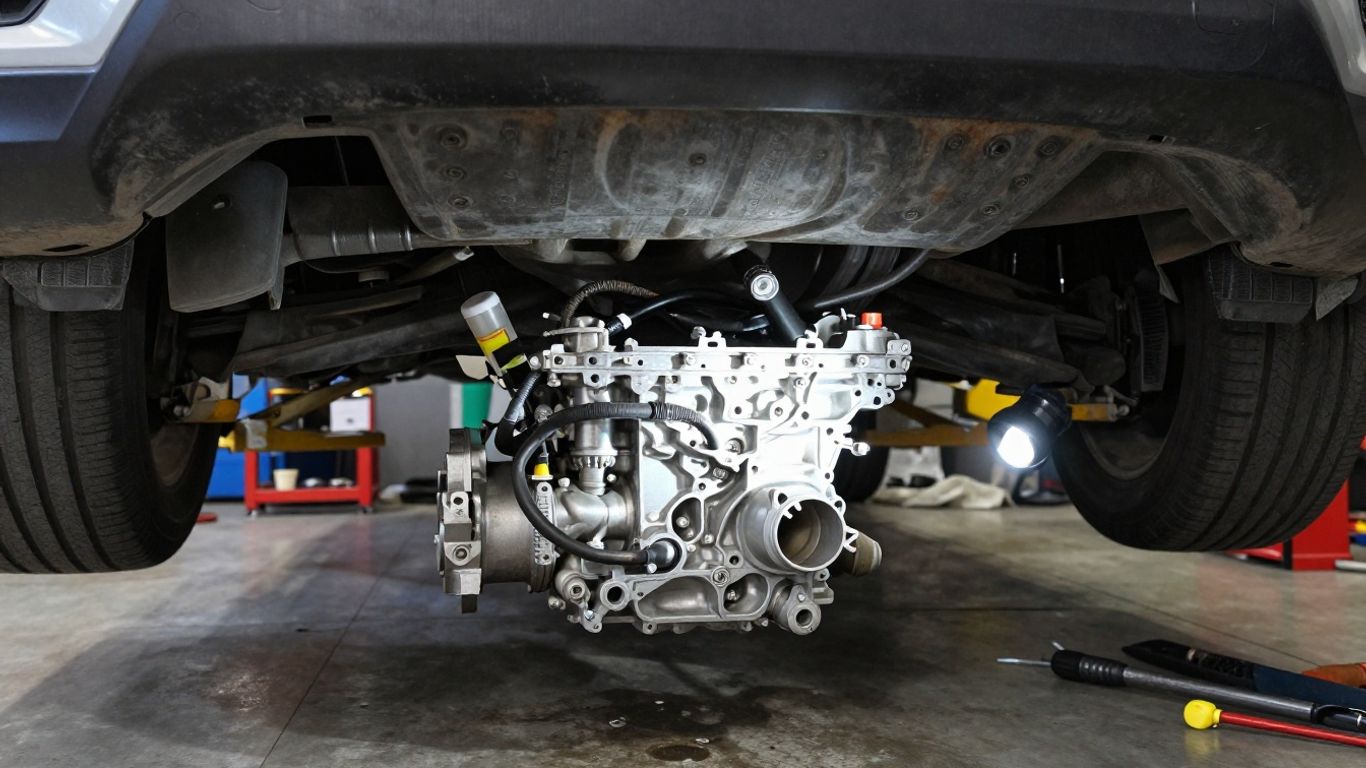
The inspection often begins with the vehicle parked and, when appropriate, raised safely. A technician looks for fluid around seals, pan edges, cooler lines, and nearby components, while also checking the transmission case, mounts, wiring, and visible signs of impact. Fluid color, odor, and contamination can add useful context, although they do not prove a particular failure by themselves.
A pan or lift inspection may reveal a loose connection, damaged housing, deteriorated mount, or evidence of excessive wear. Mission Accomplished Tire & Auto, for example, describes a diagnostic inspection that includes a fluid check, pan examination, road test, and lift inspection. The point is not to copy a checklist blindly, but to gather several kinds of evidence before recommending an expensive repair.
Road testing symptoms under different driving conditions
A road test lets the technician observe engagement, acceleration, shifting, downshifts, vibration, and noises while the vehicle is moving. Conditions matter: a fault may appear only when the transmission is cold, under load, during stop-and-go driving, or at highway speed. The technician may compare gentle acceleration with firmer throttle input and note when the symptom begins or disappears.
The driver’s description remains valuable because a shop visit may not reproduce every event. A clear account of speed, temperature, road conditions, and pedal position can help the technician choose the right test instead of guessing from a single short drive.
Computer diagnostics and transmission fault codes
A scan tool can identify stored or pending fault codes and show information from electronic control systems. Those results can point toward a sensor, solenoid, wiring issue, or operating condition that needs further testing. A code is evidence, not a complete diagnosis; replacing the named component without checking the circuit or related systems can miss the actual cause.
The strongest diagnostic process compares scan data with symptoms and physical findings. Christian Brothers Automotive describes using diagnostics for transmission issues including slipping and delayed acceleration, but any technician should still explain what a code means for this particular vehicle before proposing repairs.
Inspecting related drivetrain components
Power travels through more than the transmission. A technician may inspect the engine and transmission mounts, axles, universal joints, differential, shifter or linkage, and other components that can create similar noises or vibrations. A worn mount, for instance, may feel like a harsh shift even when the transmission itself is functioning normally.
This wider inspection prevents the owner from paying for a transmission repair when the fault lies elsewhere. It also matters when a transmission is being replaced, since connected components may affect the replacement’s operation and durability.
Warning signs that call for a professional inspection
Some transmission symptoms are intermittent and easy to dismiss, while others worsen quickly. The more specific the pattern, the more useful it is to record it before visiting a shop. An expert transmission inspection is especially sensible when a symptom affects acceleration, vehicle control, or the ability to select a gear.
Delayed engagement and slipping gears
Delayed engagement occurs when the vehicle takes noticeable time to move after Drive or Reverse is selected. Slipping may feel like the engine speed rises without a matching increase in road speed, or like the vehicle briefly loses its chosen gear. Low fluid, hydraulic problems, worn friction material, electronic faults, and other conditions can produce similar sensations.
Avoid repeated hard acceleration to “test” the problem. Note whether the delay is worse when cold, after warming up, on hills, or while carrying a load, then share that pattern with the technician.
Shifting problems, grinding, or unusual noises
Harsh shifts, flares between gears, hesitation, grinding, clunks, whining, and buzzing all deserve a proper evaluation. Some noises change with engine speed; others change with vehicle speed or steering input, which can help separate transmission concerns from axle, bearing, or differential problems.
A noise that appears only during a particular shift still matters. Write down the gear, speed, temperature, and driving maneuver involved, since those details may be more informative than a general description such as “it sounds bad.”
Burning smells, fluid leaks, and overheating
A burning odor may indicate overheated fluid or another component, while a fresh leak can allow the transmission to operate with inadequate lubrication or hydraulic pressure. Puddles do not always appear directly below the source, and fluid can spread across the underside before dripping. Heat-related symptoms may be more noticeable in traffic, on steep grades, or during towing.
If smoke, a strong burning smell, or a rapidly growing leak appears, stop driving when it is safe and arrange professional help. Continuing to operate the vehicle can turn a contained problem into extensive internal damage.
Dashboard warning lights and reduced performance
A check-engine or transmission warning light means the vehicle’s control system has detected an abnormal condition, but it does not identify the repair by itself. Reduced power, limited gear selection, rough operation, or a failsafe mode can make the vehicle unsafe or difficult to control in traffic.
Record which warning lights appeared and whether they stayed on after restarting. That information, along with any recent battery work, repairs, or unusual driving event, gives the technician a useful starting point.
How technicians diagnose transmission problems
Diagnosis is a chain of observations, tests, and decisions. A technician should first understand the vehicle’s history, then verify the fluid and operating condition before choosing deeper tests. The sequence can vary by vehicle and symptom, but each step should answer a specific question. Clear explanations make the process easier to trust.
Reviewing the vehicle’s service and driving history
Service records may show fluid changes, previous repairs, software updates, collision damage, towing use, or a recurring issue. The technician will also ask when the symptom started and whether it followed maintenance, a long trip, water exposure, or a change in driving conditions.
Mileage alone does not determine transmission health. Frequent short trips, heavy loads, steep terrain, and neglected maintenance can all shape the diagnosis, so an accurate history is more useful than a simple age-based assumption.
Checking transmission fluid level and contamination
Fluid must be checked according to the vehicle maker’s procedure, since some transmissions require a particular temperature, gear position, or inspection method. The technician may assess level, appearance, odor, and visible debris while looking for the source of any loss. On some vehicles, the fluid level cannot be judged by a conventional dipstick.
A fluid service may help when the fluid is low or due for maintenance, but contaminated fluid or metal debris may indicate a deeper problem. The findings should be explained in context rather than used as a standalone verdict.
Testing hydraulic pressure and electronic controls
Pressure testing can show whether the transmission is building and maintaining the pressure required for proper clutch and shift operation. Electronic testing may include sensors, solenoids, wiring, grounds, control modules, and live data. These checks help narrow the fault before parts are removed.
The technician should connect each test to a conclusion. If pressure is abnormal, the report should identify the conditions under which it was measured and explain what that result makes more or less likely.
Distinguishing transmission faults from engine or drivetrain issues
Engine misfires, throttle problems, worn mounts, axle damage, and differential noise can imitate transmission trouble. A careful diagnosis compares when the symptom occurs with engine speed, vehicle speed, gear selection, steering, and road surface. It may also involve basic engine or drivetrain tests before transmission disassembly is recommended.
The distinction matters financially. Goose Auto Repair describes transmission and drivetrain inspections together, a sensible principle because power-transfer components work as a connected system even when only one part is defective.
What an inspection report should include
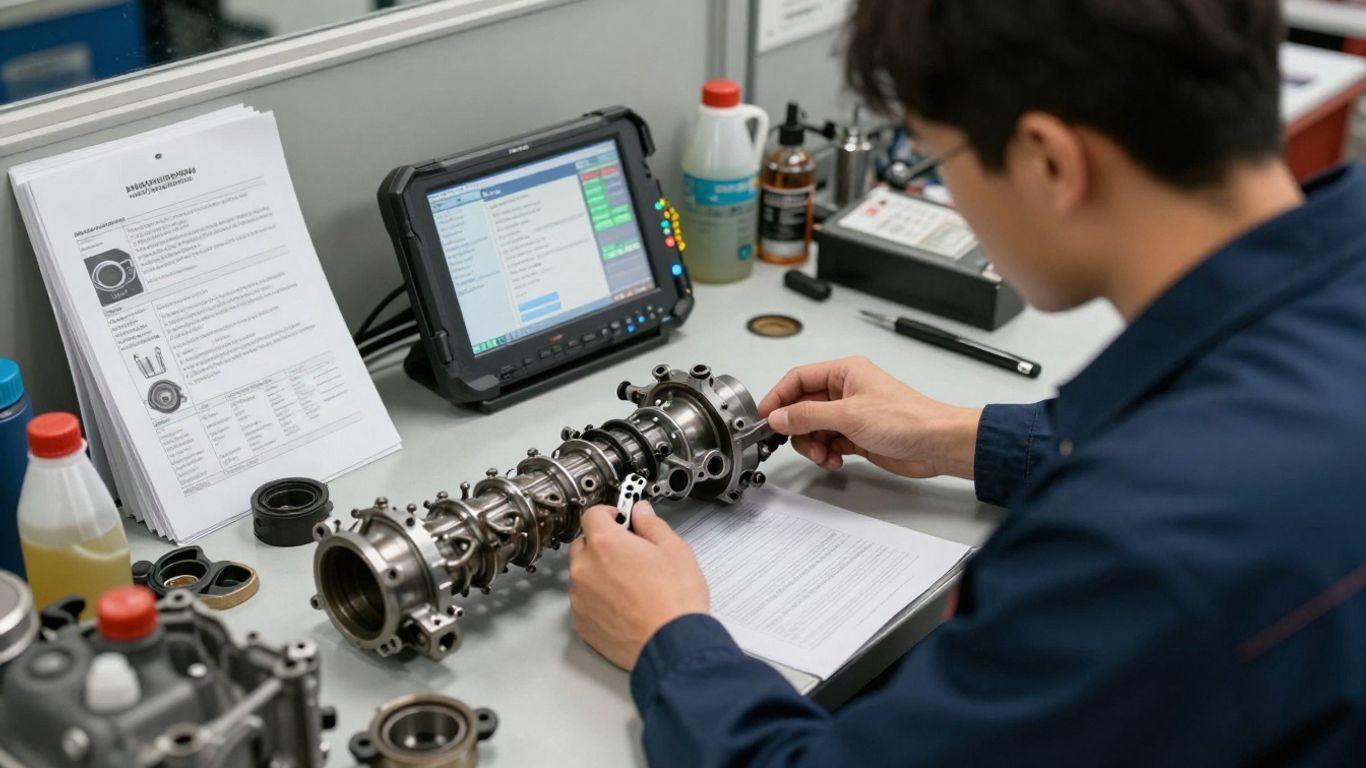
A report should turn a complicated appointment into a usable decision record. It does not need to overwhelm the reader with jargon, but it should show how the recommendation was reached. Photos, measurements, scan results, and a description of the test drive can make the findings easier to verify. A written report is also helpful when a second opinion is warranted.
Identified symptoms and likely causes
The report should describe the concern in observable terms: delayed Reverse engagement, a flare during a particular upshift, a leak near a seal, or a noise under acceleration. It should then separate confirmed findings from possible causes. That distinction prevents a hypothesis from being presented as a certainty.
A good report also records what could not be reproduced. An intermittent problem may need follow-up testing, and saying so is more honest than forcing a definitive diagnosis from limited evidence.
Diagnostic test results and supporting evidence
Useful support may include fluid observations, pressure readings, fault codes, live-data findings, photographs, road-test notes, and inspection results from the lift. Measurements should include enough context to be meaningful, such as operating temperature or test conditions. The owner should be able to understand why the evidence supports the recommendation.
The same discipline applies to any technical evaluation: technical SEO guide material, for instance, commonly explains how an audit connects findings to evidence and next steps. The subject is different, but the reporting habit is familiar—show the issue, explain its significance, and avoid overstating certainty.
Immediate safety concerns and drivability risks
The report should say whether the vehicle is safe to drive, safe only for limited use, or better transported to the shop. A severe leak, loss of reverse, unpredictable shifting, overheating, or a transmission stuck in one gear can change the recommendation. Safety advice should be specific rather than buried in a general disclaimer.
Ask whether continued driving could increase damage. Even if the vehicle still moves, a worsening shift problem may create an unexpected loss of acceleration or a stall-like event in traffic.
Recommended repairs ranked by urgency
Repairs are easier to evaluate when they are grouped by urgency and purpose. A technician might separate a safety-related leak, a needed diagnostic step, a maintenance service, and a long-term repair rather than presenting one large undifferentiated estimate. The report should identify what each recommendation is intended to correct.
A compact ranking can make the conversation clearer:
- Address conditions that could make the vehicle unsafe or cause rapid damage.
- Confirm uncertain findings with the least invasive appropriate test.
- Complete repairs that restore reliable operation.
- Schedule maintenance or monitoring items that are not immediately urgent.
This order does not replace professional judgment, but it gives the owner a practical way to discuss timing and budget. It also reduces pressure to approve every item at once.
Repair options after an expert transmission inspection
The inspection is valuable because it narrows the choices; it does not automatically mean the transmission must be replaced. Some findings respond to service or adjustment, while others require a component repair or internal rebuild. Cost, vehicle value, parts availability, and expected use all belong in the decision. Ask the technician to explain the reasonable alternatives, not just the most expensive one.
When a fluid service or adjustment may be enough
A fluid correction, filter service, seal replacement, linkage adjustment, or software-related procedure may address a problem when there is no evidence of major internal damage. The recommendation should match the findings, and the technician should explain what improvement is expected and what symptoms would require further work.
A service is not a guaranteed cure for worn internal parts. If the inspection shows significant debris, pressure loss, or mechanical damage, changing fluid alone may not restore dependable operation.
Choosing between component repair and transmission replacement
A component repair can make sense when the fault is localized and the remaining transmission is in good condition. Replacement may be more practical when internal damage is extensive, parts are unavailable, labor would approach replacement cost, or reliability is a priority. The right choice depends on evidence rather than a universal rule.
Ask whether the estimate includes diagnosis, removal and installation, fluid, programming, related seals, testing, and disposal. Comparing incomplete estimates can make a seemingly cheaper option misleading.
Understanding rebuilt, remanufactured, and used transmissions
These terms can mean different things between suppliers, so ask for a written description. A rebuilt unit may have selected worn parts replaced, while a remanufactured unit is generally restored through a more defined process; a used unit comes from another vehicle and may have limited known history. The exact parts renewed, testing performed, and warranty terms matter more than the label alone.
Before authorizing installation, confirm compatibility, included components, expected delivery time, and what happens if the unit does not correct the original symptom. Those details can prevent a difficult dispute later.
Considering warranty coverage and long-term reliability
Warranty length is only one part of the risk calculation. Review whether coverage includes parts and labor, who performs follow-up work, geographic limits, maintenance requirements, and exclusions for towing or commercial use. A longer warranty may still be less useful if its conditions are unclear or difficult to meet.
Consider how long you plan to keep the vehicle and how it is used. The least expensive repair today may not be the best value if the vehicle regularly tows, carries heavy loads, or has other aging drivetrain components.
How to choose a qualified transmission specialist
Choosing a shop is part of the repair decision. Look for a technician who can explain the diagnostic path, document findings, and distinguish what is known from what is still suspected. A polished waiting room matters less than accurate testing and clear authorization practices. Take time to compare the process, not just the advertised price.
Certifications, experience, and diagnostic equipment
Ask whether the technician has relevant training and experience with the vehicle’s transmission type. The shop should have equipment suited to the vehicle, including appropriate scan and measurement tools, and should be willing to explain how those tools will be used. Experience with a particular system can be especially helpful when symptoms are intermittent.
Certifications are useful signals, but they do not replace communication or evidence. A qualified specialist should welcome questions about the inspection scope and explain why a particular test is necessary.
Questions to ask before authorizing an inspection
Before work begins, confirm what the inspection includes, what it costs, and whether the fee is credited toward approved repairs. Ask whether a road test, lift inspection, scan, fluid check, and written report are included when relevant to the symptom.
It is also reasonable to ask:
- Will you contact me before disassembly or additional testing?
- What evidence would lead you to recommend repair rather than replacement?
- Can you provide photos, readings, or fault-code details?
- What parts, fluid, labor, and follow-up testing are included in the estimate?
The answers reveal whether the shop has a clear process. They also establish boundaries before an unexpected charge appears.
Comparing estimates, warranties, and turnaround times
Compare estimates line by line. One may include a complete unit, programming, cooler service, and a warranty while another covers only removal and installation. Turnaround time can also depend on parts availability, machine-shop work, shipping, and post-repair testing.
A written estimate should identify assumptions and possible additional costs without turning every possibility into a vague open-ended authorization. Ask when the shop expects to update you if the original diagnosis changes.
Evaluating reviews and transparent service practices
Reviews can show patterns in communication, punctuality, documentation, and how a shop handles problems. Read recent comments carefully and look for specific experiences rather than relying on a star average. A shop that explains findings and obtains approval before extra work is easier to work with.
Transparency also means being clear about uncertainty. For a complex vehicle decision, detailed medical testimony and a transmission report are obviously different subjects, but both illustrate why a professional explanation should connect evidence to a conclusion rather than ask for blind trust. For broader household maintenance, the same consumer habit applies when comparing roof repair services: verify qualifications, scope, warranty, and documentation.
Conclusion
A transmission problem is easier to manage when inspection, diagnosis, and repair decisions are treated as separate steps. Record the symptoms, request evidence, ask about safety and alternatives, and choose work that fits both the vehicle’s condition and your plans for it.
Frequently Asked Questions
How long does a transmission inspection take?
A basic inspection may be completed relatively quickly, while intermittent symptoms, pressure testing, lift access, or additional road testing can extend the appointment. Ask the shop what is included and when you can expect an update.
Should I drive a vehicle that is slipping?
Driving with slipping gears can worsen damage and may reduce acceleration unexpectedly. If the symptom is severe, accompanied by overheating or a major leak, or affects control, stop driving when safe and arrange transportation to a qualified shop.
Does dark transmission fluid always mean the transmission is failing?
No. Fluid condition is one clue among several. Age, service history, odor, debris, fluid level, fault codes, pressure readings, and driving symptoms should be considered together.
Can a transmission fault code identify the exact failed part?
Usually not. A code points to a detected condition or circuit and must be interpreted alongside testing, wiring checks, physical inspection, and the vehicle’s symptoms.
Is a fluid change enough to fix rough shifting?
It can help when the fluid is low, degraded, or due for service and there is no evidence of internal damage. It will not reliably repair worn mechanical parts, pressure loss, or every electronic fault.
What should I do if a shop recommends replacement immediately?
Ask what findings support replacement, whether the problem was reproduced, what alternatives exist, and what the estimate includes. A second opinion can be sensible when the evidence or repair scope is unclear.
How can I protect myself from unexpected repair costs?
Get the inspection fee, authorization limits, estimate, warranty, and follow-up process in writing. Ask the shop to contact you before disassembly, additional testing, or work that exceeds the approved amount.