
Key Takeaways
Solving gearbox noise issues requires a structured approach ranging from early acoustic detection to advanced structural analysis. Implementing these steps helps minimize downtime and extends equipment longevity:
- Differentiate between mechanical and harmonic noise sources.
- Maintain precise lubrication schedules using high-quality oils.
- Monitor bearing health through recurring vibration analysis.
- Ensure mounting foundations do not amplify resonant frequencies.
- Document all maintenance sessions to create a reliable performance history.
Identifying the source of the noise
Engineers and operators often face subtle acoustic changes long before a catastrophic failure occurs. By carefully categorizing the type of sound emitted, maintenance teams can isolate potential failures before they compromise the entire system. Understanding the root causes of these sounds is central to solving gearbox noise issues effectively. Early intervention reduces the risk of long-term damage.
Differentiating between whining and grinding sounds
Whining generally suggests high-frequency issues such as gear mesh errors or bearing fatigue, while grinding points toward physical contact between metallic surfaces. If you see Kent Automotive working on these diagnostics, you realize how small symptoms hint at larger issues. Careful auditory differentiation saves time during the inspection process.
Conducting a vibration analysis
Vibration analysis serves as the primary tool for peering inside a sealed gearbox environment without physical disassembly. It identifies abnormal frequencies that standard hearing might miss during normal peak operation. This technique remains essential for detecting internal imbalances associated with shafts or impellers.
Pinpointing the location using a mechanical stethoscope
Using a physical diagnostic tool allows operators to isolate specific sections of the housing that may be emitting harsh noise. This manual approach confirms whether the vibration stems from a gear assembly, a specific bearing, or an external linkage. It provides the necessary confirmation before engineers attempt to open an assembly.
Common mechanical causes and solutions
Mechanical wear remains the most frequent culprit when gearbox performance begins to fade. Normal wear and tear, when left unchecked, creates physical shifts that impact the contact pattern of gears. The following section clarifies how to address these mechanical flaws.
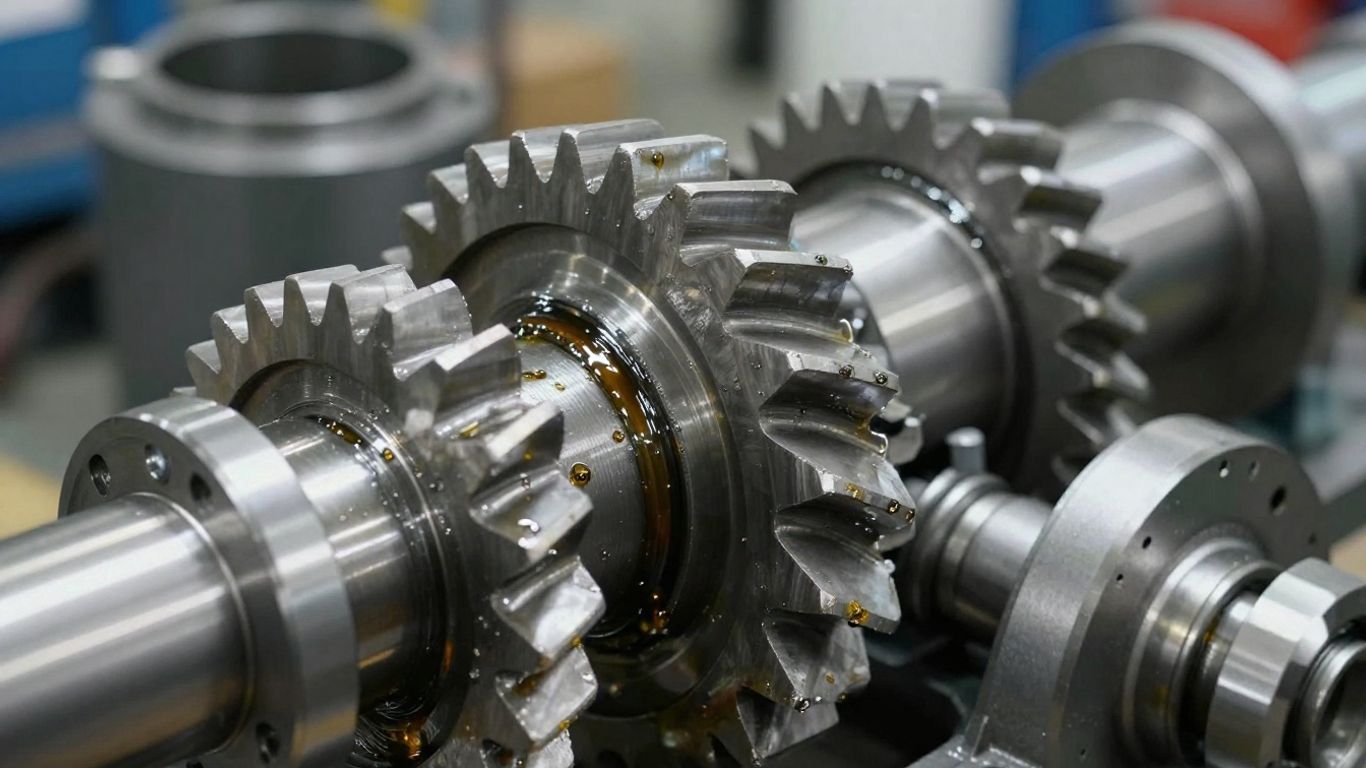
Addressing bearing wear and degradation
Bearings eventually suffer from fatigue even in well-maintained systems. Replacing them before they seize protects the surrounding gear teeth from secondary impact damage.
Correcting misaligned gear teeth
Misalignment creates uneven force distribution along the tooth flanks. This leads to inefficient power transfer and produces the grinding sounds frequently cited in maintenance logs.
Managing gear backlash and tolerance issues
Backlash happens when there is excessive movement between gear teeth during changes. Controlling this gap is a critical aspect of maintenance to ensure long-term reliability and minimize gear-to-gear impact.
Replacing damaged or chipped gears
Chipped gears act as a source of rapid destruction for the rest of the train. Swift replacement is the only way to avoid ripple-effect degradation across the entire system.
Lubrication and maintenance practices
The life of an industrial gearbox is fundamentally tied to the quality of its lubrication. Oil serves as a barrier against heat and friction, and when it fails, the results are immediate.

Selecting the correct lubricant viscosity
Viscosity must match the operating temperature and load profiles of the machine. Thick lubricants might not reach tighter tolerances, whereas thin oils can fail to establish a protective film under high pressure.
Checking for metallic contamination in gear oil
Regular monitoring provides an early look at wear patterns before they sound an alarm. Teams should watch for these signs during inspections:
- Silver flakes indicating significant bearing material loss.
- Dark sludge often caused by oxidation or overheated oil.
- Large brass particles signaling wear on internal brass synchronizers.
- Water presence which degrades additive efficacy significantly.
Maintaining clean oil represents one of the most effective strategies for preventing premature component failure.
Implementing a routine oil analysis program
Consistent analysis tracks the chemical composition of the oil over time. It allows maintenance managers to predict component failure based on the accumulation of microscopic wear metals discovered in the samples.
Importance of proper flush and fill procedures
Flushing removes residual contaminants that bypass standard drainage, ensuring the new lubricant maintains its clean state longer. This process should be performed whenever the history of the oil is unknown.
Structural and operational influences
External factors often influence internal noise levels more than expected. Structural resonance can amplify even a minor internal tick, transforming it into a disturbing industrial roar.
Minimizing resonance from foundation mounting
The mounting surface dictates how much vibration travels through the facility. Table analysis shows how different mounting configurations impact noise production:
| Mounting Type | Damping Efficiency | Noise Reduction | Result |
|---|---|---|---|
| Rigid Steel Beam | Low | Minimal | High Transfer |
| Rubber-Bonded Mount | Medium | Moderate | Stable |
| Concrete Inertia Base | High | Excellent | Low Resonance |
Selecting the right base construction helps manage the structural energy produced during high-speed cycle times.
Assessing the impact of excessive load shifts
Load fluctuations force the gears into inconsistent positions. This leads to stress peaks that eventually cause localized wear near the tooth roots.
Counteracting environmental temperature fluctuations
Extreme temperature changes affect component density and viscosity stability. Maintaining climate control or using temperature-stable synthetics mitigates the expansion issues that tighten mechanical tolerances.
Managing gearbox housing integrity and thermal expansion
Thermal expansion can shift shafts just enough to unbalance the entire meshing process. Engineers often consult technical data from Riduttori Italia to refine their tolerance management strategy. Tightening the housing limits this movement and supports better overall performance.
Preventive maintenance strategies
Preventive strategies move a facility from reactive to proactive maintenance. By focusing on data-driven triggers, managers significantly reduce the likelihood of costly, unplanned stoppages.
Establishing an automated monitoring system
Automated systems keep eyes on equipment cycles 24/7. They trigger alerts for specific noise levels, essentially functioning as a digital sentry against component degradation.
Training staff on early auditory warning signs
Employees on the floor offer the best first line of defense against noise issues. Regular training sessions help them distinguish between normal operational sounds and early warnings of mechanical trouble.
Scheduling regular non-destructive testing
Methods such as ultrasonic testing verify the integrity of housing welds and shafts without damaging the machinery. This confirms structural safety without stripping the assembly down to its base components. If designs require simulation to prevent issues like those identified by Romax Technology, then non-destructive testing provides the real-world validation of those designs.
Maintaining a detailed history of performance data
Performance logs serve as the diagnostic foundation for future work. If a specific gearbox noise returned after three years, the history provides the evidence needed to determine if the previous fix was insufficient or if the root cause was something else entirely.
Conclusion
Addressing gearbox noise requires a blend of rigorous data analysis and consistent physical maintenance. By catching auditory signals early, monitoring lubrication, and ensuring structural stability, operators maintain peak output while extending equipment lifespans significantly. A culture of vigilance, supported by clear performance documentation, turns a noisy, problematic assembly into a model of industrial efficiency.
Frequently Asked Questions
Why does my gearbox produce a rhythmic clicking sound?
A rhythmic click often indicates damaged gear teeth or internal debris that hit a specific point once every revolution, necessitating a prompt inspection of the gear train.
How often should I perform an oil analysis?
Oil analysis should occur at intervals recommended by the manufacturer, usually coinciding with your routine filter change procedures, or more frequently if the gearbox operates under extreme heat.
Is it normal for new gearboxes to make a slight whining sound?
New equipment occasionally displays a high-pitched whine during the break-in period as surfaces settle, but this sound should decrease as components seat properly.
Can extreme weather increase gearbox noise levels?
Extreme conditions directly impact internal components through oil viscosity changes and thermal expansion, often causing tolerances to tighten and resulting in increased noise.
What does a metallic sheen in the drain pan signify?
A metallic sheen is a critical indicator of excessive internal wear, confirming that small particles are circulating within the system and eroding gear surfaces.
How does mounting resonance affect gearbox lifespan?
High-vibration mounting surfaces cause increased internal stress and accelerated fatigue, significantly shortening the useful life of both bearings and gears.
Can I fix a noisy gearbox without replacing the components?
Minor noise caused by misalignment or improper lubrication is often solvable through recalibration or oil replacement, provided the internal gears show no signs of structural fragmentation.