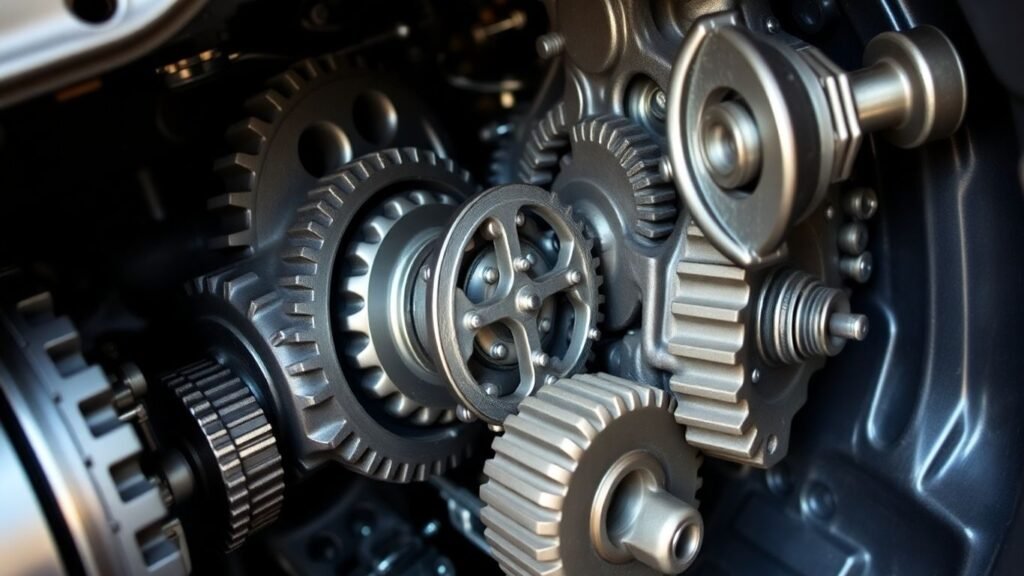
Ever wondered what makes your 4WD or AWD vehicle grip the road like a gecko on a wall, especially when things get a bit dicey? It’s often down to a couple of key players in the drivetrain: the diff centres and transfer cases. These parts work together, sort of like a power-sharing team, to make sure all your wheels are pulling their weight. Without them, your capable machine would be just like any other car, stuck when the going gets tough. This guide is all about breaking down what these parts do, why they matter, and how to keep them happy.
Key Takeaways
- The transfer case is the central hub that splits power from the transmission to both front and rear axles, making 4WD and AWD possible.
- Different types of transfer cases exist, including part-time (manual engagement), full-time (always on), and on-demand (automatic engagement).
- Center differentials, often found within transfer cases, manage speed differences between front and rear axles, with types ranging from open to limited-slip and locking.
- Transfer cases offer benefits like better traction, versatility across different terrains, and the crucial high/low range gearing for power multiplication.
- Regular maintenance, especially changing the fluid with the correct type, and periodic engagement of the system are vital for the longevity of diff centres and transfer cases.
Understanding The Core Function Of Diff Centres And Transfer Cases
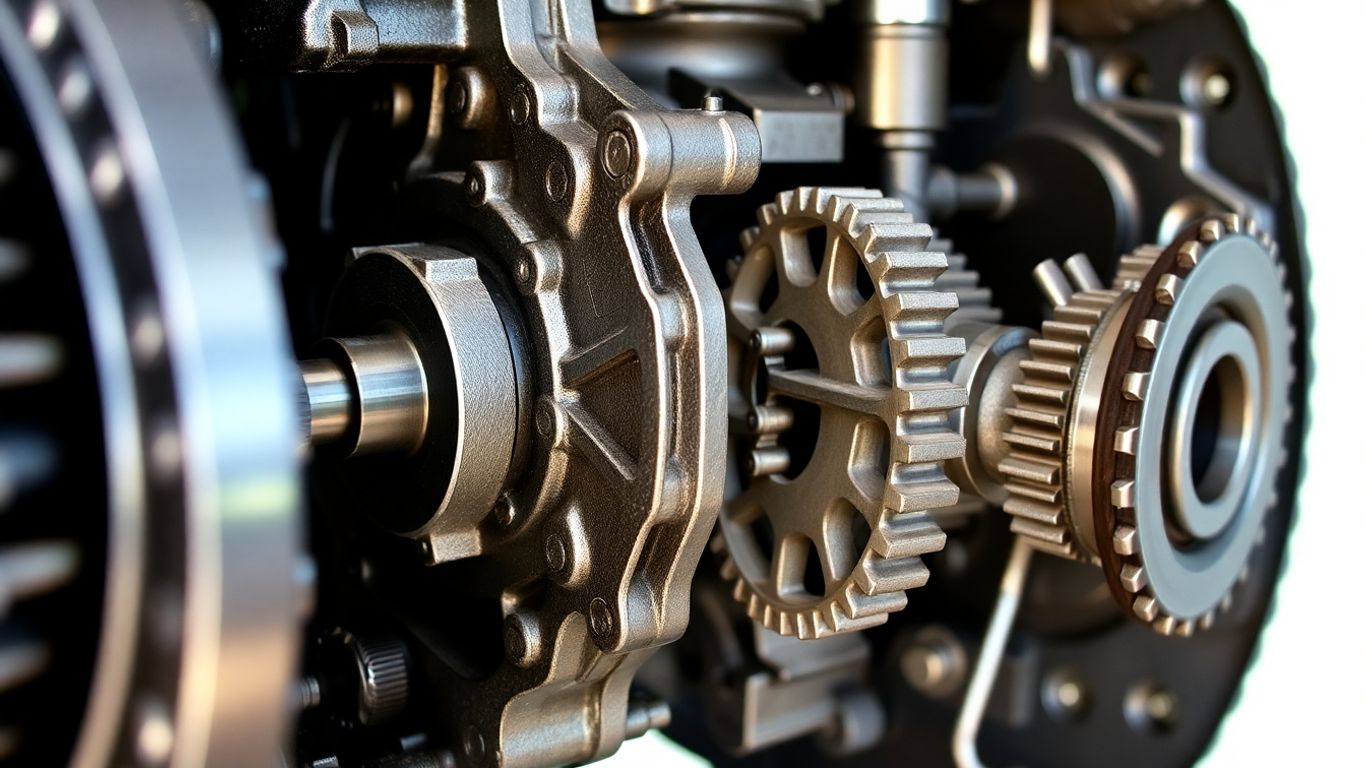
So, you’ve got a four-wheel drive or all-wheel drive vehicle, and you’re wondering what makes it actually, you know, drive on all fours? A big part of that magic is the transfer case, and often working with it, the center differential. These aren’t just fancy names; they’re the brains behind how your vehicle sends power to all its wheels, especially when things get a bit dicey out there.
What Is a Transfer Case?
Think of the transfer case as the central hub for your vehicle’s four-wheel-drive system. It sits behind the transmission and its main job is to take the power coming from the engine and transmission and split it between the front and rear axles. This means all four wheels can get power, which is a huge deal for traction. Without a transfer case, your 4WD or AWD vehicle would pretty much just be a regular two-wheel-drive car. It’s what allows you to tackle slippery roads, muddy trails, or steep inclines without getting stuck.
How Does a Transfer Case Work?
When your engine runs, power goes through the transmission and then into the transfer case. Inside, there’s a set of gears or a chain that decides where that power goes. In a two-wheel-drive mode, power might just go to the rear wheels, and the front wheels are left to coast. But when you switch to four-wheel drive, a mechanism inside the transfer case engages, connecting the power flow to both the front and rear driveshafts. This means power is sent to both sets of wheels simultaneously. Some transfer cases also have different gear settings, like a high range for normal driving and a low range for serious off-roading or pulling heavy stuff. That low range multiplies the engine’s torque, giving you way more grunt when you really need it.
Here’s a quick rundown of how power flows:
- Power Input: Engine power goes through the transmission to the transfer case’s input shaft.
- Internal Gears/Chain: Depending on the mode (2WD or 4WD), these components direct power.
- Power Output: Power is sent out through separate output shafts to the front and rear driveshafts.
- Axle Distribution: The driveshafts turn the differentials on each axle, which then spin the wheels.
The Role of the Center Differential
Now, where does the center differential fit in? It’s usually found inside the transfer case, especially in full-time 4WD or AWD systems. Its main gig is to allow the front and rear axles to spin at different speeds. This is super important when you’re turning. Imagine trying to turn a sharp corner – your front wheels have to travel a longer distance than your rear wheels, so they need to spin faster. The center differential handles this speed difference smoothly. If you didn’t have one (or a way to manage it), and you were in a full-time 4WD system, you’d feel a binding sensation in the drivetrain, especially on pavement, and it could even damage components.
The center differential is what makes full-time 4WD systems practical for everyday driving on different surfaces. It balances the need for all-wheel traction with the ability to turn without binding up the drivetrain.
Exploring Different Types Of Transfer Cases
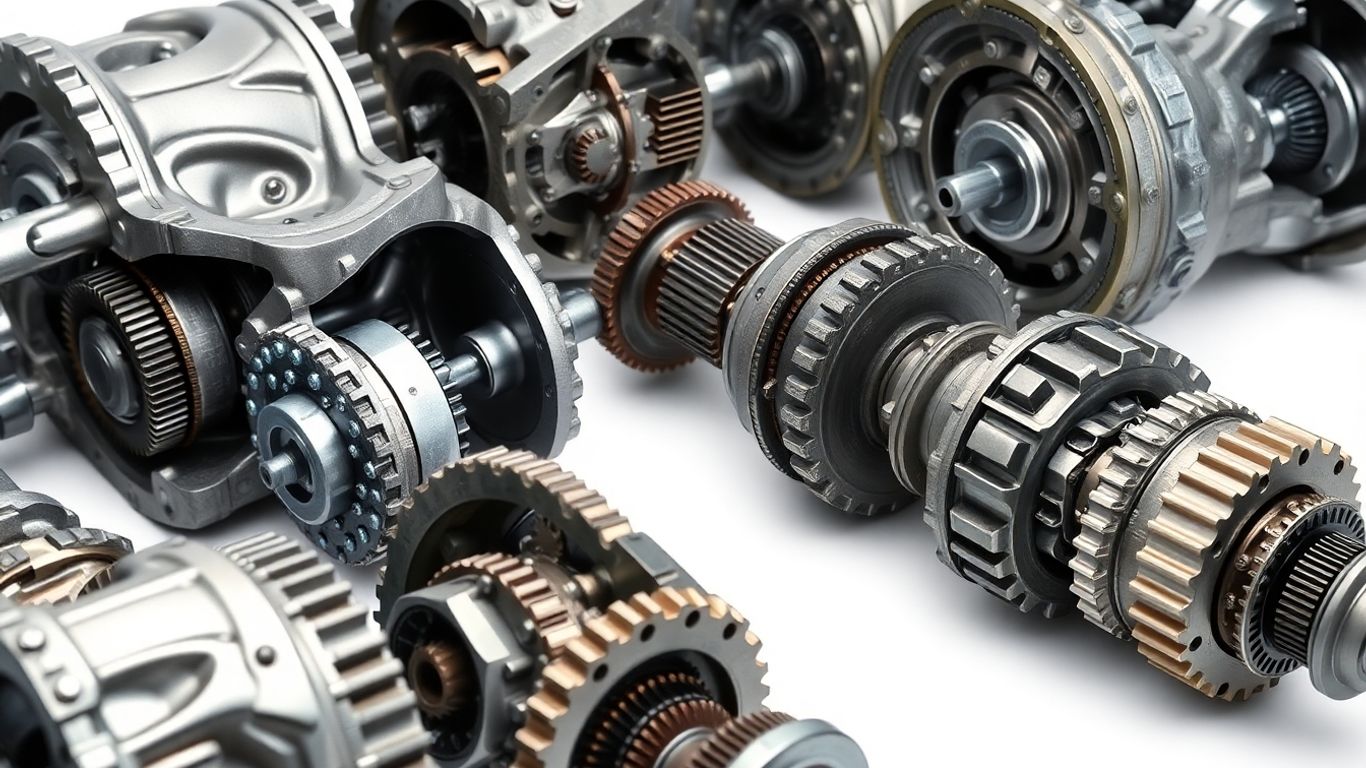
So, you’ve heard about transfer cases, but what kinds are out there? Choosing the right one depends on how you plan to use your vehicle. Transfer cases come in three main varieties: part-time, full-time, and on-demand. Each type fits a different driving style and need. Let’s break it down so it’s a little less mysterious.
Part-Time Transfer Cases
Part-time transfer cases are pretty common if you own a traditional 4×4 or like to hit the trails. They let you switch between two-wheel drive (2WD) and four-wheel drive (4WD), usually with a lever or a switch. Here’s what stands out:
- Normally, you drive in 2WD to save fuel and reduce wear.
- Flip to 4WD when roads get slippery, muddy, or you’re off-roading.
- These systems lock the front and rear axles together, so both sets of wheels spin at the same rate.
They’re simple and durable, which is great—until you forget to shift back to 2WD on dry pavement, and the steering suddenly feels sticky. If you want a more detailed breakdown with charts and comparisons, check out this guide to transfer case types.
Full-Time Transfer Cases
Full-time transfer cases are for folks who want extra traction all the time—no switching required. With a full-time setup:
- Power constantly goes to both the front and rear wheels.
- A center differential inside the transfer case allows the front and rear axles to rotate at different speeds (handy for paved turns).
- Many full-time systems let you lock the center differential for extra grip off-road.
These are found in a lot of modern SUVs and AWD vehicles, so you don’t need to think about engaging 4WD—the car does it for you.
On-Demand Transfer Cases
If you want 4WD only when you actually need it, an on-demand system might suit you. These clever units sit in 2WD for daily driving, saving gas, and only flip into 4WD when they detect slipping:
- Fully automatic operation—no driver input needed
- Sensors watch for wheel slip and engage the second axle as soon as things get slick
- Popular in crossovers and light trucks; you probably won’t even notice when it turns on
Here’s a quick comparison to summarize:
| Type | Usual Drive Mode | Engagement | Typical Use Case |
|---|---|---|---|
| Part-Time | 2WD | Manual | Off-road, older 4x4s |
| Full-Time | 4WD/AWD | Automatic/Manual lock | All-weather, modern SUVs |
| On-Demand | 2WD | Automatic | Crossover SUVs, light trucks |
Transfer cases aren’t one-size-fits-all. Picking the right one can make the difference between getting stuck in the mud—or getting where you need to go without thinking about it.
The Significance Of Center Differential Types
So, we’ve talked about what a transfer case does, but what about the center differential inside it? This little guy is pretty important, especially in full-time four-wheel drive systems. It’s the component that lets your front and rear axles spin at different speeds. Think about when you turn a corner – your front wheels have to travel a bit farther than your rear wheels, right? The center differential handles that difference smoothly. Without it, you’d get this nasty binding feeling, especially on pavement, and it could really mess up your drivetrain.
But here’s the thing: while it’s great for smooth on-road driving, an open center differential can be a real pain off-road. If one axle loses traction – say, you’re stuck in mud or one wheel is in the air – all the power goes to that slipping axle, and you’re going nowhere. That’s where the different types of center differentials really matter.
Open Center Differentials
This is your basic, no-frills center differential. It’s good because it lets the front and rear axles turn at whatever speed they need to, making on-road driving easy and stress-free. It’s like a free-for-all for power distribution. However, as we just mentioned, this freedom is also its biggest weakness when traction gets dicey. If one set of wheels has no grip, all the power goes there, and the other set gets nothing. It’s simple, it’s common, but it’s not always the best for serious off-roading.
Limited Slip Center Differentials
Okay, so an open diff is too loose, and a locked diff is too rigid. A limited-slip center differential (LSD) tries to find a middle ground. It’s designed to send some power to the axle that has traction, even if the other axle is slipping. It doesn’t lock things 100%, but it does a better job than an open diff of keeping you moving when one axle starts to lose grip. There are a few ways these work, like using clutches or special gears, but the main idea is to limit how much one axle can spin faster than the other. It’s a nice upgrade for better all-around performance.
Locking Center Differentials
This is where things get serious for off-roading. When you lock the center differential, you’re essentially forcing the front and rear driveshafts to turn at the exact same speed. No more speed differences allowed between the axles. This is fantastic when you’re crawling over rocks or stuck in deep mud because it guarantees that power is sent to both the front and rear axles, no matter what. If one wheel on the front axle is spinning uselessly, the rear axle will still get power. This 50/50 power split is what allows a vehicle to keep moving when traction is really low. The downside? It’s not great for driving on pavement, especially during turns, as it can cause drivetrain binding. Most vehicles with locking center diffs have a way to disengage the lock for normal road driving.
Here’s a quick look at how they stack up:
| Differential Type | On-Road Smoothness | Off-Road Traction | Complexity | Common In |
|---|---|---|---|---|
| Open | Excellent | Poor | Low | Most AWDs, some 4WDs |
| Limited Slip | Good | Fair | Medium | Performance SUVs, some 4WDs |
| Locking | Poor (when locked) | Excellent | High | Serious off-road 4WDs |
Key Features And Benefits Of Transfer Case Systems
So, what’s the big deal with transfer cases and why do they matter so much for your 4WD or AWD vehicle? Well, they’re not just some random box bolted onto your drivetrain; they actually bring some pretty sweet advantages to the table. These systems are designed to give you more control and capability when the going gets tough.
Enhanced Traction and Stability
This is probably the most obvious benefit. By sending power to all four wheels, the transfer case helps your vehicle grip the road or trail much better. Think about driving on a slick, snowy road or a muddy path. Without power going to all the wheels, you might just spin your tires and get stuck. The transfer case makes sure that even if one set of wheels loses traction, the others can still push you forward. This is a huge deal for staying safe and in control, especially when you’re not on dry pavement.
Versatility Across Various Terrains
Transfer cases really shine when it comes to adapting to different surfaces. Whether you’re cruising on the highway, hitting a gravel road, or tackling some serious off-roading, the transfer case lets your vehicle handle it. Many systems allow you to switch between modes, like 2WD for normal driving and 4WD for when you need that extra grip. This flexibility means your vehicle is ready for pretty much anything you throw at it, from daily commutes to weekend adventures. It’s like having a vehicle that can change its personality to suit the environment, which is pretty neat if you ask me. If you’re looking for a vehicle that can handle more, checking out different transfer case types is a good start.
The Importance Of High And Low Range Gearing
One of the coolest features, especially in more traditional 4WD systems, is the high and low range gearing. You’ve got your ‘high’ range, which is great for regular driving at higher speeds when you need a bit more traction, like on wet or snowy roads. Then there’s the ‘low’ range. Shifting into 4-Low is like unlocking a secret superpower. It dramatically multiplies your engine’s torque, giving you a ton of pulling power and control at very slow speeds. This is what you need for crawling over rocks, pulling a heavy trailer up a steep hill, or navigating really deep mud or sand. It’s not for driving fast on pavement, though; using 4-Low on high-traction surfaces can cause serious damage. It’s a tool meant for specific, challenging situations where you need maximum force, not speed.
The ability to switch between different drive modes and gear ranges means your vehicle isn’t just a one-trick pony. It can adapt, providing the right amount of power and traction for whatever situation you find yourself in, making it a more capable and reliable machine overall.
Here’s a quick look at what high and low range offer:
- 4-High (4H): Provides a 1:1 gear ratio for normal 4WD driving at regular speeds. Ideal for slippery roads, dirt trails, or wet pavement.
- 4-Low (4L): Engages reduction gears for significantly multiplied torque at low speeds. Perfect for extreme off-roading, heavy towing, or steep descents.
- 2WD Mode: Used for optimal fuel efficiency on dry, high-traction surfaces where 4WD isn’t needed.
Maintaining Your Diff Centres And Transfer Cases
So, you’ve got this awesome 4WD vehicle, and you want it to keep chugging along for years, right? Well, the transfer case and diff centres are pretty tough, but they aren’t totally maintenance-free. Think of it like taking care of your favorite tool – a little attention goes a long way.
The Golden Rule: Change the Fluid
This is probably the most important thing you can do. The fluid inside your transfer case is like the lifeblood for all those gears and chains. It keeps things lubricated, helps cool everything down, and generally keeps the whole operation smooth. Over time, though, this fluid breaks down. It gets contaminated with tiny metal bits from normal wear and tear, and it just doesn’t do its job as well. Manufacturers usually give you a mileage recommendation for fluid changes, and you should definitely check your owner’s manual. But if you’re out there using that 4WD system a lot – like for towing or serious off-roading – you might want to do it more often. Doing it every 15,000 to 30,000 miles is pretty common for enthusiasts, and honestly, it’s cheap insurance against a much bigger repair bill down the road.
Always use the exact fluid your vehicle manufacturer specifies. Seriously, don’t try to save a few bucks by using something else. The wrong fluid can mess up internal parts, especially clutch packs, and that’s a headache you don’t want.
Engage the System Periodically
If you have a part-time 4WD system, it’s a good habit to switch it into 4WD at least once a month. Just drive it for a few miles. This helps keep all the seals from drying out and makes sure the internal bits and pieces don’t get stuck from sitting around. It’s best to do this on a straight, unpaved road or a gravel lot – you don’t want to be doing this on dry pavement, as it can cause damage. It just keeps everything moving and lubricated.
Listen to Your Vehicle For Early Warnings
Your vehicle will often tell you when something’s not quite right, you just have to listen. Weird noises, like a humming or grinding sound, or noticing a fluid leak, are signs that you should pay attention. Catching a small issue early, like a minor leak, can save you from a massive repair bill later. It might just be a worn-out seal, but if you ignore it, it could lead to bigger problems.
Sometimes, the simplest maintenance tasks are the ones most overlooked. Regular fluid changes and periodic engagement of your 4WD system are not complicated procedures, but they are vital for the longevity of your drivetrain components. Don’t wait for a problem to arise; be proactive in your vehicle’s care.
Common Issues And Troubleshooting
So, your rig is making some weird noises, or maybe it’s just not engaging into 4WD like it used to. Don’t panic just yet. Transfer cases, like any other part of your vehicle, can develop problems. The good news is that many of these issues give you some warning signs. Being able to spot them early can save you a ton of cash and hassle down the road. Let’s break down what to look and listen for.
Identifying Fluid Leaks
This is probably the most common issue, and it’s a big one. Your transfer case needs its own special fluid to keep everything inside lubed up and cool. Over time, the seals around the shafts and the case itself can get old and start to leak. You might notice dark or reddish spots on your driveway, usually right under the middle of your truck or SUV. A low fluid level is a fast track to a ruined transfer case, because all those metal parts will start grinding against each other without enough lubrication, leading to overheating and eventual failure. It’s not just about topping it off; you need to find out where it’s leaking from and fix that seal.
Recognizing Unusual Noises
Your ears are your best friends when it comes to diagnosing transfer case problems. Strange sounds are often the first clue that something’s not right.
- Grinding: If you hear grinding, especially when you’re trying to shift into or out of 4WD, it could mean the shift forks are worn out or the gears aren’t lining up properly. Worn-out bearings can also make a grinding sound.
- Whining: A constant whining noise that gets louder or changes pitch as you speed up or slow down often points to worn bearings or, you guessed it, low fluid levels.
- Clunking or Popping: If you hear a distinct clunk or pop when you accelerate or let off the gas, it might be a sign of a stretched chain inside a chain-driven transfer case. That slack in the chain can slap against the inside of the case.
Some gear-driven transfer cases naturally make a bit of noise, like a whine, and that’s normal for them. But if your transfer case suddenly starts making noise, or if the noise is a grinding, clunking, or popping sound, it’s definitely time to get it checked out.
Addressing Shifting Problems
Sometimes, the transfer case just won’t cooperate. You might try to shift into 4WD and nothing happens, or it might get stuck in 4WD and refuse to come out. If you have an electronic system, a faulty shift motor could be the culprit. For manual systems, it might be a binding linkage. In more serious cases, internal damage within the transfer case itself can cause these shifting issues. Another related problem is when the vehicle is in 4WD, and then suddenly it just pops back into 2WD on its own. This usually means there’s significant wear inside, like with the gears or shift forks.
| Symptom | Possible Cause |
|---|---|
| Difficulty shifting | Worn shift forks, damaged gears, faulty shift motor |
| Stuck in 4WD | Binding linkage, internal damage, faulty control module |
| Jumping out of 4WD | Worn gears, damaged shift fork, stretched chain |
| Fluid leaks | Degraded seals (input/output shafts, case housing) |
| Grinding noise | Worn gears, misaligned shift forks, bad bearings |
Wrapping It Up
So, we’ve gone over what transfer cases and center differentials do. They’re pretty important for getting power to all four wheels, especially when things get a bit tricky off-road or the weather turns bad. Keeping up with fluid changes and giving the system a workout now and then is a good idea to keep things running smoothly. Understanding these parts means you can get more out of your vehicle and handle different driving situations with more confidence. It’s all about making sure your ride is ready when you need it.
Frequently Asked Questions
What exactly is a transfer case and why do I need one?
A transfer case is like the power director for your car’s four-wheel or all-wheel drive system. It takes the power from the engine (after it goes through the transmission) and sends it to both the front and back wheels. This gives your vehicle much better grip, especially when the road is slippery, muddy, or you’re going off-road.
What’s the difference between 4WD and AWD?
Think of 4WD (four-wheel drive) as the tougher, more rugged system, often found in trucks and SUVs meant for serious off-roading. It usually lets you switch between 2WD and 4WD and often has a special ‘low range’ gear for extra power. AWD (all-wheel drive) is usually more for everyday driving, automatically sending power to all four wheels when needed to improve traction on slippery roads, but it typically doesn’t have a low range gear.
Can I drive my 4WD vehicle on dry roads?
It depends on the type of 4WD system. If you have a ‘part-time’ 4WD system, you should NOT drive on dry pavement in 4WD. This can damage your drivetrain because the front and rear wheels have to turn at different speeds when you corner. If you have a ‘full-time’ 4WD or AWD system, it’s usually safe to drive on any surface.
What is a center differential and why is it important?
The center differential is a special part, usually inside the transfer case, that lets the front and rear wheels turn at different speeds. This is super important for making turns smoothly on regular roads without straining the drivetrain. In off-road vehicles, you can often lock the center differential to make both sets of wheels turn at the same speed for maximum traction in tough spots.
How often should I change the fluid in my transfer case?
Your owner’s manual will have the exact recommendation, but it’s generally a good idea to change it every 30,000 to 60,000 miles. If you use your 4WD system a lot, especially for heavy work or off-roading, you might want to change it more often, maybe every 15,000 to 30,000 miles. It’s like an oil change for your transfer case!
What are the signs that my transfer case might be having problems?
Listen for unusual noises like whining, clunking, or grinding, especially when you shift into 4WD or when turning. Also, watch out for fluid leaks under your vehicle, or if you notice the 4WD system isn’t engaging properly or feels jerky. Any strange smells or vibrations could also be a warning sign.